Creamy Walnut Pasta Sauce Recipe
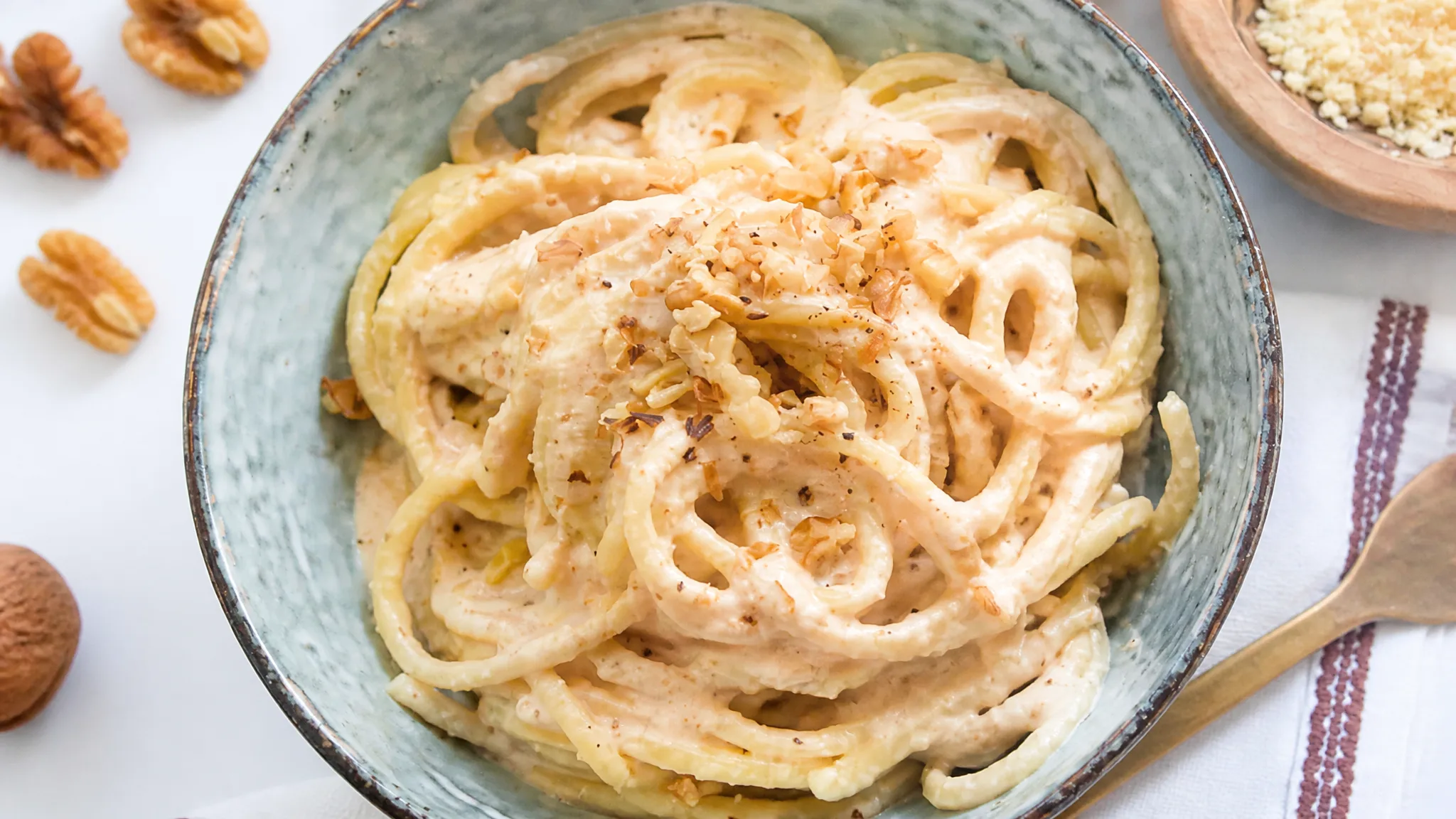
Walnut pasta sauce is one of the simplest dinners I make when the kitchen is slammed in Kew Gardens. I have run a kosher coffee shop and wine bar in Queens since 2012, and I need a plate that comes together fast and still feels like a real meal. This version blends toasted walnuts with garlic, Parmesan, and olive oil into a pale, creamy sauce that clings to spaghetti without any cream at all.
Many people reach for a jar of alfredo or a heavy cream sauce when they want something rich on a weeknight. Those sauces can taste flat and salty, and they sit heavy after a long shift. A walnut sauce gives you the same silky body with a toasty, slightly sweet flavor that tastes like it took hours. It also costs less per serving than most store-bought options.
The finished bowl has glossy strands of spaghetti, a nutty and garlicky sauce, and a sprinkle of chopped walnuts on top. You need six ingredients, one pot for the pasta, one small skillet for toasting, and a food processor or blender for the sauce. Plan on about 25 minutes from start to finish.
Prep Time: 10 minutes
Cook Time: 15 minutes
Total Time: 25 minutes
Servings: 4
Method: Stovetop and food processor
What Is Walnut Pasta Sauce?
Walnut pasta sauce is a classic Italian-style sauce that uses ground walnuts as the base instead of cream or a long simmered tomato. In Liguria, cooks make a version called salsa di noci, which blends walnuts with bread, garlic, and cheese. Other cooks skip the bread and pair the nuts with olive oil and Parmesan, which is the approach used here. The walnuts thicken the sauce naturally as they break down, and the pasta water loosens it into a silky coating.
Ingredients
- 12 ounces (340 g) spaghetti
- 1 cup (100 g) walnut halves, toasted
- 1 small garlic clove, peeled
- 1/3 cup (30 g) finely grated Parmesan
- 3 tablespoons extra-virgin olive oil
- 1 teaspoon kosher salt, plus more for the pasta water
What You Need for Walnut Pasta Sauce
Walnuts: These are the body of the sauce. Toasting them for a few minutes deepens their flavor and removes the raw, bitter edge. Pecans or blanched almonds can stand in, but the sauce will taste sweeter and lighter.
Garlic: One small clove is enough. Blended raw, it gives a sharp bite that softens once the sauce sits with the hot pasta. If you want a milder sauce, blanch the clove for one minute before you add it.
Parmesan: Use a real wedge and grate it fresh. Pre-grated cheese has anti-caking agents that keep it from melting smoothly into the sauce. Pecorino Romano works well if you want a sharper, saltier finish.
Olive oil: Choose a fruity extra-virgin oil you would enjoy on bread. It makes up most of the sauce's richness, so a flat, stale oil will show in the finished dish.
Salt and pasta water: Salt the water until it tastes like the sea. The starchy pasta water is the key to a creamy, glossy sauce, so save at least half a cup before you drain the spaghetti.
How to Make Walnut Pasta Sauce
Start by toasting the walnuts, because the sauce depends on their flavor. Toasting also makes them easier to blend into a smooth paste. While the water heats, you can have the sauce ready before the pasta is done, which keeps the whole meal moving.
Bring a large pot of water to a rolling boil and add a generous pinch of salt. While it heats, toast the walnuts in a dry skillet over medium heat for three to four minutes, stirring often, until they smell nutty and turn a shade darker. Set aside about two tablespoons for garnish, then chop them roughly.
- Bring a large pot of water to a rolling boil and add 1 teaspoon of kosher salt.
- Toast 1 cup of walnut halves in a dry skillet over medium heat for 3 to 4 minutes, stirring often, until fragrant. Set 2 tablespoons aside for garnish and chop them roughly.
- Cook the spaghetti in the boiling water until just shy of al dente, about 1 minute less than the package directions. Before you drain it, reserve 1/2 cup of the pasta water.
- While the pasta cooks, add the remaining toasted walnuts, the garlic clove, and the olive oil to a food processor. Pulse until the walnuts form a coarse, crumbly paste, about 30 seconds.
- Add the Parmesan and 1/4 cup of the reserved pasta water to the processor. Blend until the sauce is smooth, pale, and spreadable. Add more pasta water a splash at a time if it looks thick.
- Drain the spaghetti and return it to the warm pot off the heat. Pour in the walnut sauce and toss vigorously for 1 minute, adding splashes of pasta water until the strands look glossy and coated. Finish with the reserved chopped walnuts and a few cracks of black pepper.
Walnut Pasta Sauce Variations
Lemon Walnut Pasta
Add the zest of one lemon and a tablespoon of lemon juice to the processor with the Parmesan. The citrus lifts the rich walnuts and makes the dish taste lighter. It pairs especially well with fish or a green salad on the side.
Herbed Walnut Pasta
Blend a small handful of fresh parsley or basil into the sauce. The herbs add bright green flecks and a fresh, grassy note. Parsley works best for a neutral sauce, and basil gives a stronger, more Italian flavor.
Chili Walnut Pasta
Stir a pinch of red pepper flakes into the sauce just before you toss it with the pasta. A little heat cuts through the richness and gives the bowl a bit of bite. Add more flakes if you like a spicier plate.
Roasted Garlic Walnut Pasta
Roast a whole head of garlic at 400°F (200°C) for 30 minutes, then squeeze out two soft cloves into the processor in place of the raw clove. The sauce turns mellow and sweet, and the kitchen smells wonderful while it roasts.
Tips for the Best Walnut Pasta Sauce
- Toast the walnuts fully, but watch them closely. They go from golden to bitter in under a minute once the color starts to change.
- Always save the pasta water before you drain. Half a cup is the minimum for a silky sauce.
- Toss the pasta off the heat. High heat can make the oil separate and the sauce turn grainy.
- Grate the Parmesan fresh. The cheese melts into the sauce far more smoothly than pre-grated versions.
- Taste the sauce before you add it to the pasta. Walnuts vary, so you may need an extra pinch of salt.
- Serve the pasta right away. The sauce thickens as it sits, so add a splash of hot water when reheating leftovers.
Storage
Keep leftover walnut pasta in an airtight container in the refrigerator for up to three days. The sauce will thicken and the noodles will firm up, so reheat it gently in a skillet with a few tablespoons of water or milk. Stir until the strands loosen and look glossy again.
You can also make the walnut sauce on its own and keep it in the refrigerator for up to five days. Store it in a jar with a thin layer of olive oil over the top to keep it from drying out. Cook fresh spaghetti when you are ready to eat, and toss it with the chilled sauce plus a splash of hot pasta water.
Common Questions
Can I make walnut pasta sauce without a food processor?
Yes. Chop the toasted walnuts very finely with a sharp knife, then mash them with the garlic and a pinch of salt using a mortar and pestle. Whisk in the olive oil and Parmesan, then loosen the sauce with pasta water. The texture will be a little more rustic, but it still tastes great.
Can I use raw walnuts instead of toasted walnuts?
You can, but the flavor will be flatter and slightly bitter. Toasting takes only a few minutes and makes a big difference in the finished sauce. If you skip the toasting, add an extra pinch of salt to balance the taste.
Is walnut pasta sauce dairy free?
No, this version uses Parmesan. To make a dairy-free sauce, leave out the cheese and add two tablespoons of nutritional yeast for a savory, cheesy note. The sauce will be a little thinner, so use a bit more pasta water.
What pasta works best with walnut sauce?
Long strands like spaghetti, linguine, and fettuccine hold the sauce well. Short shapes with ridges, such as fusilli or rigatoni, also work. Avoid very thin pasta like angel hair, because it cannot hold enough sauce.
Walnut pasta sauce is a simple, rich dinner that comes together in one pot and one processor. Make it once with the toasted walnuts and fresh Parmesan, and it will become one of your go-to weeknight plates.
Recipe
Creamy Walnut Pasta Sauce Recipe
Prep: 10 min Cook: 15 min Total: 25 min Servings: 4 Calories: 585
Ingredients
- 12 ounces (340 g) spaghetti
- 1 cup (100 g) walnut halves, toasted
- 1 small garlic clove, peeled
- 1/3 cup (30 g) finely grated Parmesan
- 3 tablespoons extra-virgin olive oil
- 1 teaspoon kosher salt, plus more for the pasta water
Instructions
- Bring a large pot of water to a rolling boil and add 1 teaspoon of kosher salt.
- Toast 1 cup of walnut halves in a dry skillet over medium heat for 3 to 4 minutes, stirring often, until fragrant. Set 2 tablespoons aside for garnish and chop them roughly.
- Cook the spaghetti in the boiling water until just shy of al dente, about 1 minute less than the package directions. Before you drain it, reserve 1/2 cup of the pasta water.
- While the pasta cooks, add the remaining toasted walnuts, the garlic clove, and the olive oil to a food processor. Pulse until the walnuts form a coarse, crumbly paste, about 30 seconds.
- Add the Parmesan and 1/4 cup of the reserved pasta water to the processor. Blend until the sauce is smooth, pale, and spreadable. Add more pasta water a splash at a time if it looks thick.
- Drain the spaghetti and return it to the warm pot off the heat. Pour in the walnut sauce and toss vigorously for 1 minute, adding splashes of pasta water until the strands look glossy and coated. Finish with the reserved chopped walnuts and a few cracks of black pepper.
Nutrition per serving: 585 cal, 66g carbs, 17g protein, 30g fat, 5g fiber, 2g sugar, 700mg sodium
Odradeks Coffee House is reader-supported. If you buy through a link on this page, we may earn a small affiliate fee at no extra cost to you.