Femobook Coffee Grinder Review: Is It Worth It?
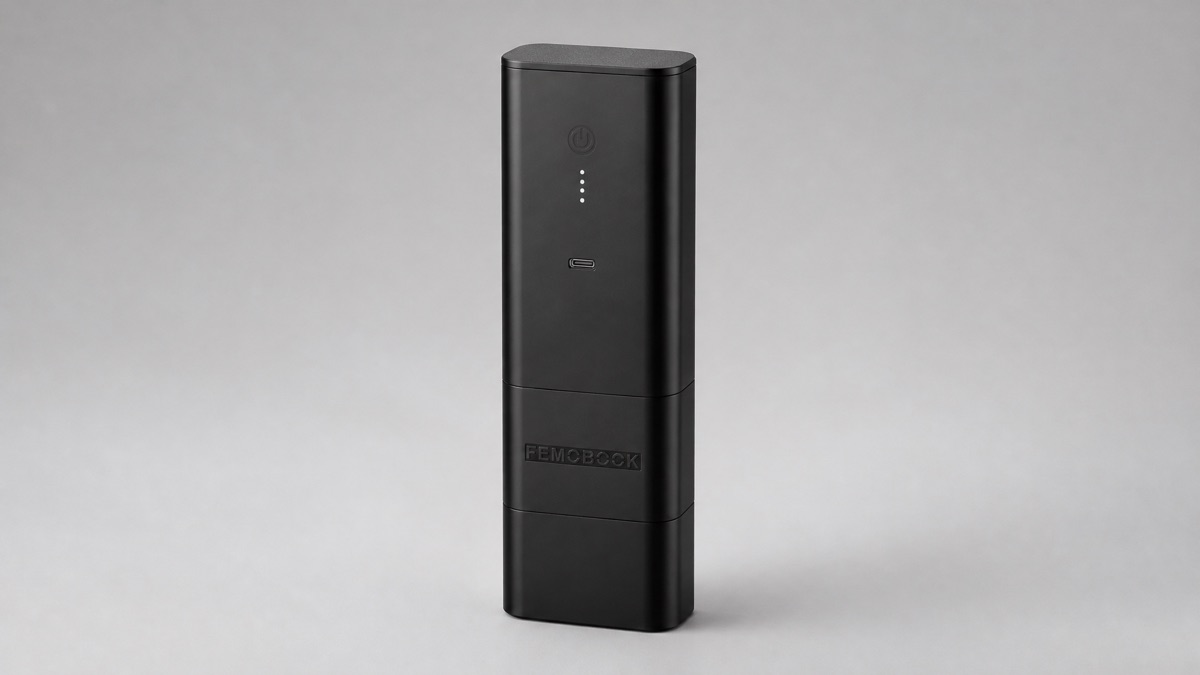
Hi, Sam here, writing between the morning rush and lunch. Our Midwood shop grinds every bag on a Mahlkönig EK43, so I know good grinding. The Femobook coffee grinder is a single-dose electric burr grinder line from Taiwan. Models run from the 650 g (1.4 lb) A2 to the 68 mm (2.7 in) A68.
Slow burrs near 60 RPM keep fines low, and grounds drop straight into a magnetic cup. The A2 grinds a 20 g (0.7 oz) pour-over dose in 55 seconds, but espresso takes about 2 minutes. Owners praise grind quality and battery life. Static and early failures draw the most complaints.
The A2 costs about $139, and the A5 plug-in sells for $469. This review is built from maker specs, press tests and owner ratings, not a hands-on test. Read on through grind quality, battery life and rival grinders. No sponsor funded the review.
What Is the Femobook Coffee Grinder?
The Femobook coffee grinder is a line of compact single-dose electric conical burr grinders from Taiwan. The range runs from small portable travel models to a 68 mm (2.7 in) flagship. Every model grinds one weighed dose at a time for filter coffee, espresso or both.
A single-dose grinder grinds one weighed dose of beans, all of it, every time. No beans wait in a hopper between brews. Switching beans takes no purge, and stale beans never sit inside the grinder.
Femobook is a Taiwanese grinder maker founded by a former 1Zpresso engineer. Several staff members previously worked for 1Zpresso, the Taiwanese hand grinder brand. 1Zpresso makes the K-Max, J-Max and ZP6.
Femobook is a separate brand, but it shares burr shapes and dial ideas with those hand grinders. The calibration system shows the same link.
The Femobook A68 was the brand's first product. The name comes from its 68 mm (2.7 in) burrs. The grinder launched in November 2022 and drew early attention for its all-magnet build.
Most Femobook models share these traits:
- Low speed motors: The motors turn the burrs near hand grinder speed.
- Replaceable batteries: Battery models run on replaceable 18650 lithium cells charged through USB-C.
- Straight drop: Ground coffee drops straight down into the cup for low retention.
Which Femobook Grinder Models Are Sold?
Femobook grinder models sold today include the A2, A3, A4, A4Z, A5 battery, A5 plug-in and A68. The A2 is the budget travel model. The A68 is the plug-in flagship for espresso and filter.
The Femobook A2 uses a 38 mm (1.5 in) stainless steel heptagonal conical burr inside a plastic body. The grinder weighs about 650 g (1.4 lb) and measures 60 x 60 x 210 mm (2.4 x 2.4 x 8.3 in). A single dose holds 35 g (1.2 oz), give or take 5 g. Black and white colors are sold.
The A3, A4, A4Z and A5 share a 130 x 60 x 245 mm (5.1 x 2.4 x 9.6 in) body. Each holds a 30 g (1.1 oz) dose. The A4Z carries 48 mm (1.9 in) ZP6 burrs. The A5 uses a 53 mm (2.1 in) stainless steel conical burr in an aluminum alloy body.
The Femobook A68 is the largest model. The body measures 160 x 106 x 295 mm (6.3 x 4.2 x 11.6 in) and weighs 5.7 kg (12.6 lb). A 192 W motor turns the 68 mm (2.7 in) conical burrs. Each dose holds 40 g (1.4 oz), give or take 5 g.
Femobook Models Compared:
| Model | Burr | Body | Dose | Power |
|---|---|---|---|---|
| A2 | 38 mm (1.5 in) conical | Plastic | 35 g (1.2 oz) | Battery |
| A4Z | 48 mm (1.9 in) ZP6 | Not listed | 30 g (1.1 oz) | Battery |
| A5 | 53 mm (2.1 in) conical | Aluminum alloy | 30 g (1.1 oz) | Battery or plug-in |
| A68 | 68 mm (2.7 in) conical | Aluminum alloy | 40 g (1.4 oz) | Plug-in, 192 W |
How Does the Femobook Coffee Grinder Work?
The Femobook coffee grinder works by turning conical burrs at a slow 60 RPM, close to hand grinder speed. Ground coffee then drops straight down into a magnetic catch cup. No chute or impeller sits in the path.
The slow speed matters because it produces fewer fines, the dust-like particles that muddy a cup. Femobook matched each burr set to a fixed speed motor after testing. The goal is a balance of grind time and flavor.
The A68 mounts its burrs, central shaft and bearings on a detachable burr chamber. The motor sits apart from that chamber, much like a motor driving a hand grinder. This split keeps motor shake away from the burrs.
Operation needs only one button. A touch starts the motor, and auto-stop ends the cycle. The A2 adds auto-reverse to clear jams. Newer A5 and A4Z units use a timed auto stop, which weather and humidity affect less than load sensing.
How Is the Femobook Grinder Adjusted?
The Femobook grinder is adjusted with a stepped dial that clicks the burrs closer or farther apart. On the A2, the dial sits under the catch cup. Each A2 click moves 0.018 mm (18 microns), with 40 clicks per turn and about three turns in all.
The A5 and A68 use finer steps. Each click moves 0.008 mm (8 microns), and one turn covers 100 clicks. Both models offer over 300 settings. The A5 ring sits above the burrs, so the grind changes with the cup still in place.
Finding zero comes first. The dial turns clockwise until the burrs touch. The A2 zero point may not land on 0, and the zero can shift after the burrs come out for cleaning.
Femobook gives starting points for each model. The A2 sits 3 to 10 clicks from zero for a moka pot and 50 to 80 clicks for pour-over. The A68 sits at 75 to 95 clicks for espresso and 170 to 190 clicks for pour-over.
Starting Settings:
| Model | Brew Method | Clicks From Zero |
|---|---|---|
| A2 | Moka pot | 3 to 10 |
| A2 | Pour-over | 50 to 80 |
| A68 | Espresso | 75 to 95 |
| A68 | Pour-over | 170 to 190 |
How Long Does the Femobook Grinder Battery Last?
The Femobook grinder battery lasts about 80 pour-over doses per charge on the A2. The A2 uses 4000 mAh from two 2000 mAh 18650 cells. Espresso settings drain it faster, at about 20 doses per charge.
The larger A5 carries a 6000 mAh pack built from three cells. Femobook rates it at 30 to 50 grinding sessions per charge. One long test reached about 125 pour-over doses or 30 espresso shots. Bean type and grind size change the count.
The cells are standard 18650 lithium batteries. A twist of the bottom cover opens the bay for a swap. On the A5, all three cells get replaced at the same time. USB-C and power bank charging work on every battery model.
The A5 has a battery indicator that flashes once per second when the charge runs low. The A5 also grinds while plugged in to charge, so a low battery does not stop work. Femobook suggests a USB-A charger rated at 5V/1A or higher.
Some Femobook grinders skip the battery entirely. The Femobook A68 has no battery. The flagship runs from a wall power brick rated for 100 to 240 volts. The brick puts out 24 V at 8 A to the motor. The A5 plug-in version also has no battery.
How Is the Femobook Grinder Cleaned?
The Femobook grinder is cleaned by pulling its magnet-held parts apart by hand, with no tools. Magnets replace screws on the hopper, cup, chute and burr guard. A full strip for a deep clean takes 1 to 2 minutes.
The A2 twists apart to separate the motor from the burrs. The magnetic catch cup lifts off, and a brush clears the grounds. The all-metal interior stays dry, so water never touches the burrs.
A2 Cleaning Steps:
- Twist the body to separate the motor from the burrs.
- Lift off the magnetic catch cup.
- Brush the grounds off the burrs and cup.
- Keep the metal interior dry and reassemble.
The A5 and A68 have a magnetic brush fixed under the burr. The brush sweeps grounds out while the motor runs. The A68 funnel holds two more brushes. A quick turn of the funnel and a tap on the cup clears the leftover grounds.
The A68 box holds three cleaning tools. A two-sided brush with hard and soft ends, an extra funnel brush and an air blower all come included.
How Well Does the Femobook Coffee Grinder Grind?
The Femobook coffee grinder grinds well, with even particles that compete with grinders twice its price. Particle tests on the A2 show a tight spread with few fines. Pour-over turns clean and bright once the burrs season over a few days.
Burr size changes the cup. A side by side brew used the same Geisha beans and the same recipe. The A4Z gave a clean, clear cup with sharp note separation. The A68 gave more complexity, a fuller body and more sweetness as the cup cooled.
The A68 drops grounds without a chute, declumper or impeller. The grounds come out fluffy. Retention sits at 0.1 to 0.2 g. The A5 holds about 0.1 g after a dose.
The A2 grind is even but not perfect. The finest setting gives a powder slightly finer than sand. A shake near the end of the cycle helps the last beans reach the burrs.
Can the Femobook Grinder Make Espresso?
Yes. The Femobook grinder can make espresso, and the A5 and A68 are built for it. The A2 also reaches espresso fineness, but slowly. Femobook itself markets the A2 for moka pot, pour-over and French press.
The three models differ in how well they handle espresso:
- A68: The A68 pulls full-bodied shots with good clarity and balance. In testing against the 1Zpresso K-Max, it was the better espresso grinder each time. Its 58 mm (2.3 in) grind cup matches a standard 58 mm portafilter, so grounds pour straight in.
- A5: The A5 gives fine control for dialing in, which means adjusting the grind until the shot is right. One 0.008 mm click shifts the shot time by 2 to 5 seconds. Light roasts grind without trouble. The burrs go fine enough for Turkish coffee.
- A2: The A2 grinds espresso for a 58 mm basket at 1 to 3 clicks from zero. That narrow window leaves little room. Some owners find the A2 too coarse for espresso. Very fast shots show up with a bottomless portafilter.
How Fast Does the Femobook Grinder Grind?
The Femobook grinder grinds fast enough for pour-over, finishing 20 g (0.7 oz) on the A2 in 55 seconds. A 15 g (0.5 oz) dose at 45 clicks takes about 50 seconds. Coarser settings run quicker.
Espresso on the A2 is slow. A 20 g (0.7 oz) dose takes about 110 seconds. Owner timings run from about 2 minutes for 18.5 g to 2.5 minutes for 16 g with lighter roasts.
The A5 moves faster at espresso settings. A 20 g (0.7 oz) espresso dose takes about 40 seconds. The bigger 53 mm (2.1 in) burr does more work per turn.
The slow speed comes with torque. Dense beans pass through the A2 without stalling. Auto-stop means the grinder needs no watching while the kettle heats.
What Do Femobook Coffee Grinder Reviews Say?
Femobook coffee grinder reviews say the grind quality is excellent for the price, while reliability is mixed. The A2 holds 4.2 of 5 stars from 74 ratings on Amazon US. The A2 also carries an Amazon's Choice badge.
The A2 star split leans high. Five-star ratings make up 66% and four-star ratings add 17%. Three-star ratings reach 3%, two-star 6% and one-star 8%. More than 50 units sold in a recent week.
Owner comments group into clear themes. Grind quality draws 31 mentions, 26 of them positive. Value draws 16, all positive. Reliability draws 19, with 11 positive and 8 negative. Grind speed splits 6 and 6.
The reliability split is the weak spot. Negative comments make up about 42% of reliability mentions, 8 of 19. A sample of 74 ratings is small, so one bad batch can move the average.
Press reviews run warm. The Mouth scores the A2 at 4 of 5. The Coffee Chronicler calls the A68 best in class for retention and workflow. The Bitter Nectar calls the A68 almost flawless. Femobook's own store shows 4.75 of 5 for the A68.
What Do Owners Like About the Femobook Grinder?
Owners like the Femobook grinder most for grind quality that beats many hand grinders at the same price. The burrs and burr holder are metal and feel solid. Heavy plastic covers the parts that take little stress.
Quiet running is another plus. Many owners find the A2 quieter than other grinders they have owned. Dense beans pass through without struggle.
Battery life wins praise. A full charge covers more than a week of daily brewing on the A2 with four bars left. After two weeks of pour-over, an A2 battery sat at about half.
The magnets earn steady praise. The lid and catch cup snap on with a clean click. No unscrewing slows the morning routine.
What Are Common Femobook Grinder Complaints?
Common Femobook grinder complaints are early failures, heavy static and a few awkward design choices. Some A2 units stop charging or turning on after a few months. Others arrive dead out of the box.
Static makes a mess on the A2. Grounds cling to the cup and the counter. A few sprays of water on the beans before grinding solve most of it. The A68 also builds static with dark roasts, so the Ross Droplet Technique (RDT) helps there.
The A2 power button sits where a hand grips the body. Accidental starts happen while moving the grinder. The USB-C port faces front, so the cable points out under the button. The white finish shows coffee stains fast.
Common Complaints:
- Units that stop charging or turning on after a few months
- Heavy static on the A2
- Power button placed where a hand grips
- Front-facing USB-C port
- Large A68 power brick and high-pitched whine
The A68 has quirks of its own. The power brick is large, and the motor makes a high-pitched whine. The funnel holds some grounds until a rotate and tap clears them.
How Does the Femobook Coffee Grinder Compare to Rivals?
The Femobook coffee grinder compares well with rivals on grind quality per dollar, but loses on build feel. The A2 costs far less than premium portable electrics. The trade is a plastic body.
The Millab E01 is a portable electric rival with better build quality. The Millab E01 sells for about $259 and uses 42 mm (1.7 in) S2C burrs from Timemore. The grinder weighs 990 g (2.2 lb), heavier than the 650 g (1.4 lb) A2. The Femobook A2 adds a replaceable battery and costs about half as much.
The Timemore C3 starts at about $79, and the Comandante C40 MK4 starts near $277. Both hand grinders feel more premium in hand. A premium hand grinder at about twice the A2 price grinds better, but not twice as well. The A2 saves arm work every morning.
The A68 faced the 1Zpresso K-Max in testing. The A68 made better espresso, and the K-Max made the better pour-over. The A68 design recalls the K-Max crossed with the Lagom Mini or Weber Key.
Inside the Femobook range, the three main models split by use. The A2 is the plastic budget model for travel and pour-over. The A5 adds a 53 mm (2.1 in) burr and an aluminum alloy body for espresso. The A68 is the plug-in flagship with the largest burrs.
Femobook A2 vs Rivals:
| Grinder | Type | Price | Weight |
|---|---|---|---|
| Femobook A2 | Portable electric | About $139 | 650 g (1.4 lb) |
| Millab E01 | Portable electric | About $259 | 990 g (2.2 lb) |
| Timemore C3 | Hand grinder | From $79 | Not listed |
| Comandante C40 MK4 | Hand grinder | From $277 | Not listed |
Which Femobook Grinder Suits Pour-Over Best?
The Femobook grinder that suits pour-over best is the A4Z, built around ZP6 burrs licensed from 1Zpresso. The ZP6 burr makes very few fines, which are tiny bits of coffee dust. The result is a clean, clear cup with defined notes.
The 1Zpresso ZP6 hand grinder has a strong record. Carlos Medina used it in his winning routine at the 2023 World Brewers Cup. The A4Z puts that burr design behind a motor.
The A5 replaced the A4Z in the same body shape. It gives clean, crisp pour-over notes with a lingering sweetness. Its 53 mm (2.1 in) burr also covers espresso.
The A2 is the budget pick for pour-over. Pour-over is where it does its best work, with clean, bright cups. It costs far less than the A4Z.
How Much Does the Femobook Coffee Grinder Cost?
The Femobook coffee grinder costs about $139 for the A2 and $469 for the A5 plug-in in the US. Prices move often. The A2 has sold for as low as $109.
The A5 plug-in sells on Amazon US for $469. The A5 battery and plug-in versions both use the 53 mm (2.1 in) burr and 300+ settings.
The A68 opened for pre-order in November 2022 at about $513 before shipping. Femobook planned a later starting price of $610. In 2023 buyers paid under $600 plus $125 shipping, near $700 in total. At launch the A68 sold only through the Femobook website.
US Prices:
| Model | US Price |
|---|---|
| A2 | About $139 (as low as $109) |
| A5 plug-in | $469 |
| A68 | About $513 pre-order, $610 planned start |
Running costs stay low. Replacement 18650 cells cost a few dollars, so a worn battery does not mean a new grinder.
The A2 box holds the grinder, a manual, a charging cable and a cleaning brush. The A68 box adds the power supply, a brush, an air blower and an extra funnel brush.
Does the Femobook Grinder Have a Warranty?
Yes. New Femobook grinders have a 1 year warranty from Femobook. The cover applies to new products bought from the brand and its sellers.
A warranty only helps if the claim is accepted, and claims can stall. A refused claim on an A2 that failed within 10 months of light use shows the risk. Proof of purchase matters, so a new owner should keep the receipt or order record.
Femobook promises a responsive support team. The battery is replaceable, which lowers repair risk. It is the most common wear part, and it swaps by hand.
Who Should Skip the Femobook Coffee Grinder?
Buyers who should skip the Femobook coffee grinder include espresso drinkers who pull many shots and anyone brewing for a crowd. The A2 needs about 2 minutes per espresso dose. Back to back shots test patience.
Dose size limits group brewing. Femobook models hold 30 to 40 g (1.1 to 1.4 oz) per load. That covers 1 or 2 cups, not a pot for six. The Baratza Encore ESP is a hopper grinder at about $199. Its 300 g (10 oz) bean hopper fits batch brewing better.
Buyers who want a premium feel may dislike the A2. The plastic body feels budget next to metal hand grinders. The A5 and A68 fix that with aluminum alloy.
Small counters suit the A68 poorly. The grinder weighs 5.7 kg (12.6 lb), and the large power brick needs a hiding spot.
Is the Femobook Grinder Good for Travel?
Yes. The Femobook grinder is good for travel, and the A2 is the lightest model at 650 g (1.4 lb). The A2 weighs less than most water bottles. A bag side pocket fits it.
USB-C charging works from a phone charger or a power bank. Hotel rooms and campsites need no outlet. Auto-stop frees hands for the kettle.
The A2 flies without trouble under FAA rules. Lithium-ion batteries up to 100 Wh are allowed on passenger aircraft. Each 2000 mAh 18650 cell holds about 7.4 Wh, so the two A2 cells total about 14.8 Wh. Spare cells ride in carry-on bags only, never in checked bags.
The A5 also travels well. The body is about palm sized and needs no outlet. The aluminum shell handles bags better than plastic.
Is the Femobook Coffee Grinder Worth It?
Yes. The Femobook coffee grinder is worth it for single-dose brewers who want hand grinder quality without the cranking. Grind quality beats the price on every model. Reliability reports call for some caution.
The strengths are clear. Even grounds, replaceable batteries, tool-free magnetic cleaning and low retention set the line apart.
Pros:
- Even grounds for the price
- Replaceable 18650 batteries
- Tool-free magnetic cleaning
- Low retention
Cons:
- Static on the A2
- Slow espresso on the A2
- Some early failures
- Large A68 power brick
The weaknesses are real. Static, slow espresso on the A2, some early failures and a refused warranty claim weigh against it. The A68 power brick takes space.
The fit depends on the buyer. Daily single-cup brewers who are tired of hand cranking get the most from the line. Crowd brewers and heavy espresso drinkers on the A2 get the least.
Which Femobook Grinder Is the Best Value?
The Femobook grinder with the best value is the A2 for pour-over and travel at about $139.
Three Femobook grinders stand out, and each suits a different buyer:
- A2: This model suits pour-over coffee and travel, and it costs about $139. It outperforms many hand grinders at its price.
- A68: This model is the best value for home espresso and filter coffee in one grinder. Its retention and workflow rank best in class.
- A5: This model fits buyers who want espresso on battery power. Its 53 mm (2.1 in) burr and 0.008 mm steps make dialing in easy. Dialing in means finding the right grind setting.
The choice depends on the brew method and on whether the buyer needs battery power.
Odradeks Coffee House is reader-supported. If you buy through a link on this page, we may earn a small affiliate fee at no extra cost to you.