Fellow Coffee Grinder Review: Is It Worth It?
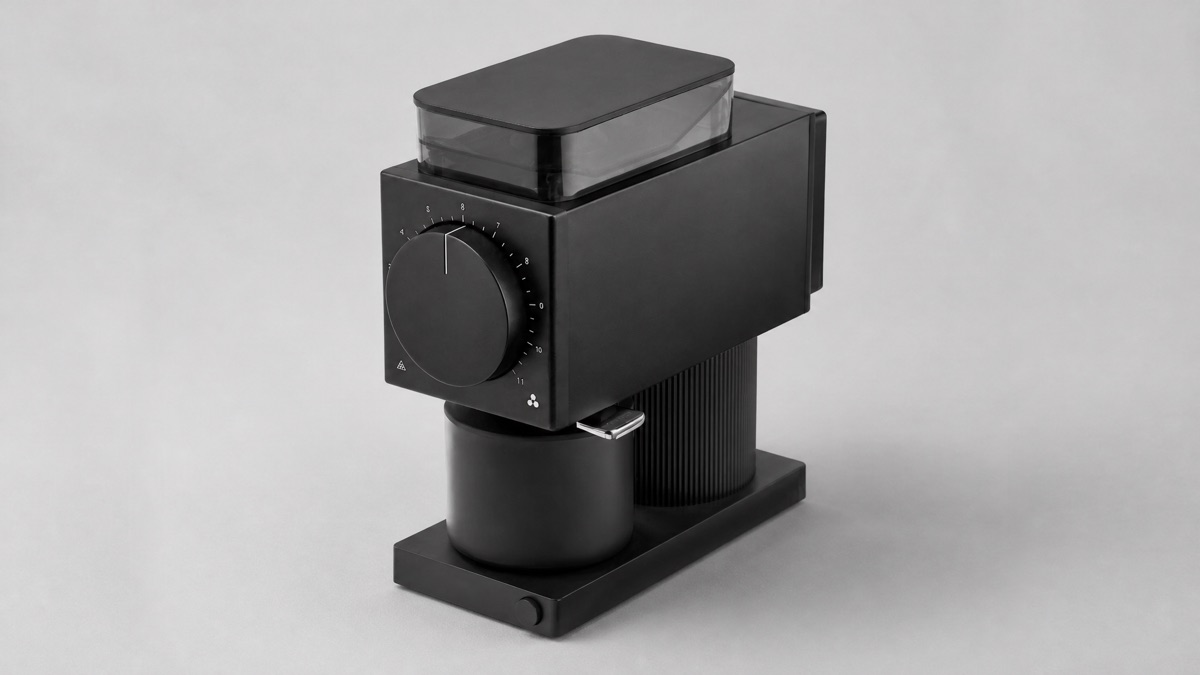
Welcome to my Fellow Coffee Grinder review, Sam here. Since 2019, when Fellow launched its Ode brew grinder, I have seen coffee grinders change fast.
The Fellow coffee grinder is an electric single-dose burr grinder from Fellow, a San Francisco coffee brand. Two lines sell today: the Ode Brew Grinder Gen 2 for filter coffee, and the Opus 2 for espresso through cold brew. The Opus 2 began shipping in October 2026.
The Ode Gen 2 uses 64 mm (2.5 in) flat burrs and a 31-step dial. The Opus 2 uses 48 mm (1.9 in) conical burrs and a stepless dial. Both stop on their own and use ionizers to cut static. Retention runs as low as 0.1 g (0.004 oz). Only the Opus 2 grinds fine enough for espresso.
The Opus 2 costs $199.95, and the Ode Gen 2 costs $399.95. The drink brewed most days decides between them. Homes that pull espresso gain the most from the Opus 2. Filter-only brewers who want clarity from light roasts get more from the Ode Gen 2. I review burrs and settings, mess and retention and prices, and no sponsor edited my words.
What Is the Fellow Coffee Grinder?
The Fellow coffee grinder is an electric single-dose burr grinder sold in two lines, the Ode and the Opus. The Ode Brew Grinder Gen 2 uses 64 mm (2.5 in) flat burrs for filter coffee. The Opus 2 uses 48 mm (1.9 in) conical burrs and grinds for espresso through cold brew.
Fellow is a San Francisco coffee brand known for design-led products. The Stagg EKG kettle and the Atmos vacuum canister are two of its best-known items. The grinders carry the same clean, minimal styling.
The first Ode launched on Kickstarter in late 2019. The campaign passed its $200,000 goal within hours and raised more than $1 million. The original Ode later won a Specialty Coffee Association (SCA) Best New Product award in 2021.
The original Opus followed in 2023. Fellow showed it at CES, the Las Vegas tech show, in January 2023. Sales began on February 21, 2023, at $195.
Both lines are built around single dosing, which means grinding only the amount needed for one brew. The owner weighs each dose, pours the beans into a 100 g (3.5 oz) load bin and presses one button. The motor stops on its own once the burrs run empty, and the grounds land in a magnetic catch cup.
Which Fellow Grinder Models Are Sold Today?
Fellow grinder models sold today are the Opus 2 Conical Burr Grinder and the Ode Brew Grinder Gen 2. Fellow also sells an Ode Gen 2 fitted with SSP Red Speed Coated 64 mm MP flat brew burrs for lighter roasts.
The Opus 2 began shipping around October 2026. It replaces the original Opus 40 mm (1.6 in) burrs with 48 mm (1.9 in) conical burrs. One stepless side dial now does the job of the two old controls. An upgraded ionizer and two catch cups complete the changes.
Fellow Grinder Models:
| Model | Burrs | Espresso |
|---|---|---|
| Opus 2 | 48 mm conical | Yes |
| Original Opus | 40 mm conical | Yes |
| Ode Gen 2 | 64 mm flat | No |
| Ode Gen 2 with SSP MP burrs | 64 mm flat | No |
The Ode Gen 2 replaced the first Ode. Its Gen 2 Brew Burrs grind as fine as 250 microns (0.25 mm). The original burrs only reached 500 microns (0.5 mm). The hopper also grew from 80 g (2.8 oz) to 100 g (3.5 oz). The catch cup pours more cleanly.
The Opus 2 also comes in a premium colorway with a wood lid and a metal dial. The premium version costs about $50 more. The burrs and motor inside are the same.
How Does the Fellow Coffee Grinder Work?
The Fellow coffee grinder works by grinding one weighed dose and stopping automatically when the burrs run empty. The owner pours beans into the load bin, picks a grind setting and presses the single button.
The Ode Gen 2 grinds with a feedback-controlled PID motor. PID stands for proportional-integral-derivative, a control loop that adjusts power as the load changes. Because of this loop, the motor holds a steady 1400 RPM, or rotations per minute, under load. A steady speed keeps the particle size even from the first bean to the last.
The Ode also has a grind knocker on the side. After the motor stops, the knocker taps stray grounds out of the chute.
Both current models use an ionizer to cut static. The ionizer neutralizes the electric charge on fresh grounds. Neutral grounds drop into the cup instead of clinging to the chute or jumping onto the counter.
The Opus 2 ships with two magnetic cups to catch those grounds. The standard catch cup holds 100 g (3.5 oz). The espresso cup holds 30 g (1.1 oz). The espresso cup fits 54 mm and 58 mm (2.1 and 2.3 in) portafilters, and an internal impeller pushes grounds out of the chamber.
What Burrs Does the Fellow Grinder Use?
The Fellow grinder uses 64 mm flat burrs in the Ode Gen 2 and 48 mm conical burrs in the Opus 2. The Ode burrs are uncoated stainless steel Gen 2 Brew Burrs, designed by Fellow VP of R&D and Certified Q Grader Nick Terzulli.
The Opus 2 burrs are stainless steel cones, one inside the other. The original Opus used smaller 40 mm (1.6 in) Burly conical burrs with six aggressive blades. The larger burrs in the Opus 2 cut each bean in fewer passes.
The burr shape changes how the coffee tastes. Flat burrs produce more clarity and flavor separation in the cup. Conical burrs produce a wider spread of particles, which tastes like more body. Body suits milk drinks such as lattes and cappuccinos.
SSP is a burr maker that sells high-uniformity 64 mm burrs. SSP flat burrs fit the Ode Gen 2 as an upgrade. Fellow now sells an Ode Gen 2 with SSP MP burrs already installed for extreme clarity.
How Do the Fellow Grinder Settings Work?
The Fellow grinder settings work through a stepped front dial on the Ode Gen 2 and a stepless side dial on the Opus 2. The Ode dial carries 31 settings, numbered 1 to 11, with marks between the whole numbers.
A stepped dial clicks into fixed positions, so each setting repeats exactly. A stepless dial moves freely between marks, so the burr gap can sit anywhere in the range. The burrs are the two toothed parts that crush the beans, and the gap between them sets the grind size.
The Opus 2 dial moves smoothly with no fixed clicks, and Fellow marks 48 adjustable settings along it. Most espresso dials in around settings 0 to 2. A grind guide on the lid lists starting points for other methods.
The original Opus worked differently. Its outer dial had 41 settings, made of 11 numbers with 4 ticks between each. An inner ring under the hopper added six extra steps in each direction for espresso.
The Ode Gen 2 has clear starting points by brew method. Each method needs a different grind size, so each has its own number. A V60 sits near 6.2, and drip sits near 7.2. Chemex sits at 8, French press at 9, and cold brew at 10.
Ode Gen 2 Starting Settings:
| Brew Method | Setting |
|---|---|
| V60 | 6.2 |
| Drip | 7.2 |
| Chemex | 8 |
| French press | 9 |
| Cold brew | 10 |
Does the Fellow Coffee Grinder Make Good Coffee?
Yes. The Fellow coffee grinder makes good coffee because its burrs cut beans to an even, set size. The Ode Gen 2 produces sweet, balanced cups with medium clarity, and the Opus 2 produces balanced, versatile cups.
Blade grinders show why even size matters. Blades chop beans into random sizes. Large pieces taste sour and thin, while dust tastes bitter. Burrs cut to a set size, so both Fellow grinders avoid that mix.
The Ode Gen 2 handles light roasts better than the first Ode. Light roasts need very fine grind sizes, and the finer Gen 2 burrs reach them. Floral and fruit notes come through clearly in a Chemex or V60.
The Opus 2 makes good filter coffee with some limits. Its filter cups trail 64 mm (2.5 in) flat burr grinders in sweetness and development. The gap is small for medium roasts and larger for very light roasts.
Does the Fellow Grinder Work for Espresso?
Yes. The Opus 2 Fellow grinder works for espresso, while the Ode Gen 2 does not reach espresso fineness. The Opus 2 grinds an 18 g (0.6 oz) espresso dose in about 9 seconds.
The Ode Gen 2 is a filter grinder by design, and Fellow does not intend it for espresso. Its grind range stops at medium-fine, so shots run fast and taste thin.
The Opus 2 grinds fine enough, so it produces good espresso at its price. Its shot-to-shot consistency at very fine settings is good, not perfect. A $900 single-dose espresso grinder stays more precise.
A common espresso starting point is 18 g (0.6 oz) of coffee in and about 36 g (1.3 oz) out, a 1:2 ratio. The grind is then adjusted by taste. A fast, sour shot needs a finer grind. A slow, harsh shot needs a coarser grind.
Basket type changes how far the grind must move. Pressurized baskets from entry-level machines hide grind differences and need a coarser setting. A 58 mm (2.3 in) basket generally needs a finer grind than a 54 mm (2.1 in) basket.
Is the Fellow Grinder Good for Pour-Over and French Press?
Yes. The Fellow grinder is good for pour-over and French press, with the Ode Gen 2 as the stronger pick. The Ode grinds for pour-over, drip, AeroPress, French press and cold brew.
The Ode uses 64 mm (2.5 in) flat burrs. Burrs of that size are common in entry-level commercial grinders. The large burrs keep fines low and particles even. Fines are the tiny bits of coffee dust that grinding creates.
The Opus 2 uses conical burrs at 48 mm (1.9 in). Conical burrs at this size make more fines than a large flat burr. Extra fines in a French press create sludge and a bitter edge. The Opus 2 coarse settings handle everyday French press and cold brew.
The Ode Gen 2 also suits batch brewing. The 100 g (3.5 oz) hopper holds enough beans for 12 cups at a 1:16 ratio.
How Messy Is the Fellow Coffee Grinder?
The Fellow coffee grinder is not very messy, since ionizers and magnetic catch cups keep grounds contained. The Ode Gen 2 and Opus 2 leave little scatter, while the first Ode was a messy grinder.
The original Ode had two mess problems. Static made chaff, the thin skin of the bean, stick inside the catch bin and fall from the chute. Fins inside the catch cup also trapped grounds.
Static can still show up on any grinder, and dry winter air raises it. The Ross Droplet Technique cuts the static that remains. One drop of water on the beans before grinding neutralizes most of the charge.
The technique takes its name from coffee professional David Ross. A 2023 study in the journal Matter confirmed that a little water cuts static clumping during grinding. One small spritz per dose is enough.
Even a low-mess grinder collects some loose grounds, so it needs regular cleaning, and that takes little time. A weekly brush of the chute clears loose grounds. The Opus 2 gives tool-free burr access, and cleaning tablets such as Urnex Grindz clear coffee oils. The grinder stays unplugged before any part comes off.
How Much Coffee Does the Fellow Grinder Retain?
The Fellow grinder retains as little as 0.1 g (0.004 oz) of coffee on current models. The Ode Gen 2 cut retention from about 1 g (0.04 oz) on the first Ode to as low as 0.1 g.
Retention matters because grounds left inside a grinder go stale. Those stale grounds then mix into the next dose and dull the cup. A grinder that holds back less coffee protects the flavor of each new dose.
The original Opus held back more than the current models. Retention reached as high as 1 g (0.04 oz), a high figure for a single-dose grinder. Owners tapped the body and used the lid as a bellows to clear it.
The Opus 2 fixed this problem. Bon Appetit testing in 2026 recorded no more than 0.1 g at fine, medium and coarse settings. The Coffee Chronicler measured 0.1 to 0.2 g (0.004 to 0.007 oz) on a separate unit.
Retention by Model:
| Model | Retention |
|---|---|
| Original Ode | About 1 g |
| Ode Gen 2 | As low as 0.1 g |
| Original Opus | Up to 1 g |
| Opus 2 | 0.1 to 0.2 g |
Is the Fellow Grinder Loud or Slow?
No. The Fellow grinder is not loud or slow on current models. The Ode Gen 2 makes a low-pitched hum and grinds about 15 g (0.5 oz) in under 10 seconds.
The Ode Gen 2 runs at about 80 decibels (dB), the same level as the original Ode. The grind lasts only seconds, so the sound ends fast.
The original Opus was the slow one. A 350 RPM motor made it markedly slower than the Ode. The noise level sat in the middle of the pack.
The Opus 2 grinds faster than the first Opus. Fellow rates it at about 9 seconds for an espresso shot. A 300 W motor drives the 48 mm (1.9 in) burrs.
Placement changes the sound. A thin rubber mat under the grinder cuts vibration. A fully seated catch cup stops rattling against the base.
What Do Fellow Coffee Grinder Reviews Say?
Fellow coffee grinder reviews say both models are strong, with mostly positive scores. The Opus 2 holds 4.5 out of 5 from 143 reviews on the Fellow store, and 107 of those are five stars.
Press reviewers agree with those buyers. Bon Appetit named the Opus 2 its overall pick in 2026 grinder testing.
The Ode Gen 2 is a common pick for manual brewing. The first Ode drew complaints about a narrow grind range and static. The Gen 2 fixed both problems.
What Do Owners Like About the Fellow Grinder?
Owners like the Fellow grinder for its compact design, simple workflow and low retention. The Ode measures 239 x 105 x 248.3 mm (9.4 x 4.1 x 9.8 in) and fits under standard kitchen cabinets.
Small size matters less if the grinder is hard to use. One button starts the grind, and auto-stop ends it. The magnetic catch cup snaps into place every time.
Low retention keeps each cup true to the beans. Little old coffee stays between doses. Single-origin coffees taste like the beans just weighed.
The Opus 2 earns praise for range. One grinder covers cappuccinos in the morning and pour-over later in the day.
What Are the Common Fellow Grinder Complaints?
The common Fellow grinder complaints are the plastic Opus body, the missing espresso range on the Ode and early Opus 2 issues. The Opus 2 body uses ABS, PC, nylon and POM plastics.
The plastic build feels less premium than other Fellow products. The plastic grind chamber also draws concern about long-term wear.
The Ode Gen 2 surprises some buyers. Espresso drinkers expect a premium grinder to pull shots. The Ode stops short of espresso fineness.
The Opus 2 had launch problems. An early test sample had a dial that moved during grinding, and Fellow called it an early-unit issue. Launch stock was also sold out or backordered.
Common Complaints:
- Plastic Opus body and grind chamber
- No espresso range on the Ode Gen 2
- Dial movement on an early Opus 2 sample
- Rough grind guides on the lid
- Short replacement parts record for the Opus 2
The lid grind guides are rough starting points. Settings printed on the lid often miss for light roasts. The Opus 2 also has no long record for replacement parts yet.
Fellow Ode vs Opus: Which Fellow Coffee Grinder Is Better?
The better Fellow coffee grinder is the Opus 2 for homes that make espresso and the Ode Gen 2 for filter-only brewers. The Ode gives more clarity, while the Opus gives more range.
The Ode Gen 2 uses 64 mm (2.5 in) flat burrs, which are the metal parts that crush the beans. Its dial has 31 steps and the grinder weighs 4.6 kg (10.1 lb). The Opus 2 uses 48 mm (1.9 in) conical burrs and a stepless dial. The setting can sit anywhere between two marks. It weighs 2.3 kg (5.1 lb).
Ode Gen 2 vs Opus 2:
| Feature | Ode Gen 2 | Opus 2 |
|---|---|---|
| Burrs | 64 mm flat | 48 mm conical |
| Dial | 31 steps | Stepless |
| Weight | 4.6 kg (10.1 lb) | 2.3 kg (5.1 lb) |
| Best for | Light roast filter | Espresso and milk drinks |
Roast style points to a model. Light roast filter coffee suits the Ode. Dark roast espresso and milk drinks suit the Opus.
Some homes drink both styles. In that case, the most common drink picks the grinder. The drink brewed most days decides, not the rare treat.
How Does the Fellow Grinder Compare to the Baratza Encore ESP?
The Fellow grinder compares well to the Baratza Encore ESP, winning on workflow while the Encore wins on repairs. Both the Opus 2 and the Encore ESP list at $199.95.
The Encore ESP uses 40 mm (1.6 in) M2 conical burrs. Its dial moves in steps. The steps are finer in the espresso zone and wider for filter. The Encore ESP hopper holds 300 g (10.6 oz) of beans. It does not grind one dose at a time.
The Opus 2 has a stepless dial, which means the setting does not jump between fixed steps. It also has better anti-static and lower retention.
The Encore ESP has a longer track record and parts that owners replace at home. Baratza has been part of the Breville Group since October 2020. The Encore ESP carries a 1-year warranty.
The standard Baratza Encore compares to the Ode Gen 2. The Encore costs about $149, uses 40 mm (1.6 in) conical burrs and holds 300 g (10.6 oz) of beans. Its warranty lasts 1 year, while the Ode carries 2 years.
How Much Does the Fellow Coffee Grinder Cost?
The Fellow coffee grinder costs $199.95 for the Opus 2 and $399.95 for the Ode Gen 2. The Opus 2 premium colorways with wood and metal cost $249.95.
The Ode Gen 2 launched at $345. The list price has since risen to $399.95. The original Ode listed at $299, and the original Opus sold for $195.
Fellow Grinder Prices:
| Model | Price |
|---|---|
| Opus 2 | $199.95 |
| Opus 2 premium colorway | $249.95 |
| Ode Gen 2 | $399.95 |
| Original Ode | $299 |
| Original Opus | $195 |
Fellow runs seasonal sales on both grinders. Prices shift with promotions and bundles, such as kits with espresso accessories. The price a buyer pays can therefore differ from the list price.
The price matches the use. About $200 is the realistic floor for home espresso grinding. Spending $200 to $400 buys real gains in pour-over clarity.
Does the Fellow Grinder Have a Warranty?
Yes. The Fellow grinder does have a 2-year standard warranty on both current models. Fellow offers the Opus 2 warranty with an option to extend.
The Ode Gen 2 also carries a 2-year warranty on its maker page. A basic Baratza Encore carries 1 year, by comparison, so the Fellow coverage lasts twice as long.
Fellow also publishes repair guides for the Ode. The guides cover replacing the grind knocker, the grind dial and the burrs.
Is the Fellow Coffee Grinder Worth It?
Yes. The Fellow coffee grinder is worth it for buyers who match the model to their brewing. The Opus 2 suits one-grinder homes that make espresso and filter, and the Ode Gen 2 suits filter-only brewers.
The strengths are clear. Both grinders retain very little coffee and run a clean workflow. Both fit small counters and carry a 2-year warranty.
The weak points are also clear. The Opus is mostly plastic. The Ode skips espresso and costs twice as much as the Opus. The Opus 2 parts record is still new.
Pros:
- Very low retention
- Clean workflow
- Compact size for small counters
- 2-year warranty
Cons:
- Mostly plastic Opus
- No espresso on the Ode
- Ode costs twice as much as the Opus
- New Opus 2 parts record
Who Should Skip the Fellow Grinder?
Buyers who should skip the Fellow grinder include espresso purists, budget French press drinkers and big-batch households. Long-term repairers also fit this group.
Four types of buyers are better served by another grinder:
- Espresso purists: Serious espresso drinkers with costly machines outgrow the Opus. The Eureka Mignon range suits them better.
- Budget French press drinkers: A daily French press drinker spends less on a manual grinder. A good hand grinder costs about $80 to $120 and makes the same coarse grind. Hand grinders such as the Timemore C3 suit one or two cups a day.
- Long-term repairers: A buyer who keeps appliances for a decade and swaps parts at home gets more from the Baratza Encore ESP.
- Big-batch households: Large households refill often. The 100 g (3.5 oz) load bin limits each grind to about 12 cups.
Odradeks Coffee House is reader-supported. If you buy through a link on this page, we may earn a small affiliate fee at no extra cost to you.