Elma Coffee Grinder Review: Is It Worth It?
Hello and welcome, Sam here. When we serve Honduran Santa Bárbara, a weak manual hand grinder makes a flat cup fast.
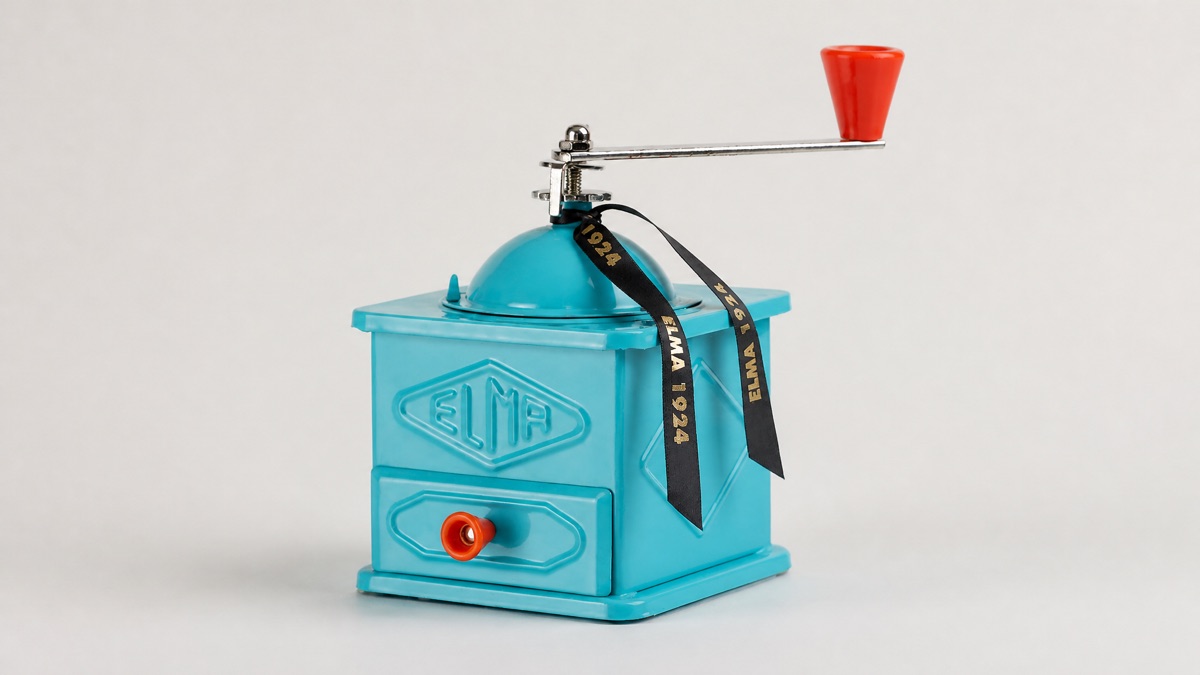
The Elma coffee grinder is a manual hand-crank mill from the Spanish brand Elma, which has made grinders since 1924. The name covers antique cast iron wheel mills and a current line of small decorative metal grinders in six colors. Both versions share a retro look built around a crank, a hopper and a drawer.
Elma calls the current models decorative and does not recommend grinding with them. The metal version offers two settings and scores 3.9 out of 5 across 108 ratings. A Zassenhaus Brasilia scores 4.4 and adjusts steplessly, so it beats the Elma as a working grinder. Elma leads only on vintage style, which is its real selling point.
Vintage cast iron Elma mills are a different case. A Model 0 in excellent condition sold for $469, and collectors prize age and sturdy iron. The verdict: the Elma is worth it as a decoration or a collectible, not as a daily grinder. The Elma suits a shelf, not a morning routine. Expect grind settings, materials and vintage models, and no paid spots.
What Is the Elma Coffee Grinder?
The Elma coffee grinder is a manual hand-crank mill from the Spanish brand Elma, founded in 1924. The name covers antique cast iron wheel mills from the 1920s to 1940s and a current line of small decorative metal grinders.
Collectors call the old design a wheel mill. It is a hand grinder with a hopper on top, a side flywheel and a drawer below.
Vintage Elma mills follow that design. They have a cast iron body and a large side wheel with a wooden handle. A wooden drawer at the base catches the ground coffee.
The current Elma grinders copy that look in sheet metal. The brand calls them a new version of its first metal grinders, which sat in thousands of homes. They are a replica-style decorative line, not the original cast iron design.
The current line comes in pink, orange, red, yellow, blue and green. Buyers choose a finish to match a kitchen or coffee corner.
Who Makes the Elma Coffee Grinder?
The Spanish brand Elma makes every Elma coffee grinder and has made grinders since 1924. The company started in the Basque Country of Spain.
Five men founded Elma, and two of them were brothers. The name joins the first letters of their last names.
Early Elma mills carry the place name Mondragón, the Spanish name for the Basque town of Arrasate. A Salamanca museum holds an Elma No. 6 grinder from the mid-20th century.
Elma was still active a century after its founding. The brand now sells tools for food professionals and home cooks, including tools for sausage making and vacuum packing.
Which Elma Coffee Grinder Models Are There?
Elma coffee grinder models include vintage cast iron wheel mills and a current range of metal and ceramic grinders. The models differ in size, finish and age.
Model 0 dates from about 1930. It is a black cast iron mill with a brown hopper lid, a wooden drawer and a wooden crank handle. The body measures 11 x 7 x 12 inches (28 x 18 x 30 cm).
Model No. 1 is a distress-red cast iron mill with a large side flywheel. It stands 42 cm (16.5 in) tall. With the handle, it measures 33 cm (13 in) wide.
Single wheel hand grinders from the 1940s also exist, with and without a drawer. Elma kept making grinders into the 1950s. A red lacquer metal model from that decade has a silver plated hand crank, a sliding lid and a removable drawer. It stands 16 cm (6.3 in) tall and weighs 516 g (1.1 lb).
The current range adds six sheet metal colors and one ceramic and wood model.
Elma Models:
| Model | Material | Size |
|---|---|---|
| Model 0 (about 1930) | Cast iron and wood | 11 x 7 x 12 in (28 x 18 x 30 cm) |
| Model No. 1 | Cast iron and wood | 42 cm (16.5 in) tall |
| Current metal model | Sheet metal | 10.5 x 10.5 x 15.5 cm (4.1 x 4.1 x 6.1 in) |
| Current ceramic model | Ceramic and wood | 12.5 x 12.5 x 17 cm (4.9 x 4.9 x 6.7 in) |
How Does the Elma Coffee Grinder Work?
The Elma coffee grinder does work by turning a hand crank that drives the grinding surfaces, and the beans crush between them. The ground coffee falls into a drawer below.
The grinding surfaces are burrs, two serrated parts that crush each bean as it passes between them. A blade grinder chops beans at random sizes instead.
Beans enter through the hopper at the top and move down to the burrs. After grinding, the coffee drops into a small drawer at the base of the body.
The crank is what moves the burrs, and the style of crank depends on the model. Vintage models turn a large side wheel with a wooden handle. The heavy flywheel keeps the crank turning smoothly. The current metal models use a crank handle instead.
The current metal models also offer two adjustment positions, fine or coarse. The setting changes how finely the grinder crushes each bean.
What Is the Elma Coffee Grinder Made Of?
The Elma coffee grinder is made of cast iron and wood in vintage models and of sheet metal in current ones. A ceramic and wood version also exists.
- Vintage: The body is cast iron. The drawer and handle are wood. The materials are cast iron, wood and metal.
- Current: The body is sheet metal.
- Ceramic: The grinder uses ceramic and wood, with a stainless steel grinding part. The unit weighs 0.8 kg (1.8 lb).
Paint on 1930s mills wears with age. Old mills often need a repaint and some polish to look their best.
Does the Elma Coffee Grinder Grind Coffee Well?
No. The Elma coffee grinder does not grind coffee well enough for daily brewing, and the maker says so. Elma describes the current models as decorative and does not recommend grinding with them.
The maker's own product pages show this. The title of the blue metal model says it does not grind coffee and is just for decoration. The ceramic model's page says its main function is decorative.
Some copy pulls the other way. One page says the new range lets buyers grind coffee and taste rich coffees again. Another page says the mills may not grind coffee perfectly.
Vintage cast iron mills are a different case. A 1930s Model 0 has a crank that works smoothly, and the wheel spins freely.
Does the Elma Coffee Grinder Have Grind Settings?
Yes. The Elma coffee grinder has two grind settings, fine and coarse, on the current metal models. The ceramic and vintage models list no setting count.
Two settings limit how much a brewer can adjust. Espresso, pour over and French press each need a different grind size, and two positions cannot cover all three well.
The fine and coarse positions work for a quick, rough grind. A precise cup needs a grinder with many more steps.
How Big Is the Elma Coffee Grinder?
The Elma coffee grinder is not big, and the metal version measures 10.5 x 10.5 x 15.5 cm (4.1 x 4.1 x 6.1 in). The metal grinder weighs 0.5 kg (1.1 lb).
The ceramic and wood model is a little larger. It measures 12.5 x 12.5 x 17 cm (4.9 x 4.9 x 6.7 in). It also weighs more, at 0.8 kg (1.8 lb).
Vintage mills run larger than both modern versions. Model 0 measures 11 x 7 x 12 inches (28 x 18 x 30 cm). Model No. 1 stands 42 cm (16.5 in) tall.
What Are the Benefits of the Elma Coffee Grinder?
The benefits of the Elma coffee grinder are a vintage look, a wide color range and collector appeal. Style is the main strength, not grinding power.
- Vintage styling in sheet metal, ceramic or cast iron
- Six finishes in the current range
- Low weight and a small footprint in the metal model
- Collector interest in the early cast iron mills
The current range comes in six colors, so a buyer can match a kitchen. Elma calls the grinders a treasure for collectors and a gift for coffee lovers.
The metal grinder weighs 0.5 kg (1.1 lb) and covers about 10.5 cm (4.1 in) square. Vintage mills reward collectors with sturdy cast iron bodies.
Does the Elma Coffee Grinder Work as Decoration?
Yes. The Elma coffee grinder works as decoration in a kitchen or coffee corner, and Elma sells it for that purpose.
The metal line comes in six finishes: pink, orange, red, yellow, blue and green. The brand pitches the grinders as vintage pieces for homes and as gifts for coffee lovers.
Vintage cast iron mills suit rustic kitchens and coffee shops. Their red or black paint and wooden drawers give that classic look.
What Do Elma Coffee Grinder Reviews Say?
Elma coffee grinder reviews put the metal model at 3.9 out of 5 stars across 108 ratings. The score sits in the middle of the range.
The ceramic and wood model scores higher, at 4.2 out of 5. That score rests on only 15 ratings. A small sample can shift quickly with a few new reviews. The number is less stable than the metal model's.
The metal model's score comes from Amazon ratings. Vintage Elma mills have no shared rating at all. They sell one at a time through eBay, Etsy and Todocoleccion, so each piece stands on its own condition.
What Do Owners Like About the Elma Coffee Grinder?
Owners like the Elma coffee grinder for its looks, its colors and its gift appeal. The design is the clearest selling point.
Vintage cast iron mills draw praise for a sturdy build. A 1930s Model 0 still has a crank that works smoothly.
The ceramic model earns 4.2 out of 5 stars. That is the higher of the two current scores.
What Do Owners Dislike About the Elma Coffee Grinder?
Owners dislike the Elma coffee grinder mainly for weak grinding, since the maker sells the current models as decoration.
The metal model offers only two settings, fine and coarse. Brew methods need different grind sizes, and two settings cannot cover them.
Vintage mills carry other flaws. Paint wears off over the years, so old mills often need a repaint and some polish.
Vintage mills also cost a lot. A Model 0 in excellent condition sold for $469.
How Does the Elma Coffee Grinder Compare to Zulux and Zassenhaus?
The Elma coffee grinder compares poorly with the Zulux and the Zassenhaus Brasilia as a working grinder. Elma leads only on vintage style.
The Zulux Vintage Manual Coffee Grinder also has a vintage look, and it uses ceramic conical burrs. Burrs are the toothed parts that crush the beans. Customers rate it 3.9 out of 5 across about 940 ratings. That matches the Elma metal model, which also scores 3.9 out of 5 but across only 108 ratings.
The Zassenhaus Brasilia has a conical burr made of hardened tool steel. Its stepless adjustment lets the user pick any setting from coarse to powder-fine. It holds 50 g (1.8 oz) of beans and weighs 0.81 kg (1.8 lb). Buyers rate it 4.4 out of 5 across 924 ratings.
The Hario Mini Mill Plus reaches the same 4.4 out of 5. It holds 24 g (0.8 oz) and uses ceramic burrs. Its score comes from 8,292 ratings, far more than any other grinder here.
Rating Comparison:
| Grinder | Rating | Ratings |
|---|---|---|
| Elma metal model | 3.9 out of 5 | 108 |
| Zulux Vintage Manual | 3.9 out of 5 | about 940 |
| Zassenhaus Brasilia | 4.4 out of 5 | 924 |
| Hario Mini Mill Plus | 4.4 out of 5 | 8,292 |
Zassenhaus has made manual coffee mills since 1867. Elma has made grinders since 1924.
Should You Buy a Zassenhaus Instead of the Elma Coffee Grinder?
Yes. A Zassenhaus is the better buy than the Elma coffee grinder for anyone who brews coffee.
The Brasilia is built for filter coffee and espresso with a hand crank. The Elma is built to look good on a shelf.
The Brasilia adjusts steplessly, so the grind can match any brew from espresso to French press. Each brew method needs a different grind size, and stepless adjustment allows any size in between.
The Elma still wins on style. A buyer who wants a colorful vintage piece, not a daily grinder, loses nothing by choosing it.
How Much Does the Elma Coffee Grinder Cost?
The Elma coffee grinder costs little in its current form and more in its vintage form. The current metal range sits at the low end of decorative grinders.
A vintage red and black single wheel Elma sells for $129. A Model 0 in excellent condition sold for $469.
Vintage prices depend on model, condition and finish. Original paint and a working crank raise the price.
The current metal range costs far less than vintage Elma mills. A Zassenhaus Brasilia sells for about $99.50. A grinder that grinds well costs more than a decorative one.
Where Can You Buy the Elma Coffee Grinder?
A buyer can buy the Elma coffee grinder from Amazon for current models and from eBay, Etsy and antique stores for vintage ones.
Current models appear on Amazon stores in the United States, the United Kingdom, Germany, France and other countries.
eBay and Etsy carry vintage Elma grinders, and so do antique stores.
Spanish marketplaces such as Todocoleccion list many old Elma mills. Antique dealers in Europe and the United States also stock them.
Is a Vintage Elma Coffee Grinder Worth Collecting?
Yes. A vintage Elma coffee grinder is worth collecting for its age, its sturdy cast iron body and its model variety.
Cast iron mills date from about the 1920s to the 1940s. Lacquered metal models followed in the 1950s. A mill with its original red finish and aged patina holds its appeal.
A Model 0 with a smooth crank and a freely spinning wheel is complete and usable. A working crank and an intact wooden drawer matter most.
Is the Elma Coffee Grinder Worth It?
Yes. The Elma coffee grinder is worth it as a decoration and a collectible but not as a daily coffee grinder.
The metal model gives a bright vintage look at a low price. Elma itself says the models are for decoration.
Vintage mills reward collectors. Age and sturdy cast iron keep their appeal.
Decorators, gift buyers and collectors get the most from the Elma. Collectors look for cast iron Model 0 and Model No. 1 mills with an intact wooden drawer and a smooth crank.
Pros:
- Vintage look in six colors
- Small, light metal body
- Collector appeal in cast iron mills
Cons:
- Weak grinding, by the maker's own words
- Only two grind settings
- High prices for vintage mills
Anyone who wants fresh coffee every morning needs a purpose-built grinder.
Who Should Skip the Elma Coffee Grinder?
Daily brewers, espresso drinkers and travelers skip the Elma coffee grinder in favor of a purpose-built hand grinder.
Buyers who want a vintage look and a working grinder pick the Zassenhaus Brasilia or the Zulux instead.
Who Should Skip It:
- Daily brewers
- Espresso drinkers
- Travelers
Espresso needs fine, repeatable adjustment. Two settings, fine and coarse, cannot deliver that.
Travelers need a grinder built for a bag. The Hario Mini Mill Plus holds 24 g (0.8 oz) and uses ceramic burrs.
Odradeks Coffee House is reader-supported. If you buy through a link on this page, we may earn a small affiliate fee at no extra cost to you.