Eilong Manual Coffee Grinder Review: Is It Worth It?
Hello, I'm Sam, and I write these reviews between orders. We close early on Fridays for Shabbat, so our Friday rush is huge.
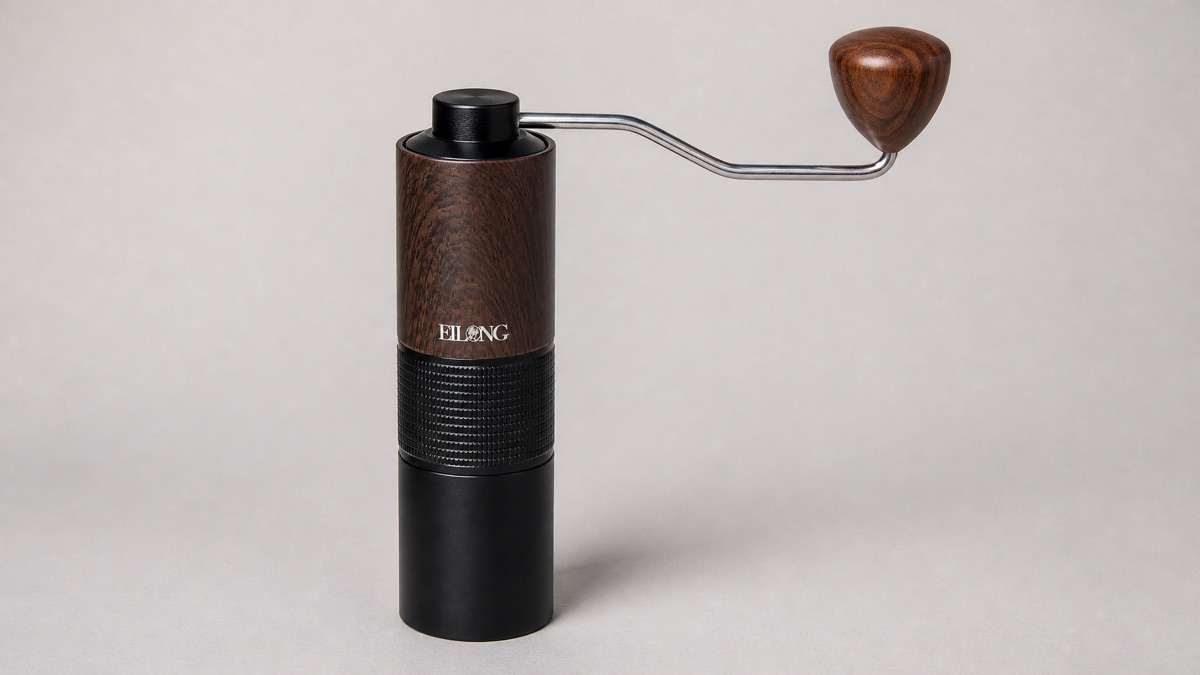
The Eilong manual coffee grinder is a hand-crank grinder with an aluminum alloy body and 5-axis CNC stainless steel burrs. Eilong sells it as the Professional Hand-Crank Coffee Grinder for $54.31. A side crank turns the burrs, so the grinder needs no power and suits one or two cups.
Eilong offers 9 to 30 grind settings and a body that comes fully apart for cleaning. The maker claims results comparable to electric grinders. No independent test backs that claim. Eilong publishes no burr diameter, hopper capacity, step size or warranty term, and only one review exists.
On its specs the grinder suits pour over and other filter brewing, but not espresso. The price sits $25 below the Timemore C2s. I answer 8 common questions, from grind settings to daily cleaning. No sponsor paid.
What Is the Eilong Hand Grinder?
The Eilong hand grinder is a manual coffee grinder with an aluminum alloy body and stainless steel burrs. Eilong sells it as the Professional Hand-Crank Coffee Grinder. A side crank turns the burrs by hand, so the grinder needs no power.
Those burrs make it a burr grinder. Two steel burrs crush the beans to one size, where a blade grinder chops them unevenly. Eilong does not state whether the burrs are conical or flat.
Eilong shows the grinder in brown, gold and silver finishes under the SKU E-OI001-32-B. Eilong pitches it at all brewing methods and claims results comparable to electric grinders. Eilong names no electric grinder as the reference.
Two other Eilong products are separate from this one. The wooden walnut version and the mini grinder in the Eilong travel set are not covered here. This review covers the Professional Hand-Crank Coffee Grinder.
Hand grinders suit one or two cups at a time. Electric grinders suit bigger batches and faster mornings. The Eilong grinder belongs in the first group.
Who Makes the Eilong Grinder?
Eilong makes the grinder as an original design for its own teaware and coffeeware label. The Taiwanese brand also sells pour-over drippers, tea sets and travel brewing sets.
The maker of the parts is a separate question from the owner of the design. A Pinkoi listing for the wooden version says the grinder is machine-made in mainland China. Pinkoi is a design marketplace that serves Taiwan. Neither Pinkoi nor Eilong names the factory.
Eilong's own store invites buyers to ask about the country of origin. The brand leaves that detail to direct questions. Pinkoi lists the product type as original design. No source links the grinder to another maker's model.
Eilong's range also holds a second grinder. The Eilong travel brewing set includes a mini grinder with a 402 stainless steel core. The mini grinder is a smaller, separate product from the full-size hand grinder.
How Does the Eilong Hand Grinder Work?
The Eilong hand grinder works by turning a hand crank that drives CNC-cut stainless steel burrs. The crank replaces the motor of an electric grinder. Eilong says the burrs give uniform grinding with low heat.
The burrs crush the beans between them, so the gap between the burrs sets the particle size. A tight gap gives a fine grind. A wide gap gives a coarse grind. Eilong does not say whether the adjustment is stepped or stepless, or where the dial sits.
Particle size also depends on how steadily the burrs spin. A wobbling axle spreads particle sizes, so shaft stability matters on any hand grinder. A stabilizing bearing shaft holds the burr axis steady. Eilong says the shaft keeps the grind smooth and even.
The crank turns the burrs slowly, so little friction heat reaches the beans. This explains the low heat claim, and most hand grinders share it. The slow pace is the cost of the design. Hand grinding trades speed for quiet and low cost.
What Burrs Does the Eilong Grinder Use?
The Eilong grinder uses 5-axis CNC stainless steel burrs made from food-grade SUS420 steel. Eilong calls the steel corrosion-resistant, heat-resistant and built to last.
SUS420 is the Japanese name for AISI 420 stainless steel. The grade is martensitic, so heat treatment hardens it to about 50 HRC. The Sweet Maria's Easy Adjust hand grinder uses the same 420 steel for its conical burrs.
The CNC label describes how the burrs are made. The maker machines each burr instead of casting it in a mold. Eilong does not say how large the burrs are or what shape they have. Other grinders show what that detail looks like. The Timemore Chestnut C2s uses 38 mm (1.5 in) burrs. The 1Zpresso J uses 48 mm (1.9 in) conical burrs.
Steel is not the only burr material. Ceramic burrs do not corrode and cost less. Ceramic grinds slower, spreads particle sizes wider and chips if dropped. Steel burrs beat small ceramic sets on speed and particle evenness.
How Many Grind Settings Does the Eilong Grinder Have?
The Eilong grinder offers 9 to 30 adjustable grind settings. Eilong calls the range right for both beginners and pros.
The range leaves two questions open. Eilong does not say whether it means 21 steps from 9 to 30 or a different scale. The product page also omits the step size in microns. That is the gap in grind size between one setting and the next.
Step size matters because it decides how finely a grind can be tuned. It, not burr size, separates an espresso-capable hand grinder from a filter-focused one.
For comparison, two other hand grinders list their step sizes. The 1Zpresso J has 30 clicks at roughly 25 microns per click. The KINGrinder K6 has 60 clicks per turn at 16 microns per click. The K6 therefore moves in smaller steps than the J. The Eilong grinder has no published step size to set beside them.
Adjustment compared:
| Grinder | Settings | Step size |
|---|---|---|
| Eilong grinder | 9 to 30 levels | Not published |
| 1Zpresso J | 30 clicks | About 25 microns |
| KINGrinder K6 | 60 clicks per turn | 16 microns |
What Is the Eilong Hand Grinder Made Of?
The Eilong hand grinder is made of aluminum alloy, SUS420 stainless steel and wood. Eilong calls the aluminum body durable, lightweight and sleek.
The aluminum body holds the burrs, and SUS420 steel forms the burrs themselves. Eilong does not name the aluminum grade, the surface finish or the material of the catch cup and shaft.
The body measures 178 by 170 mm (7.0 by 6.7 in). The wooden version weighs 500 g (1.1 lb) and uses walnut wood with 420 stainless steel and aluminum alloy. Eilong gives no weight for the metal version.
Materials at a glance:
| Part | Material | Detail |
|---|---|---|
| Body | Aluminum alloy | 178 by 170 mm (7.0 by 6.7 in) |
| Burrs | SUS420 stainless steel | 5-axis CNC machined |
| Wooden version | Walnut wood | 500 g (1.1 lb) |
| Catch cup and shaft | Not stated | Eilong names no material |
For scale, the aluminum Timemore Chestnut C2s weighs 1.5 lb (680 g). Aluminum bodies scratch under rough handling, so a travel pouch protects the finish.
How Do You Clean the Eilong Grinder?
The Eilong grinder comes fully apart for cleaning, with no hard-to-reach spots. Eilong sells the easy takedown as a core feature.
Stale oils build up on burrs over time. A grinder that opens fully lets each part be reached and cleaned. That makes regular cleaning realistic for a daily grinder. Eilong does not say whether a cleaning brush comes in the box.
Eilong gives the two steps below as its own care note. Remove the bearing before washing the other parts. Dry every part fully before reassembly. The drying step matters because 420 steel trades some corrosion resistance for hardness.
How Well Does the Eilong Hand Grinder Grind?
The Eilong hand grinder grinds with stainless steel burrs that Eilong says give uniform, low-heat grinding. Eilong claims results comparable to electric grinders.
That claim rests on the maker's word alone. Eilong published no particle-size data, no grind time and no hopper capacity for the grinder.
Two tests could check the uniformity claim: a Kruve sifter, which sorts grounds by particle size, or a side-by-side cup test. Neither test exists for the Eilong grinder. The specs do list steel burrs on a stable axle, and that design usually grinds evenly.
Speed is also unconfirmed. Larger burr sets finish a 20 g (0.7 oz) filter dose in 30 to 40 seconds. However, Eilong publishes no grind time. Fine grinds take more effort than coarse grinds on every hand grinder.
Is the Eilong Grinder Good for Espresso?
No. The Eilong grinder is not good for espresso, because Eilong publishes no step size. Espresso dial-in needs that figure.
Step size is how much the grind changes with each click of the dial. Espresso-focused hand grinders use single-digit microns per click.
All-rounder grinders use roughly 16 to 20 microns per click. The KINGrinder K6 is one example, and it handles espresso at 16 microns per click.
Eilong gives 9 to 30 levels, but it gives no micron figure. Without that number, a buyer cannot tell how much each level changes the grind. Fine espresso grinding also takes real effort on any hand grinder.
Is the Eilong Grinder Good for Pour Over?
Yes. The Eilong grinder is a good match for pour over on its specs. Pour over needs a medium grind with even particles.
Steel burrs suit that job. The 1Zpresso J shows the point with remarkable consistency at medium settings.
Eilong says the grinder suits all brewing methods. That list includes pour over, AeroPress and French press. French press and cold brew need a coarse grind, which needs no fine steps.
What Do Eilong Hand Grinder Reviews Say?
Eilong hand grinder reviews say very little, because few reviews exist. The one Pinkoi listing for the wooden version shows 1 review.
One review is too few to rate a grinder. A single data point cannot show grind consistency, handle comfort or bearing life. A buyer learns almost nothing about how the grinder performs.
No independent test of the Eilong grinder turned up for grind quality, speed or durability. Without outside testing, every claim about the grinder comes from Eilong's own pages.
Each claim therefore stays the maker's word, not a measurement. Tested rivals such as the Timemore C2s carry measured results, which the Eilong grinder lacks.
What Are the Eilong Grinder's Weak Points?
The Eilong grinder's weak points are missing specs and missing test data. Eilong publishes no burr diameter, no hopper capacity, no microns per step and no warranty term on the product page.
Retention, static, burr wobble and crank effort have no published test. Replacement burrs and spare parts do not appear on the product page.
Missing specs:
- Burr diameter and burr shape
- Hopper capacity
- Microns per step
- Warranty and return term
- Replacement burrs and spare parts
Eilong's store flags the brown finish as backordered, so stock varies. The store also warns that import tariffs can apply to packages.
Aluminum bodies scratch under rough handling. The wooden version adds weight at 500 g (1.1 lb).
How Does the Eilong Hand Grinder Compare With Rivals?
The Eilong hand grinder compares with rivals on build and burr material but not on proven results. Timemore, 1Zpresso and KINGrinder set the benchmarks for budget and midrange hand grinders.
Each of those brands has published reviews behind its grinders. Eilong has none. Prices run from $54.31 for the Eilong grinder to $79 for the Timemore C2s.
Burrs and adjustment compared:
| Grinder | Burrs | Step size |
|---|---|---|
| Eilong grinder | CNC SUS420 steel, diameter not published | Not published |
| 1Zpresso J | 48 mm (1.9 in) conical steel | About 25 microns |
| KINGrinder K6 | Stainless steel, dual bearings | 16 microns |
The 1Zpresso Q-Air costs $60. The 1Zpresso J-Ultra costs $199. The Comandante C40 MK4 costs about $300. Eilong prices its grinder below all of them.
Price ladder:
- Eilong grinder: $54.31
- 1Zpresso Q-Air: $60
- Timemore Chestnut C2s: $79
- 1Zpresso J-Ultra: $199
- Comandante C40 MK4: about $300
Eilong Grinder vs Timemore C2s: Which Is Better?
The Eilong grinder is the less proven pick against the Timemore C2s, which is better tested. The C2s costs $79 and holds 30 g (1.1 oz) of beans.
The C2s uses 38 mm (1.5 in) CNC stainless steel burrs. Burrs are the metal parts that crush the beans. Eilong uses CNC stainless steel burrs too, but it publishes no diameter, no capacity and no step size. A buyer can check the C2s numbers. A buyer cannot check the Eilong numbers.
Timemore ships the C2s with a bag and a brush. Eilong lists 9 to 30 grind levels, which is a range but not a step size. The Eilong grinder costs $24.69 less than the C2s.
Eilong Grinder vs 1Zpresso J: Which Is Better?
The 1Zpresso J is the better documented choice, and the Eilong grinder is the unproven one. The J earns a best-for-pour-over title from reviewers.
The J has 48 mm (1.9 in) conical steel burrs, which are the toothed parts that crush the beans. It has 30 clicks at roughly 25 microns each. A rubber sleeve adds grip, and the parts come apart for cleaning.
Price is the other half of the comparison. The J-Ultra costs $199. Eilong sits far below that price, but it lacks the step size and burr data. A buyer can check what the J does. For Eilong, the same checks cannot be made.
How Much Does the Eilong Hand Grinder Cost?
The Eilong hand grinder costs $54.31 on Eilong's own store. The wooden walnut version lists at $72.22 on Pinkoi.
The Eilong store showed $54.31 in November 2026, and the store lists prices without taxes. The grinder alone falls below the $119 free-shipping threshold, so shipping adds to the cost.
The store also notes that import tariffs can apply to packages. Eilong's product page gives no return term and no warranty term.
Other hand grinders put this price in context. The Timemore Chestnut C2s costs $79, and the 1Zpresso Q-Air costs $60. The Eilong price sits in the budget tier of hand grinders.
Is the Eilong Grinder Worth the Price?
Yes. The Eilong grinder is worth the price if the claimed specs hold up. The price sits $25 below the Timemore C2s.
Aluminum bodies and stainless steel burrs also appear on the $79 Timemore C2s. The Eilong build matches what the budget tier offers.
The money risk is small at $54.31. Eilong's product page gives no warranty term, so a faulty unit has no published remedy. That gap cuts the value.
Where Can You Buy the Eilong Grinder?
Shoppers can buy the Eilong grinder where Eilong sells it, on its own web store and on Pinkoi. The Pinkoi listing covers the wooden version.
The Eilong store runs a wholesale mode. It also ships to the US, with tariff notices shown for US orders.
No other retailer listing for the Professional Hand-Crank model turned up.
Is the Eilong Hand Grinder Worth It?
Yes. The Eilong hand grinder is worth it for a budget buyer who brews filter coffee and accepts unproven claims. The metal body, steel burrs and easy takedown fit that buyer.
Pros come from the specs. The body is aluminum alloy, the burrs are stainless steel, and the grinder comes apart for cleaning. The price of $54.31 sits below the Timemore C2s at $79.
Pros:
- Aluminum alloy body
- 5-axis CNC stainless steel burrs
- Full takedown for cleaning
- Price of $54.31, below the Timemore C2s
Cons come from the gaps. Only 1 review exists, and no independent test covers grind quality, speed or durability. Eilong publishes no burr diameter, hopper capacity, step size or warranty term.
Cons:
- One review and no independent test
- No published burr diameter, capacity or step size
- No warranty or return term
- Backordered brown finish and possible import tariffs
New data would change the verdict. An independent test, a stated step size or a warranty term would raise it. A price close to the C2s would lower it. Buyers who want proof pick the C2s, the Q-Air or the J.
Who Should Skip the Eilong Grinder?
Espresso drinkers, large-batch brewers and warranty seekers are the buyers who should skip the Eilong grinder. Each group needs data the maker does not publish.
Large batches take too long by hand. Hand grinders suit one or two cups. Buyers who want a stated burr size, hopper capacity or step size also look elsewhere.
Odradeks Coffee House is reader-supported. If you buy through a link on this page, we may earn a small affiliate fee at no extra cost to you.