Concordia Espresso Machine Review: Is It Worth It?
Hey there, Sam here, with a fresh pot brewing. La Marzocco launched the Linea Mini for homes in 2015, and I have followed super automatic espresso machines since.
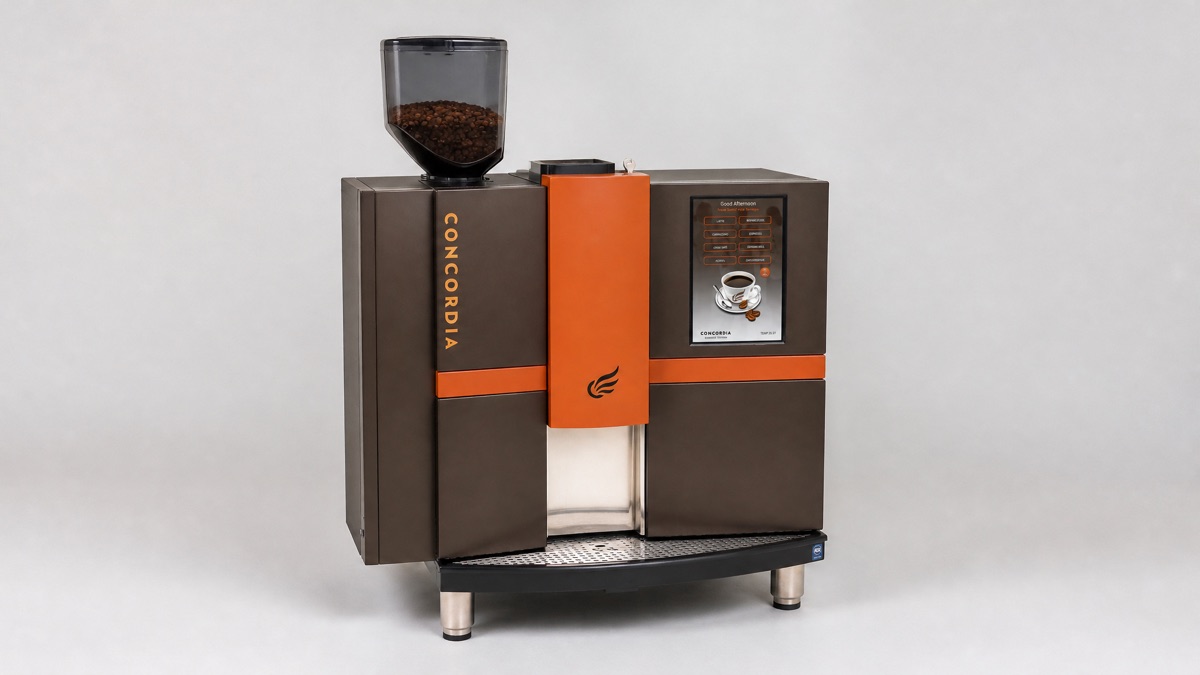
A Concordia espresso machine is a commercial super automatic machine that grinds beans, brews espresso and steams milk at one touch. Concordia Beverage Systems has built the machines in the Seattle area since 1989, and The Middleby Corporation owns the brand.
The Xpress Touch makes 150 cups per hour, and the Integra makes 100. The Ascent Touch brews black coffee in under 30 seconds, and the Savante adds microfoam milk. Older units log 40,000 shots with few repairs, but dial-in takes work and cleaning is daily.
Concordia publishes no US list price. The Savante MF starts at $28,175, and used older units sell for $1,000 to $5,000. The sections below cover specs, power needs, maintenance, cost and the best model for each kind of business. Coming up: specs, maintenance and cost. No brand can buy my verdict.
What Is a Concordia Espresso Machine?
A Concordia espresso machine is a commercial super automatic bean-to-cup machine that grinds beans, brews espresso and steams milk at one touch. Concordia Beverage Systems builds the machines for businesses that sell coffee drinks without a dedicated barista.
Concordia has engineered and built its machines in the Seattle area since 1989. The company designs and assembles every machine at its Redmond, Washington headquarters.
The Middleby Corporation owns Concordia. NSF tests and certifies the machines for quality and safety.
The Middleby Corporation bought Concordia Coffee Company in September 2014. Super automatic means the machine performs the grinding, dosing, tamping, brewing and milk steaming that a barista does by hand on a semi-automatic machine.
On average, more than 130 drinks come out of Concordia equipment every minute. The machines run in thousands of convenience stores, hotels, restaurants and offices.
Which Concordia Espresso Machine Models Exist?
The Concordia espresso machine models are Xpress and Xpress Touch, Integra, Ascent Touch and Savante. Xpress is the flagship line for busy sites, and Integra is the lower-volume line.
- Xpress and Xpress Touch
- Integra
- Ascent Touch
- Savante
The Xpress line has the X0 and XT0 base models. The X6 and XT6 add a side-mounted flavor system.
The Integra line has three models. Integra 0 is the base model, Integra 1 adds chocolate sauce and Integra 4 adds four flavors.
The Ascent Touch brews black coffee only. The Savante MF adds microfoam milk, and the Savante MFF adds flavors on top of that.
Franke, Schaerer and Eversys build rival commercial bean-to-cup machines. The Savante runs on Synesso technology, which adds four-stage pressure profiling and stable brew temperature.
How Does a Concordia Espresso Machine Work?
A Concordia espresso machine works by grinding, dosing, brewing and frothing milk after one button press. A finished drink arrives in under 25 seconds.
The Xpress holds two bean grinders with a 2-pound (0.9-kilogram) hopper each. An onboard refrigerator stores two 1-gallon (3.8-liter) milk containers.
The Xpress Touch adds a touchscreen. Operators set the dose, extraction pressure, temperature and milk froth level on the screen. The older Xpress uses touchpad controls for the same settings.
The Ascent Touch brews with the patented Accelerated Low Pressure System, or A.L.P.S. The system makes black coffee in under 30 seconds and meets the Specialty Coffee Association Gold Cup standard.
The Savante pours a 16-ounce (473-milliliter) drink in under 30 seconds. The Savante offers two types of milk with microfoam, and its onboard cold storage holds two 1-gallon (3.8-liter) containers. Concordia built the Savante for either customer self-service or staff operation.
What Does the EspressJet Flavor System Do on a Concordia Espresso Machine?
The EspressJet flavor system infuses up to 6 flavors into drinks on the Concordia Xpress X6 and XT6 espresso machine models. The patented unit mounts on the side of the machine.
- Vanilla
- Sugar-free vanilla
- Hazelnut
- Chai
- Caramel
- Chocolate sauce
The six flavors are vanilla, sugar-free vanilla, hazelnut, chai, caramel and chocolate sauce. Together they create more than 1,000 flavor profiles.
The Integra line has a smaller version. Integra 1 offers chocolate sauce only, and Integra 4 offers chocolate, vanilla, caramel and chai for up to 250 drink profiles.
The flavor system needs its own upkeep. The Xpress manual covers flavor storage, replacing empty flavor boxes and chocolate sauce.
What Are the Specs of a Concordia Espresso Machine?
Concordia espresso machine specs vary by line, from 100 cups per hour on the Integra to 150 cups per hour on the Xpress. The Ascent Touch brews one cup of black coffee in under 30 seconds.
| Line | Output | Hoppers |
|---|---|---|
| Xpress Touch | 150 cups per hour | Two 2-lb (0.9-kg) |
| Integra | 100 cups per hour | Two 2.5-lb (1.13-kg) |
| Ascent Touch | Under 30 seconds per cup | 2 to 4 |
| Savante MF | 16 oz (473 ml) in under 30 seconds | Two 2-lb (0.9-kg) |
The Xpress Touch makes 150 standard 12-ounce (350-milliliter) cappuccinos per hour. The Integra makes 100 cups per hour.
The Integra hoppers hold 2.5 pounds (1.13 kilograms) of beans each. The Integra refrigerator holds one 1-gallon (3.8-liter) milk container.
The Ascent Touch serves four standard sizes: 12, 16, 20 and 24 ounces (355, 473, 592 and 711 milliliters). Carafes and travel mugs run from 24 to 96 ounces (0.7 to 2.8 liters).
The Savante MF measures 18 inches wide, 17.5 inches deep and 32.5 inches tall (46 x 44 x 83 centimeters) and weighs 389 pounds (176 kilograms). The Savante runs on 200 to 240 volts, holds two 2-pound (0.9-kilogram) hoppers and has a 10.1-inch (25.7-centimeter) touchscreen.
New Concordia Savante machines carry a 1-year parts and labor warranty.
How Much Space and Power Does a Concordia Espresso Machine Need?
A Concordia espresso machine needs 200 to 240 volts of power and 12.6 by 27.8 inches of space. Those figures describe the Ascent Touch.
The Ascent Touch measures 12.6 inches wide, 27.8 inches deep and 38.2 inches tall (32 x 71 x 97 centimeters) and weighs 125 pounds (57 kilograms). The footprint is compact for a bean-to-cup unit.
The Ascent Touch also needs utilities at the site. It runs on 200 to 240 volts at 30 amps. The water line needs 30 to 100 psi (2 to 6.9 bar). The machine also needs a 0.75-inch (19-millimeter) indirect drain hose.
The older 2000 and 2500 series takes more room. Its cabinet measures about 25 inches wide, 25 inches deep and 42 inches tall (64 x 64 x 107 centimeters).
The older series needs 220 volts at minimum. Internal settings can adjust the machine for higher voltage.
What Do Concordia Espresso Machine Reviews Say?
Concordia espresso machine reviews describe a reliable, easy-to-run machine that few independent reviewers have tested. Most pages online are dealer listings, manuals and used-machine ads.
A food-service executive at Bon Appétit called Concordia machines legendary and bullet-proof in 2016. The comment came in the maker's own press release.
Long-term use backs the praise. One owner ran two older units around the clock, one with 40,000 shots and one with over 9,000. Repairs covered a few leaks and one pressure switch.
Daily use is simple. One button press produces a latte, and the menu sets three cup sizes. The machines also make cappuccino, espresso, americano and hot water for tea.
What Are the Common Complaints About the Concordia Espresso Machine?
The common complaints about the Concordia espresso machine center on dial-in effort, the small 1000 and 1500 models, and the size of older units. The older 2000 and 2500 series draws most of the praise.
- Dial-in takes about 5 pounds (2.3 kilograms) of beans
- The 1000 and 1500 models struggle to make an acceptable drink
- Older cabinets are large and have many parts
Dialing in takes work. The older machines can use 5 pounds (2.3 kilograms) of beans to set up. Drinks turn sour when shot time drifts, so the operator checks it daily.
The 1000 and 1500 models disappointed one owner. Both are 115-volt, single-boiler, single-grinder machines, and neither produced an acceptable drink. The owner sold the unit.
Older machines have many parts. Some cost little to replace, and others cost more. The cabinet is large for tight counters.
How Hard Is Concordia Espresso Machine Maintenance?
Concordia espresso machine maintenance is light on the Ascent Touch and heavier on the Xpress with milk and flavor systems. The Ascent Touch needs 4 minutes of daily maintenance that anyone can do.
The Xpress asks for more because milk and flavor systems need regular cleaning. Its 42-page Xpress 0 manual lists daily cleaning, monthly cleaning and preventive maintenance procedures. The manual also covers operational messages, error messages and troubleshooting.
Owners who need more help can turn to Concordia's resources page, which hosts technical documents and FAQs. When a part wears out, a Buy Parts link on the maker's site sells replacement parts.
The Savante takes most of the work out of cleaning. It cleans itself with inCLEAN automatic cleaning, which covers both the coffee and milk systems. The operator swaps a cartridge every 3 weeks, and the system replaces cleaning tablets.
Open Kitchen software from Powerhouse Dynamics helps once a business runs more than one machine. The software tracks machine performance and sends maintenance alerts. It also monitors conditions at every location.
How Often Does a Concordia Espresso Machine Need Cleaning?
A Concordia espresso machine needs cleaning every day, with extra monthly procedures on the Xpress. The Xpress manual separates the daily routine from the monthly routine.
The milk system needs the most care. The built-in refrigeration unit and milk lines handle perishable milk. A Concordia technician writes that a clean machine is a happy customer.
Busy machines need a morning check as well. The owner of two older units checks shot time every morning because the machines run all day.
How Much Does a Concordia Espresso Machine Cost?
A Concordia espresso machine costs from a few hundred dollars per month on a lease to over $30,000 to buy. Concordia publishes no US list price, so buyers request a quote.
Concordia launched Plan Zero in July 2016. The monthly fee was $299 for the Ascent, $599 for the Integra and $699 for the Xpress.
The plan covered installation, preventive maintenance and repairs. A 90-day profit guarantee came with it, and the plan was built to pay for itself at 6 to 10 drinks per day.
One dealer lists five Concordia models, and the top price is $31,717. Used older 2000 and 2500 units sold for $1,000 to $5,000 in 2013.
The Savante MF starts at $28,175 on the Middleby online shop.
| Line | Plan Zero monthly fee (2016) |
|---|---|
| Ascent | $299 |
| Integra | $599 |
| Xpress | $699 |
Is a Concordia Espresso Machine Worth the Price?
Yes. A Concordia espresso machine is worth the price for sites that sell enough drinks to use its speed. The Xpress makes 150 cups per hour, so a busy site fills that capacity.
A fast machine pays off through labor. The maker says the machines reduce labor and cost of goods. Fewer staff hours spent on each drink lowers the cost of every cup sold. The 2016 plan paid for itself at only 6 to 10 drinks per day.
Speed only helps when customers line up for it. A low-volume site pays for capacity it never uses. The Integra makes 100 cups per hour, which suits a smaller crowd.
The exact cost is hard to pin down. No public US list price exists, and the 2016 monthly figures are old. A current quote replaces them.
Who Should Avoid a Concordia Espresso Machine?
Home users, craft cafes and small-counter shops should avoid a Concordia espresso machine. The machines target commercial sites with steady drink volume.
The following are the three kinds of buyers who should avoid one, each for a different reason:
- Home users: Home kitchens rarely have the power. A Concordia needs 200 to 240 volts, a plumbed water line and a drain. The Ascent Touch weighs 125 pounds (57 kilograms). The Savante MF weighs 389 pounds (176 kilograms), so a standard kitchen counter cannot hold it.
- Craft cafes: Craft cafes sell handmade espresso. A one-button machine replaces the barista, which defeats that goal.
- Small-counter shops: Small counters cannot host the bigger models. The older 2500 stands about 42 inches (107 centimeters) tall and 25 inches (64 centimeters) wide.
Steady drink volume, the right power and water, and enough space are what make a site a good fit.
Is a Concordia Espresso Machine Good for Home Use?
No. A Concordia espresso machine is not a good fit for home use. Concordia builds the machines for convenience stores, offices, cafeterias, healthcare sites, restaurants and hotels.
The utility needs rule out most homes. The Ascent Touch needs a 200 to 240 volt, 30-amp circuit. It also needs a water line with 30 to 100 psi (2 to 6.9 bar) of pressure. It needs a drain hose too.
Size is a second problem for a home. The Ascent Touch stands 38.2 inches (97 centimeters) tall and weighs 125 pounds (57 kilograms).
Where to Buy a Concordia Espresso Machine?
Buyers can buy a Concordia espresso machine through Concordia sales representatives or restaurant-equipment dealers. The maker's site has a Get a Quote button and a financing page.
Dealers list the machines too. Chefsdeal, Ckitchen and Chrane Foodservice carry Concordia models.
The Middleby online shop lists the Savante MF and MFF directly.
Parts have their own channel. The maker's site has a Buy Parts link, and parts dealers publish troubleshooting guides for the XpressTouch.
Can You Buy a Used Concordia Espresso Machine?
Yes. Buyers can buy a used Concordia espresso machine, and older units appear on resale sites and coffee forums. Used units are the only low-cost route.
Used prices run from $1,000 to $5,000 for the older 2000 and 2500 series. Supply is thin, though. A used-gear marketplace lists the Elite 1500S, 2500S and XT6 with none for sale at the time.
Closed businesses feed the used market. One forum seller bought two Xpress 0 units from a local company that went out of business.
Is the Concordia Espresso Machine Worth It?
Yes. The Concordia espresso machine is worth it for businesses that need fast milk drinks without a barista. The Xpress makes 150 cups per hour, and NSF certifies the machines.
The strengths are clear. One-touch grind, brew and steam cuts labor. Older units log 40,000 shots with few repairs.
The weaknesses are just as clear. The price is commercial, the power need is 220 volts, and cleaning is daily. Independent reviews are rare, so a trial or demo is wise.
Which Concordia Espresso Machine Model Fits Which Business?
Each Concordia espresso machine model fits a different business based on drink volume and drink type.
| Model | Best fit |
|---|---|
| Xpress Touch | 150 milk drinks per hour |
| Integra | Low to medium volume |
| Ascent Touch | Fast black coffee |
| Savante | Microfoam milk drinks |
The Xpress Touch fits busy sites that need 150 milk drinks per hour. The Integra fits low to medium volume at 100 cups per hour.
The Ascent Touch fits sites that sell black coffee fast, in under 30 seconds. The Savante fits sites that want microfoam milk drinks from a 2 group super-automatic. A Savante can run as customer self-service or with staff.
Odradeks Coffee House is reader-supported. If you buy through a link on this page, we may earn a small affiliate fee at no extra cost to you.