Clover Coffee Machine Review: Is It Worth It?
Nice to see you, I'm Sam. My shop in Kew Gardens is a short walk from the LIRR station.
The Clover coffee machine is a single-cup brewer that steeps coffee in hot water, then pulls it through a metal filter with a vacuum. The Coffee Equipment Company built the first model in Seattle. Starbucks bought the company in 2008.
The original Clover 1S cost $11,000 and gave cafes exact control over dose, water temperature and time. The newer Clover Vertica grinds and brews a cup in 30 seconds. Starbucks sells neither one, so cups and used units are the only way in.
I look closely at how the vacuum press works, cup and used prices and home alternatives. Clover had no part in this review. The verdict at the end says if the machine is worth the hunt.
What Is the Clover Coffee Machine?
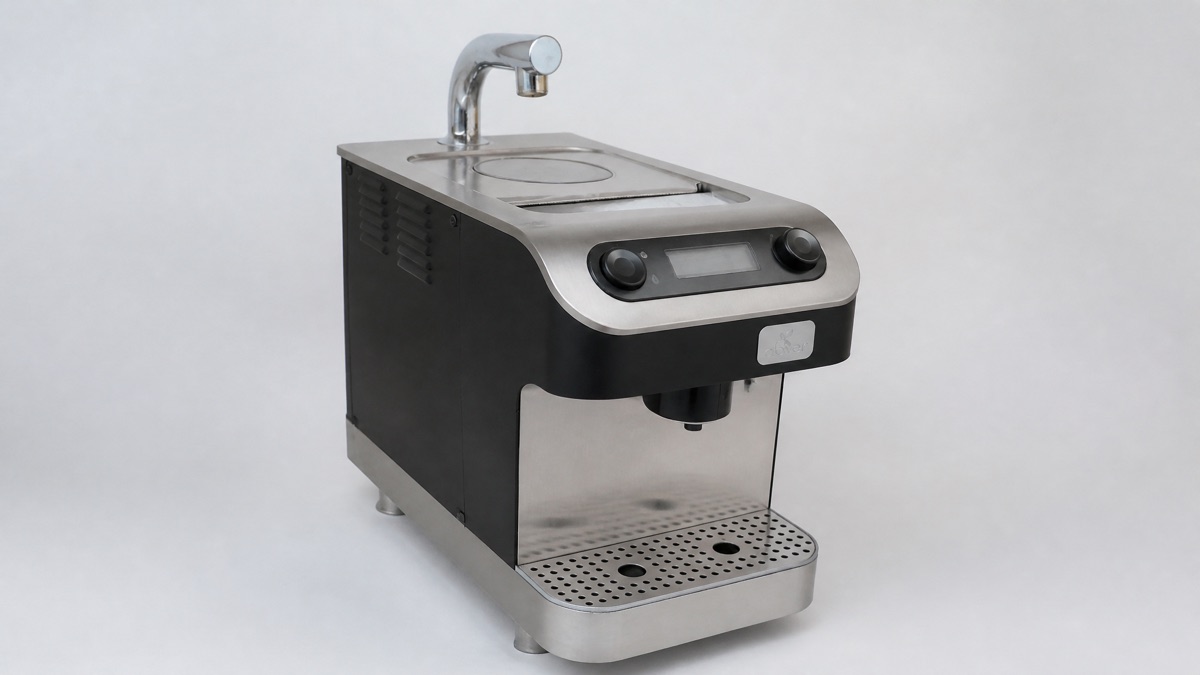
The Clover coffee machine is a single-cup brewer that pairs French press steeping with a vacuum that separates the coffee from the grounds. Its first model, the Clover 1S, made regular brewed coffee for cafes, not espresso, in under a minute.
The Clover 1S is a commercial machine, built for cafe counters. A barista brews one cup at a time and controls the recipe by hand. Because the machine was made for that setting, it never aimed at the home kitchen.
The Clover makes brewed coffee, not espresso, and the two differ in how water meets the grounds. An espresso machine forces hot water through packed grounds under pressure. The Clover lets the grounds steep freely, then draws the liquid off with a vacuum.
The name causes confusion online. An Amazon search for Clover coffee machines returns unrelated home machines that only share the name. None of those machines uses the Clover vacuum-press method.
Who Made the Clover Coffee Machine?
The Coffee Equipment Company made the Clover coffee machine in Seattle, in a converted trolley shed. Zander Nosler founded the company in 2004 with fellow Stanford University alumni, including Randy Hulett.
The first prototype appeared in spring 2005 under the code name Chalupa. The finished Clover 1S debuted at the Specialty Coffee Association of America event in 2006. Independent roasters welcomed it.
Starbucks bought the company in March 2008. Starbucks chief executive Howard Schultz had called a Clover cup the best brewed coffee he had ever tasted. The sale changed who could own one.
After the sale, Starbucks stopped selling new Clovers to independent cafes. It also shut down CloverNet, the online recipe database. Stumptown Coffee Roasters sold its Clover machines after the news.
Which Clover Coffee Machine Models Exist?
Two Clover coffee machine models exist today: the Clover 1S and the Clover Vertica. The Clover 1S is the original cafe brewer. The Clover Vertica is the Starbucks machine that replaced the slow manual method.
About 250 Clover 1S machines existed worldwide by 2008. The 1S remains the model that independent cafes and collectors mean by Clover.
The Clover Vertica grinds and brews a cup in 30 seconds or less. Starbucks began rolling it out in 2022. More than 90% of company-operated US Starbucks coffeehouses now have one.
The Vertica holds six bean hoppers. Its modular design offers one or two brewing towers. The dual-tower version suits busy stores, and the single tower suits quiet ones.
Clover 1S vs Clover Vertica:
| Feature | Clover 1S | Clover Vertica |
|---|---|---|
| Maker | Coffee Equipment Company | Starbucks |
| Brew time | Under 1 minute | 30 seconds or less |
| Grinder | Separate grinder | Built in, six hoppers |
| Settings | Dose, temperature and time | Hopper and cup size |
| Availability | Used only | Starbucks coffeehouses only |
How Does the Clover Coffee Machine Work?
The Clover coffee machine works by steeping coffee in hot water, then pulling it through a filter with a vacuum. The method keeps the full-immersion taste of a French press.
Full immersion means every ground sits in water for the whole steep. A pour over works differently. It uses percolation, so water passes through the grounds once and drains through a paper filter. In the Clover, the water stays with the grounds instead of draining away.
Because the grounds stay in the water, the water's heat matters for the whole steep. Coffee Equipment Company coffee expert David Latourell said temperature has a massive effect on the extraction of flavor chemicals. Extraction is how water pulls flavor out of the grounds. The machine holds the water temperature steady during the brew.
When the steep ends, the grounds must be separated from the drink. The vacuum pulls the liquid through a fine metal mesh filter, which holds back the grounds. Paper filters are not needed. The metal mesh also leaves the cup clean, with little sediment.
How Does the Clover Coffee Machine Brew a Cup on the 1S?
The Clover 1S brews each cup in six steps, ending with a vacuum stroke from a piston. The barista sets dose, water temperature and steep time first.
A piston pulls the filter platform down. Fresh ground coffee goes into the chamber, and hot water flows in. The barista stirs the grounds with a whisk so the water and beans steep evenly.
The piston then rises and creates a vacuum. That vacuum separates the brew from the grounds. The piston lowers and forces the coffee out of a nozzle below.
The piston rises once more and pushes up a disc of spent grounds. A squeegee wipes the disc away. The Clover 1S has no built-in grinder, so the cafe grinds beans on a separate grinder. A sample recipe used 37.5 g (1.3 oz) of coffee at 204 degrees F (96 C) for 43 seconds.
Clover 1S brew steps:
- Set the dose, water temperature and steep time.
- Lower the filter platform with the piston and add ground coffee.
- Let hot water flow into the chamber.
- Stir the grounds with a whisk while they steep.
- Raise the piston to create a vacuum and force the coffee out of the nozzle.
- Squeegee the disc of spent grounds away.
How Does the Clover Coffee Machine Brew a Cup on the Vertica?
The Clover Vertica grinds and brews one cup in under 30 seconds with a single press of a dial. The barista picks a hopper, a cup size and any customizations first.
The machine uses vacuum-press technology and controls water temperature precisely. The brew stays full immersion, as in the original Clover. The grounds soak in the water instead of having water pass through them. A fine metal mesh filter holds back the grounds.
Brewing on demand cuts brewed coffee waste by 70%.
The metal filter also replaces paper. Starbucks also says the metal filter removes about 200 million paper filters a year across its 33,000 stores.
What Features Does the Clover Coffee Machine Have?
The Clover coffee machine offers different features in each model, from hand-built programmability to automated hoppers. The Clover 1S favors control. The Clover Vertica favors speed and variety.
The Clover 1S is made of stainless steel and copper. A single unit takes several hours to assemble by hand. The company built each machine to order.
The Clover 1S has an Ethernet port. The port linked the machine to CloverNet, where owners saved recipes for specific beans. Starbucks shut CloverNet down after the 2008 sale.
The Clover Vertica has six hoppers, haptic buttons, a dial and light cues. The design meets NSF standards for cleanability and safety. Every touchpoint sits within arm's reach.
The Vertica has two brewing towers that run independently. A technician can disconnect one tower for service while the other keeps brewing. That choice keeps a busy cafe serving.
Clover Vertica Features:
- Six bean hoppers
- Haptic buttons and a dial
- Light cues during the brew
- Single or dual brewing towers
- NSF cleanability and safety standards
Can You Program the Clover Coffee Machine?
Yes. A barista can program the Clover coffee machine for dose, water temperature and brew time. The Clover 1S offers all three. Wired called it the first coffeemaker to offer all three controls.
A PID algorithm regulates the water temperature. The machine also offers programmable workflow modes. These modes help the barista repeat a recipe cup after cup.
Latourell raised the water from 205 degrees F (96 C) to 207 degrees F (97 C). He stretched brewing from 45 to 50 seconds and added 6 g (0.2 oz) of coffee. The chocolate flavor, mouthfeel and acidity all shifted.
The Vertica trades that control for speed. A barista chooses a hopper and a cup size. The machine sets temperature and time on its own.
Does the Clover Coffee Machine Make Good Coffee?
Yes. The Clover coffee machine makes clean, flavorful coffee when the beans are fresh and the barista follows the recipe. Howard Schultz called its cup the best brewed coffee he had ever tasted.
The machine only shows what the beans give it. Coffee consultant Tony Konecny made that point in 2008. Stale or blended beans take away the flavor that the Clover is built to bring out.
Starbucks designed the Clover Vertica to match the quality of French press coffee. The goal was freshly brewed coffee on demand, in 30 seconds or less. Starbucks tested several versions before it reached that goal.
What Do Reviews of the Clover Coffee Machine Say?
Reviews of the Clover coffee machine run from glowing to lukewarm. Early Starbucks trial reviews were glowing. One Yelp review told coffee snobs they might be pleasantly surprised.
A 2008 Coffee Like Wine post gave a more detailed picture. The writer tasted pencil shavings in a Tanzania Blackburn Estate cup. The cup lacked the usual Starbucks bitterness. The writer still called it the most expressive cup he had from Starbucks.
Later reviews were cooler. A 2024 Coasters and Coffee review tried Clover Vertica iced coffee. The cup had a light body, pungent acidity and a caramel finish. The review rated it slightly better than regular Starbucks coffee, but unspectacular.
Wired writer Mathew Honan reached the harshest verdict. He could not tell a Clover cup from batch coffee at a Seattle Starbucks. He wrote that the coffee tasted a little like hype. The Clover matches the beans it brews.
What Are the Common Complaints About the Clover Coffee Machine?
The common complaints about the Clover coffee machine cover price, bean freshness, staff skill and the Starbucks takeover. Each complaint points to the setting around the machine, not the brewing method.
Price comes first. The $11,000 Clover 1S became a fetish object among coffee fans. Few independent cafes could afford one. Cafes that did had to charge $3 to $7 a cup.
Many independent cafes felt betrayed by the Starbucks sale. Stumptown owner Duane Sorenson said the company chose to support a small maker and then sold its Clovers after the deal.
Bean age matters too. Konecny said Starbucks beans can sit in a bag for six weeks before they reach the machine. Anything special about the coffee is lost by then.
Staff skill varies. Wired found a Starbucks barista who stirred the grounds with a clunky rubber spatula, not a metal whisk. A 2008 blogger saw a barista read from a cheat sheet and spill grounds.
Main Complaints:
- High price of the Clover 1S
- Starbucks takeover of the maker
- Old beans before they reach the machine
- Uneven barista skill
How Does the Clover Coffee Machine Compare to a French Press?
The Clover coffee machine compares to a French press as an automated, vacuum-filtered version of the same steeping method. Wired called the Clover a robotic hybrid of a French press and a Dirt Devil. Dirt Devil is a vacuum cleaner brand, which hints at the suction step.
Both methods start the same way. Grounds steep in hot water. The difference comes after steeping, when the grounds must be separated from the liquid. The Clover uses a vacuum for that step. A French press relies on a plunger and the barista's hand.
Because a person works the plunger, a French press leaves temperature, time and filtering to that person. The Clover controls all three by machine. That is why Clover cups are more repeatable, cup after cup.
Starbucks engineer Joe Gormley said the team wanted coffee closer to a French press in quality. The Clover Vertica copies the French press result, on demand, without the manual work.
Does the Clover Coffee Machine Beat a Chemex or Melitta Pour Over?
No. The Clover coffee machine does not clearly beat a Chemex or Melitta pour over in the cup. Blogger Chuck Norton found the Clover good, but called Chemex and Melitta coffee just as good.
Norton said the Clover only automates a process a skilled brewer can master at home. A pour over takes more attention and practice. The Clover removes that learning curve.
The Clover brews faster and repeats a recipe more exactly. A pour over costs a tiny fraction of the price. The cup quality gap is small for most drinkers.
The closest home tools are the Clever Dripper and the AeroPress. Both steep the coffee first and then filter it. They cost far less than a Clover.
Home Alternatives:
- French press
- Chemex
- Melitta pour over
- Clever Dripper
- AeroPress
The Clover also offers exact settings for dose, temperature and time. A pour over depends on a kettle and the pourer's hand. A scale and thermometer narrow that gap at home.
How Much Does the Clover Coffee Machine Cost?
The Clover coffee machine cost $11,000 for the Clover 1S in 2008. Other sources from that time cite a range of $10,000 to $15,000.
Used Clover machines appear on eBay, often for thousands of dollars. One used Clover 1S listing on Barista Exchange asked $6,500 or best offer. That is well below the 2008 price.
The lower price comes with a risk. Used units carry no manufacturer warranty. Starbucks owns the brand and the service network. Prices depend on the model and the condition. A buyer also needs a parts and repair plan before paying.
The newer Clover Vertica is not an option at any price. It has no retail price because Starbucks does not sell it to the public. The machine exists only inside Starbucks coffeehouses.
Clover Prices:
| Item | Price |
|---|---|
| Clover 1S, 2008 asking price | $11,000 |
| Clover 1S, range cited in 2008 | $10,000-$15,000 |
| Used Clover 1S listing | $6,500 or best offer |
| Clover cup at cafes | $3-$7 |
| Clover Vertica | Not sold |
How Much Does a Cup From the Clover Coffee Machine Cost?
A Clover cup cost $3 to $7 at cafes with the machine. Ritual Coffee Roasters in San Francisco charged $4 a cup in 2008. Rare beans pushed the price up.
Starbucks first sold Clover cups in 2007 for up to $3.05. That price sat about $1 above its regular brewed coffee. Trial stores in Seattle and Boston tested the machine.
Today the Clover Vertica coffee sells at normal Starbucks brewed coffee prices in company stores. Customers pick from six coffees at a regular price. The cup comes out in about 30 seconds.
Can You Buy a Clover Coffee Machine?
Yes. A buyer can buy a used Clover coffee machine, but not a new one. Starbucks stopped selling the Clover 1S after 2008. Independent cafes lost access to new units.
Because no new units exist, a buyer must look at the secondhand market. Used Clover 1S machines show up on eBay and cafe forums. Starbucks said it would share custody of the machines already out there. It also planned to maintain and repair them.
The Clover Vertica is a different case. It is a proprietary Starbucks brewer, which means Starbucks built it in-house and does not sell it. A buyer finds it only in Starbucks coffeehouses.
Is a Home Clover Coffee Machine Available?
No. A home Clover coffee machine has never reached stores. Schultz said in 2008 that the Clover was a commercial machine with potential for consumer use at home.
No consumer version followed. Amazon results for Clover coffee machines show unrelated brands. Those machines do not use the vacuum-press method.
A home brewer can get a similar cup from three tools. All of them cost far less than a Clover:
- French press: This tool gives a cup similar to the Clover's at a much lower price.
- Chemex: This tool gives a similar cup and costs far less.
- Melitta pour over: This tool also gives a similar cup and costs far less.
A scale and a thermometer help repeat the recipe with any of them.
Is the Clover Coffee Machine Worth It?
Yes. The Clover coffee machine is worth it as a cup to try, not as an appliance to buy. The price and the Starbucks lock make it impractical now.
The Clover 1S gave cafes exact control and a clean cup. A buyer today finds only used units at a high price. Parts and repairs add risk.
The Clover Vertica is an efficient brewer for Starbucks. Nobody else can buy it. The cup is a fair step up from batch coffee.
The verdict is simple. Try a Clover Vertica cup at Starbucks if the line is short. Skip the hunt for a used Clover 1S unless the machine itself is the goal.
Who Should Skip the Clover Coffee Machine?
Home brewers should skip the Clover coffee machine, because no home model exists. A French press or pour over gives a close cup for a small cost.
Small cafes without a large budget should skip a used Clover 1S. Repairs depend on parts that Starbucks controls. A reliable grinder and a pour over station cost less.
Buyers who want light roast flavor from independent roasters should skip Starbucks Clover cups. Local roasters often offer fresher beans for the same money.
Skip the Clover If:
- The goal is a machine for a home kitchen
- The cafe has a small budget
- The goal is light roast flavor from a local roaster
Odradeks Coffee House is reader-supported. If you buy through a link on this page, we may earn a small affiliate fee at no extra cost to you.