Chemex Coffee Maker Review: Is It Worth It?
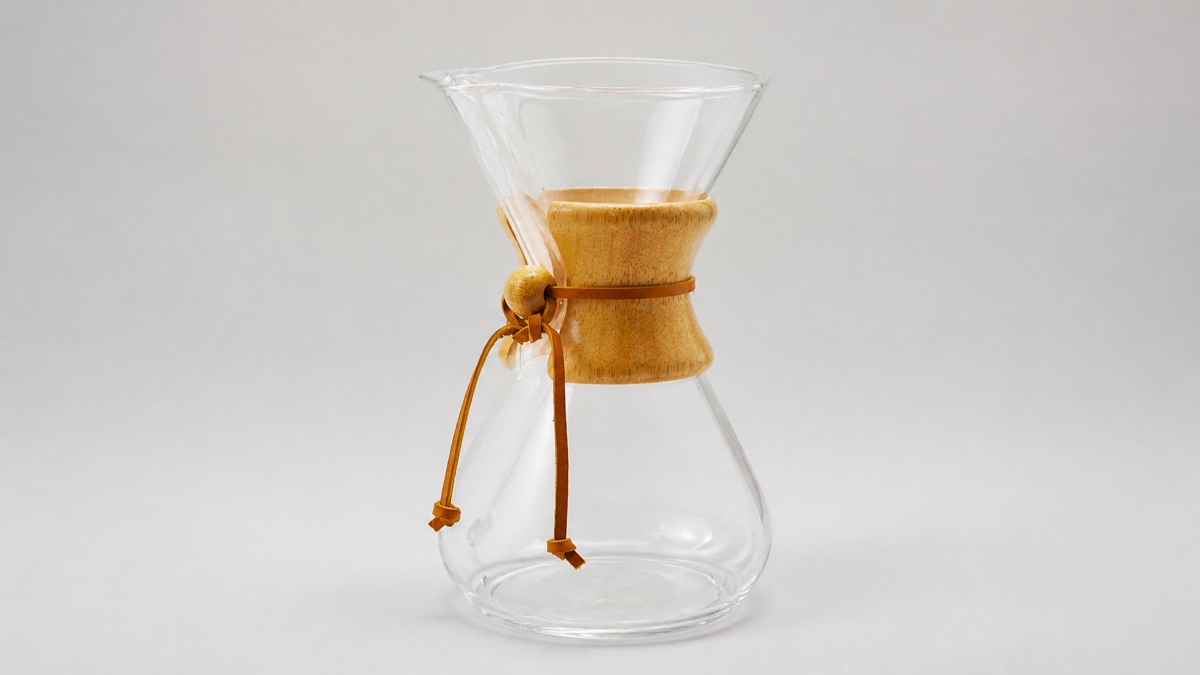
Hello, I'm Sam, from Odradeks. My shop was open in 2017, the year Nestlé took a majority stake in Blue Bottle. The Chemex coffee maker is a one-piece borosilicate glass pour-over brewer that doubles as its own carafe.
German-born chemist Peter Schlumbohm patented the hourglass design in 1941. The Chemex makes a clean, bright, light-bodied cup through thick bonded filters in four to five minutes. The 6-cup model costs about $45 to $55. Glass loses heat fast, and the filters cost extra.
This review covers sizes, taste, filters, brewing, cleaning, rivals, price and warranty. I explain sizes, filters and brewing technique before my verdict, with no sponsor. The verdict says who should buy the Chemex and who should pick a French press or a V60.
What Is the Chemex Coffee Maker?
The Chemex coffee maker is a one-piece hourglass pour-over brewer made of borosilicate glass. German-born chemist Peter Schlumbohm patented it in 1941. The vessel brews the coffee in its top half and serves it from its bottom half.
Borosilicate is the type of glass used for lab equipment. It does not absorb odors and adds no flavor to the cup, so the coffee tastes like the beans alone. A polished wood collar with a leather tie wraps the middle of the carafe.
The shape has stayed the same for over 80 years, and the brand has never needed a redesign. The Museum of Modern Art in New York and the Brooklyn Museum both hold the design.
The same care shows in how the product is made. The Chemex team inspects, polishes and hand ties each coffee maker before shipping. The brand makes its coffee makers in the USA.
How Does the Chemex Brew Coffee?
The Chemex brews coffee by pour-over, with hot water dripping through grounds in a paper filter. Gravity does the work. The brew needs no electricity, only the vessel, a filter, grounds and hot water.
The filter opens into a cone that sits in the top of the vessel. One side of the cone has three layers of paper. The three-layer side covers the pouring spout.
The spout holds an air channel in the glass. A filter that collapses into the channel blocks the air, so flow stops until the filter sits back in place.
Brewed coffee collects in the lower half of the vessel. Lift the filter with the spent grounds out and toss it. The carafe is then ready to pour.
What Sizes Does the Chemex Coffee Maker Come In?
The Chemex coffee maker comes in four sizes in the Classic Series: 3-cup (15 oz), 6-cup (30 oz), 8-cup (40 oz) and 10-cup (50 oz). Chemex counts each cup as 5 oz. A standard coffee mug holds more than a Chemex cup.
Chemex Classic Sizes:
| Size | Capacity | Metric |
|---|---|---|
| 3-cup | 15 oz | 450 ml |
| 6-cup | 30 oz | 900 ml |
| 8-cup | 40 oz | 1.2 L |
| 10-cup | 50 oz | 1.5 L |
The 8-cup model stands 9 in (23 cm) tall and measures 5 1/4 in (13 cm) across. Its item number is CM-8A. Its capacity is 40 oz (1.2 L). The 3-cup model carries item number CM-1C.
Two built-in guides measure the volume. A glass button marks the halfway point of the capacity. The bottom of the wooden collar marks the full capacity.
Brewing less than the full size works fine. Adjust the coffee and the water to match the amount you want.
How Many Cups Does the Chemex 6-Cup Make?
The Chemex 6-cup makes 30 oz (900 ml) of coffee, or about three to four cups of standard mug size. Each Chemex cup is 5 oz, so the 30 oz equals six small servings. Most buyers pick this size for two to four servings.
The 3-cup holds 15 oz (450 ml). That is enough for one or two small mugs. The narrow neck of this size makes pouring harder, and water can splash.
The 8-cup holds 40 oz (1.2 L). The size suits hosts and larger households. Counts of standard mugs range from three to six, depending on mug size.
Does the Chemex Glass Handle Differ From the Wood Collar?
No. The Chemex glass handle does not differ from the wood collar in function, only in looks. Chemex says the choice is purely aesthetic. The glass handle versions skip the wooden collar and leather tie.
The Handblown version costs about $30 more than the Classic. The Classic glass is a bit thinner than the hand-blown glass. Both use unleaded glass.
The glass handle can give a more controlled pour than the wooden collar. The wooden collar keeps the classic look many buyers want.
How Does the Chemex Coffee Maker Taste?
The Chemex coffee maker makes a clean, bright, light-bodied cup that tastes almost like tea. The cup has no grit and no sediment. The flavors stay distinct.
That clarity shows most with light and medium roasts. Single-origin beans also stand out. The clean cup lets subtle notes come through, so a bean's own character is easy to taste.
The same clean cup has a cost in body. A Chemex cup is lighter than a French press cup. A newspaper tester called the first brew clean and crisp but short on boldness. French press keeps more oils, so it tastes fuller.
A stronger cup needs more coffee, not a finer grind. Chemex says extra grounds still brew without bitterness.
Does the Chemex Make Better Coffee Than Drip?
Yes. The Chemex makes better coffee than most drip machines, with a cleaner cup and more effort. The slow brew gives the grounds time to bloom. Auto-drip machines work fast and rarely allow a bloom.
That extra effort buys control. With a Chemex, the user sets the water temperature, the ratio and the pour. An auto-drip machine sets all three. The Chemex suits people who want to make those choices.
The filter is the other reason the cup tastes cleaner. It is thick, so it removes oils and fine particles that thinner filters let through. A first-time tester found more flavor clarity than automatic drip, with no sediment in the cup.
Does the Chemex Keep Coffee Hot?
No. The Chemex does not keep coffee hot, because glass holds heat poorly. Coffee cools noticeably within 10 to 20 minutes, even in a pre-heated carafe.
Because the glass loses heat so fast, the best time to serve is right after brewing. Pouring the coffee into pre-heated mugs keeps it warm where it will be drunk. Moving it to an insulated carafe also works, since that container is built to hold heat.
Coffee that is not served can still be saved. Leftover coffee keeps in the fridge inside the glass. To warm it again, it should be reheated gently on a stovetop over very low heat. The glass is not microwave safe, so the microwave is not an option.
Glass that holds hot coffee is also hot to the touch. The wood collar and leather tie give a safe place to hold the carafe while the glass is hot.
What Filters Does the Chemex Coffee Maker Need?
The Chemex coffee maker needs Chemex Bonded filters, which are 20-30% thicker than standard pour-over filters. The thick paper removes oils, sediment and bitter elements. The filters are sold separately.
Chemex Filter Models:
- FSU-100, brown, for 6-cup and larger
- FS-100, white, for 6-cup and larger
- FC-100, pre-folded circle, for 6-cup and larger
- FP-1, unfolded circle, for 6-cup and larger
- FP-2 and FP-2N, half-size, for the 3-cup and the Funnex
The 6-cup and larger sizes take FSU-100 (brown), FS-100 (white), FC-100 (pre-folded circle) or FP-1 (unfolded circle) filters. The 3-cup size and the Funnex take the half-size FP-2 (white) or FP-2N (brown) filters. The shape makes little difference to the cup.
Filters come bleached or unbleached. The choice is personal. The filters are biodegradable and compostable.
To fold a round filter, fold it in half twice. Part the layers between the third and fourth sheet. The result is a cone with three layers on one side.
The thick paper also holds back most cafestol, an oily coffee compound that can raise cholesterol. French press and metal filters let more of it through.
Can You Use Regular Filters in the Chemex?
No. You cannot use regular filters in the Chemex, because standard cone filters are thinner and fit poorly. Chemex recommends only its own bonded filters.
The thinner paper is the main problem. It lets water flow faster through the coffee. The faster flow changes the extraction, and more oils end up in the cup.
A pre-folded FC-100 circle is the wrong pick for the 3-cup. The 3-cup needs the FP-2.
Third-party filters made for the Chemex also exist. One review says they work reasonably well.
How Do You Brew With the Chemex Coffee Maker?
The Chemex coffee maker brews in seven steps: grind, set the filter, dose, bloom, pour, lift the filter and serve. A 6-cup batch takes about 4 to 5 minutes. A brew past 7 or 8 minutes means the grind is too fine.
Heat the water to about 200°F (93°C), just off the boil. Use filtered water. Avoid distilled or reverse osmosis water, because some minerals help the flavor.
Brew Steps:
- Grind the coffee medium-coarse.
- Set the filter in the cone with three layers at the spout.
- Rinse the filter with hot water and discard the water.
- Add the coffee and wet it for a 30 second bloom.
- Pour slowly in circles below the rim.
- Lift out the filter and serve.
Wet the grounds and wait about 30 seconds for the bloom. Then pour slowly in circles. Keep the water at least a quarter inch (6 mm) below the rim.
A gooseneck kettle such as the Hario Buono or the Fellow Stagg EKG gives slow, steady pours. A scale such as the Timemore Black Mirror weighs the coffee and water.
Pour away from the filter sides. Rinsing the filter first with hot water removes paper taste and warms the glass. Discard the rinse water.
What Grind and Ratio Does the Chemex Need?
The Chemex does need a medium-coarse grind and a ratio of one rounded tablespoon of coffee per 5 oz cup. The grind is slightly coarser than drip and finer than French press. The Chemex uses a thick paper filter, and fine grounds clog it.
The tablespoon rule sets the amount for a batch. A 6-cup batch takes six rounded tablespoons, about 42 g. The full 30 oz of water is a lot for that much coffee. So six tablespoons make a light brew, near 1:21 by weight. A stronger cup needs more coffee.
Weight gives a more exact way to set strength. A ratio of 1:15 to 1:17 also works, meaning 1 part coffee to 15 to 17 parts water. One example is 30 g of coffee with 480 g (17 oz) of water.
Taste shows whether the grind and the water are right. Bitter coffee points to a grind that is too fine or water that is too hot. Sour coffee points to a grind that is too coarse or water that is too cool.
How Do You Clean the Chemex Coffee Maker?
The Chemex coffee maker cleans by hand with hot water, mild soap and a bottle brush. Lift out the filter and the grounds first. Then rinse the glass with hot water.
Skip abrasive sponges. They scratch the glass.
The wood collar is not dishwasher safe and should not soak. Wipe it with a barely damp cloth. A dry microfiber cloth polishes out stains.
Coffee residue collects in the narrow neck. A long-handled bottle brush reaches it. Chemex sells a brush for about $10.
For scale or oil buildup, soak the glass in equal parts water and white vinegar for 15 to 30 minutes. Then rinse well.
Is the Chemex Dishwasher Safe?
Yes. The Chemex glass is dishwasher safe once you remove the wooden collar and the rawhide tie. Secure the carafe so it does not bump other dishes. Bumping can break the glass.
The collar and rawhide need hand cleaning only. Wood warps in a dishwasher.
One review says Chemex recommends hand washing to protect the finish. The maker's own FAQ allows the dishwasher.
How Does the Chemex Coffee Maker Compare to the Hario V60?
The Chemex coffee maker makes a cleaner, lighter cup than the Hario V60, while the V60 makes a brighter cup with more body. The Chemex serves two to four people. The V60 serves one or two.
Chemex vs Hario V60:
| Feature | Chemex | Hario V60 |
|---|---|---|
| Cup | Cleaner, lighter | Brighter, more body |
| Brew time | 4 to 5 minutes | 2.5 to 3.5 minutes |
| Serves | 2 to 4 people | 1 or 2 people |
| Price | $35 to $50 | About $9 (plastic) |
| Filters | Chemex bonded | Standard cone |
The Chemex takes 4 to 5 minutes to brew. The V60 takes about 2.5 to 3.5 minutes. The thick Chemex filter slows the flow.
The Chemex costs about $35 to $50. The plastic V60 costs about $9.
The Chemex needs its own bonded filters. The V60 takes standard cone filters. The Chemex also doubles as the server.
Is the Chemex Easier Than the Kalita Wave?
No. The Chemex is not easier than the Kalita Wave, which forgives poor pouring. The Kalita has a flat bottom and three small holes. The Chemex drains through one path.
The slow Chemex flow gives a narrower technique window, per one review. Pouring too fast or too slow shifts the extraction.
The Kalita cup sits between the Chemex and the V60 in body and clarity.
A gooseneck kettle improves pour control with the Chemex.
How Much Does the Chemex Coffee Maker Cost?
The Chemex coffee maker costs about $45 to $55 for the 6-cup model. The 8-cup runs about $50 to $70. The 3-cup runs about $35 to $45.
Chemex Prices:
| Item | Price |
|---|---|
| 3-cup | $35 to $45 |
| 6-cup | $45 to $55 |
| 8-cup | $50 to $70 |
| 100 filters | $8 to $12 |
One roundup listed the 8-cup at $48.93 at Amazon, $39.95 and up at Williams Sonoma, and $52.16 at Target. Prices change often.
Filters cost about $8 to $12 per 100. That is 8 to 12 cents per cup.
Good extras add cost. A gooseneck kettle, a scale and a burr grinder all help. A Chemex cleaning brush costs about $10.
What Warranty Covers the Chemex?
The warranty that covers the Chemex is a 1-year limited warranty against manufacturing defects. The warranty covers the Classic and Glass Handle coffee makers. Chemex supports the claims.
A manufacturing defect is a flaw that was present when the coffee maker was made. For that reason, the warranty does not cover traumatic breakage. A dropped carafe is not covered.
A claim also needs proof that the product was bought from a seller Chemex approves. The warranty therefore requires proof of purchase from an authorized seller. Amazon purchases qualify only through the Chemex Coffeemakers seller account.
Orders placed directly with Chemex follow separate rules for damage that shows up soon after delivery. Direct orders carry a three-day window to report breakage or shipping errors. Returns need 30 days and the original packaging.
Is the Chemex Coffee Maker Worth It?
Yes. The Chemex coffee maker is worth about $50 if you want a clean, bright pour-over and brew for two or more people. The design also earns its place on the counter.
Main Strengths:
- Clean, bright cup
- Brewer and server in one piece
- Durable borosilicate glass
- Replacement collars and ties
The brewer and server are one piece. The glass lasts for years with care. Replacement collars and ties are available.
The weaknesses are real. The glass breaks if dropped. The filters are proprietary. The coffee cools fast, and the brew takes longer.
A solo brewer on a budget can pick the plastic V60 at about $9. It gives a similarly clean cup.
Who Should Skip the Chemex?
Dark roast drinkers who want body should skip the Chemex and pick a French press. The thick filter removes the oils that give a heavy mouthfeel.
Slow sippers should skip it too. The glass loses heat fast, so a cup that lasts a long time will not stay warm.
Solo brewers on a budget have cheaper choices. The smallest Chemex makes 15 oz, and the V60 costs less.
Odradeks Coffee House is reader-supported. If you buy through a link on this page, we may earn a small affiliate fee at no extra cost to you.