Chefman Espresso Machine Review: Is It Worth It?
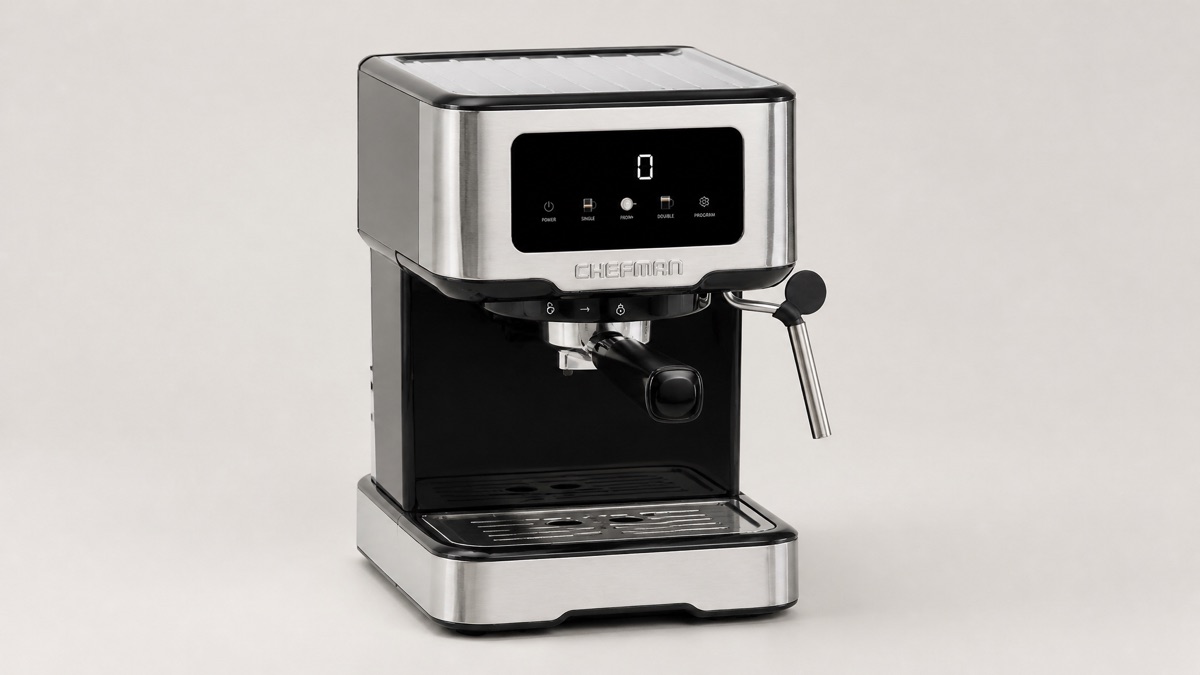
Hi, I'm Sam, and the Chefman espresso machine is today's review. The Chefman espresso machine is a budget home espresso maker with a 15-bar pump and a steam wand. Models start with the compact CraftBrew, which often sells for $50 to $70. The Crema Supreme adds a built-in grinder and costs $250 to $350. Most models are built for beginners and small kitchens.
The 15-bar pump is real, so the drink is true espresso. The machine heats up in about 45 seconds. A pressurized basket gives a crema that fades in about 60 seconds. Owners rate the CraftBrew 4.4 out of 5 and praise the easy setup. They dislike the plastic parts, the loud steam and the overheat light.
Trips to Vienna's old coffee houses help me choose budget semi-automatic espresso machines for my shop. This review covers steam wand, crema and overheat light, and no brand approved the text. It also weighs the models, rivals, price and a clear verdict.
What Is the Chefman Espresso Machine?
The Chefman espresso machine is a budget home machine that pushes hot water through coffee with a 15-bar pump and froths milk with a steam wand. Chefman sells several versions, from a compact $50 model to a $279 model with a grinder.
Chefman is a kitchen appliance brand known for low prices. Its espresso line targets beginners who want lattes and cappuccinos at home. Most models are semi-automatic, so the owner tamps the coffee and the machine runs the shot.
The entry model is the CraftBrew, model RJ54-SS-15-D. It is compact and weighs 7.9 lb (3.6 kg). It measures 10.8 x 8.9 x 11.9 in (27.4 x 22.6 x 30.2 cm). Such a small body fits under most wall cabinets.
Chefman backs each machine with a 1-year assurance. The machines also carry cETL approval. Intertek, a testing lab, issues the mark, and it signals compliance with Canadian safety standards. Every model runs on standard 120 V household power.
Which Chefman Espresso Machine Models Are Sold?
Chefman sells five espresso machine models: the CraftBrew, the 6-in-1, the CaféMaster Pro, the Crema Supreme and the Crema Deluxe. The CraftBrew is the smallest, and the Crema Supreme adds a built-in grinder.
The CraftBrew holds 1.5 L (51 fl oz) of water and uses a manual steam wand. The 6-in-1 and the CaféMaster Pro hold 1.8 L (61 fl oz). The CaféMaster Pro adds a 500 ml (17 fl oz) milk reservoir that froths milk by button.
The Crema Supreme has a conical burr grinder with 30 grind settings and a 3 L (101 fl oz) tank. It draws 1,450 W and weighs 21.8 lb (9.9 kg). The Crema Deluxe pairs a grinder with a double boiler, so shots and steam run together.
Chefman also sells an 8-in-1 coffee station that pairs a 20-bar espresso pump with a 12-cup carafe. The station needs far more counter space than the single-purpose models.
| Model | Water tank | Weight | Milk system |
|---|---|---|---|
| CraftBrew | 1.5 L (51 fl oz) | 7.9 lb (3.6 kg) | Manual steam wand |
| CaféMaster Pro | 1.8 L (61 fl oz) | 10.9 lb (4.9 kg) | Automatic milk reservoir |
| Crema Supreme | 3 L (101 fl oz) | 21.8 lb (9.9 kg) | Steam wand, built-in grinder |
How Does the Chefman Espresso Machine Work?
The Chefman espresso machine works by driving hot water through ground coffee with a 15-bar vibratory pump. The pump pulses to build pressure. A rotary pump, found on pricier machines, runs more quietly and holds pressure more evenly.
The pressure meets coffee that sits in a pressurized basket. A small valve in the basket holds back the water until pressure builds. The valve controls the flow. So a beginner can pull a drink-ready shot with an imperfect grind and a light tamp.
The touch panel starts a single or double shot and sets the shot volume. The machine also counts cycles. After 500 cycles, it shows a descale alert.
A separate steam mode heats the same small heater to make steam. The steam pushes through the wand and froths the milk. Brewing and steaming share one heating path, so the machine cannot do both at once.
What Features Does the Chefman Espresso Machine Have?
The Chefman espresso machine has these features: a 15-bar pump, touch controls, a steam wand and a removable tank. Single and double baskets, a portafilter, a scoop and a tamper come in the box.
Touch controls set the shot volume on the CraftBrew. The panel is light-sensitive and can double-register a tap. A brighter kitchen can make the dim display hard to read.
The tank lifts out for filling at the sink. The drip tray slides out for emptying and rinsing. Stainless steel panels wipe clean, but the side panels on the entry models are plastic with a metal finish.
The CaféMaster Pro adds an internal cleaning cycle that flushes mineral buildup. The Crema Supreme adds shot temperature and volume settings. The CraftBrew has no grinder, so owners grind beans separately or buy pre-ground coffee.
Does the Chefman Espresso Machine Make Real Espresso?
Yes. The Chefman espresso machine makes real espresso because its 15-bar pump forces hot water through packed coffee. The pressure is genuine, so the drink is espresso and not strong drip coffee.
The 15-bar figure is the pump's peak rating. An over-pressure valve limits the pressure at the coffee to about 9 bar, the usual standard for espresso.
The pressurized basket is the limit. Its valve builds a thick, golden crema that collapses in about 60 seconds. The crema is foam from the valve and not trapped carbon dioxide from fresh beans.
The taste sits in the middle. Shots come out sweet enough for lattes and beat pod coffee. A straight shot tastes flat beside a machine with a non-pressurized basket and a good grinder.
Temperature holds up fairly well. The first shot of the day runs cooler than the second. A blank shot of hot water through the empty portafilter warms the metal and fixes most of the gap.
What Do Owners Think of the Chefman Espresso Machine?
Owners think the Chefman espresso machine earns 4.4 out of 5 across 6,310 ratings on the CraftBrew. About 74% give five stars and 7% give one star. The pattern is clear praise for ease and price, with doubts about build.
Many one-star cases trace back to skipped priming or a vent sticker left on the back panel. Both fixes are free.
Milk foam draws the most mixed comments. Foam can come out rich and creamy on one day and thin on the next. The panarello sleeve on the steam wand makes the result depend on the milk and the jug.
What Do Owners Like About the Chefman Espresso Machine?
Owners like the easy setup, the low price and the small size of the Chefman espresso machine. Ease of use and value for money are the two most mentioned topics in the ratings.
Setup takes about 20 minutes with the guide. Beginners report a drinkable cup on day one. The icons are plain, with no menus, so owners memorize them in about two days.
A cold machine finishes a latte in about three minutes. Heat-up takes about 45 seconds.
The steam wand pulls well for the price. Owners froth 6 oz (177 ml) of milk in 40 to 50 seconds. Skim milk foams best, and oat milk foams acceptably.
The compact body suits small kitchens. It fits on a small counter and under standard cabinets, which makes it a fit for apartment counters. Owners who move up from pods say the cup tastes noticeably better.
Owners point to four strengths:
- Setup: It takes about 20 minutes with the guide.
- Heat-up: It is fast, at about 45 seconds.
- Steam: The pressure is strong for the price.
- Size: The small footprint suits apartment counters.
What Do Owners Dislike About the Chefman Espresso Machine?
Owners dislike the light plastic parts, loud steaming and the dim touch display on the Chefman espresso machine. Leaks are the most common long-term complaint.
The drip tray, the portafilter handle and the water tank feel thin in the hand. The same plastic shows up in the tamper, which fits the basket loosely. It cannot press the coffee evenly, so many owners buy a metal tamper for about $15.
The steam pump is loud. The steam sleeve also makes large, bubbly foam. Such foam suits cappuccinos but works poorly for flat whites. Latte art is close to impossible with the sleeve on.
Tall travel mugs do not fit under the group head on the 6-in-1. Owners pull the shot into a short cup and pour it over.
Hard water raises the scale risk, so monthly descaling is the norm.
How Does the Chefman Espresso Machine Compare to Rivals?
Rivals to the Chefman espresso machine include the De'Longhi Stilosa, the Casabrews CM5418 and the Breville Bambino. The Stilosa and Casabrews cost about the same, and the Bambino costs about twice as much as the Chefman CaféMaster Pro.
The Breville Bambino lists near $299.95. Its ThermoJet heater reaches brewing temperature in about 3 seconds. The Bambino has PID temperature control and a manual steam wand. The Bambino Plus adds an automatic steam wand. Buyers pay about double for steadier shots and finer milk texture.
| Machine | Pump | Typical price | Milk system |
|---|---|---|---|
| Chefman CraftBrew | 15 bar | $50-$150 | Manual steam wand |
| De'Longhi Stilosa | 15 bar | $134.95-$149.95 | Manual steam wand |
| Casabrews CM5418 | 20 bar | $111.99-$139.99 | Manual steam wand |
| Breville Bambino | 9 bar extraction from a 15 bar pump | $299.95 | Manual steam wand |
Is the Chefman Espresso Machine Better Than the De'Longhi Stilosa?
No. The Chefman espresso machine is not better overall, because the De'Longhi Stilosa has the sturdier build. The Chefman machine wins on touch controls and adjustable shot volume.
The Stilosa has a 15 bar pump, a stainless steel boiler and a 1 L (34 fl oz) tank. Owners trust its materials and its steady shots. Its Pannarello-style steam wand is manual, just as on the CraftBrew.
Price is where the Chefman machine pulls ahead. The Stilosa lists at $134.95 to $149.95, while the CraftBrew often costs $50 to $70 on sale. A buyer who wants the lowest price picks the Chefman machine. A buyer who wants the sturdier body picks the Stilosa.
How Does the Chefman Espresso Machine Compare to a Casabrews?
The Chefman espresso machine trades the Casabrews CM5418's 20-bar rating and larger tank for a lower price on the CraftBrew. Both machines are compact semi-automatic units with a manual steam wand.
The Casabrews has a stronger heating system than most budget machines and a bigger water tank. It lists at $111.99 to $139.99. Buyers praise its crema and its stainless steel look.
The 20-bar figure on the Casabrews is a marketing number. Espresso extracts at about 9 bar at the coffee. The pump rating only shows peak pressure, not the pressure that reaches the grounds. The Chefman 15-bar rating reads the same way.
Is the Chefman Espresso Machine Easy to Use?
Yes. The Chefman espresso machine is easy to use, with plain icons, no menus and one-touch single and double shots. A cold start to a finished latte takes about three minutes.
Two skills take practice. The included plastic tamper presses the coffee grounds, and it gives uneven pressure at first. The steam wand heats and froths milk, and it takes a few tries before the foam holds.
Cleaning is quick. The tank and drip tray come out in seconds. The portafilter, the handled basket that holds the grounds, rinses at the sink. A wipe cleans the steam wand after every drink.
Descaling, which removes mineral buildup, is the one chore that grows with hard water. Skipping monthly descaling lets scale build up, and pressure can drop within a year. Monthly descaling keeps pressure steady.
How Do You Make Espresso With the Chefman Espresso Machine?
The Chefman espresso machine makes a shot after a rinse, two priming cycles, a 16 to 18 g (0.6 oz) dose and a 25 to 30 second pull. Priming matters because skipped priming gives weak first shots and sputtering.
- Rinse the tank, fill it with filtered water and run two priming cycles with no coffee.
- Weigh 16 to 18 g (0.6 oz) of fine coffee into the double basket.
- Tamp level, lock the portafilter in and run a blank hot-water shot first to warm the metal.
- Start the shot and stop it when the cup holds the target volume, about 25 to 30 seconds.
The full scoop in the box overfills the double basket. The overfill causes a short, thin shot. A kitchen scale is worth using for the first week.
After the shot, steam the milk. Heating 6 oz (177 ml) of milk takes 40 to 50 seconds. Brew first and steam second to avoid the overheat light.
Why Does the Chefman Espresso Machine Show an Overheat Light?
The Chefman espresso machine shows an overheat light when steaming comes before brewing or when shots run back to back with no rest. The light is a safeguard and not a defect.
Steaming raises the heater to a much higher temperature than brewing does. If the machine switches straight back to coffee, the heater is still too hot, and the protection trips. The rule is brew first, then steam, with a short pause between drinks.
A shipping film on the rear vent is the second common cause. The film blocks airflow on day one. Owners peel it off, and the machine then runs normally.
A household that makes three or more drinks in a row every morning will keep running into the pause. That buyer needs a double-boiler model such as the Crema Deluxe.
How Much Does the Chefman Espresso Machine Cost?
The Chefman espresso machine costs between $50 and $350, depending on the model and the sale. The CraftBrew is the cheapest, and the Crema Supreme with a grinder is the dearest.
The CraftBrew sold for $50 to $70 during its viral run and lists near $84 to $120 in normal weeks. The 6-in-1 sells for about $156 to $193. The CaféMaster Pro lists at $199.99 and often drops to $149.99.
The Crema Supreme sells for $250 to $350. One buyer saw it at $279. The grinder inside would cost $50 to $100 as a separate unit. The Crema Deluxe, with a double boiler and a grinder, has listed at $339.99.
| Model | Typical price | Grinder |
|---|---|---|
| CraftBrew | $50-$150 | No |
| 6-in-1 | $156-$193 | No |
| CaféMaster Pro | $149.99-$199.99 | No |
| Crema Supreme | $250-$350 | Yes, 30 settings |
| Crema Deluxe | $339.99 | Yes |
Is the Chefman Espresso Machine Worth the Price?
Yes. The Chefman espresso machine is worth the price because it gives a real pump and a steam wand for under $150. Comparable Breville setups start at about twice the cost.
The machine is not the whole bill. A metal tamper costs about $15. A kitchen scale and a separate grinder or good pre-ground coffee also cost money. A kitchen scale and a separate grinder or good pre-ground coffee improve the cup more than any change to the machine.
Savings add up for a daily café buyer. One owner counted about $2,800 saved in a year after the machine and $30 a month in beans. Such savings depend on the habit being replaced.
Upkeep costs little but needs discipline. Descaling solution and filtered water protect the pump. Owners who skip both risk the leaks and pressure loss that earn the one-star ratings.
Where Can You Buy the Chefman Espresso Machine?
The Chefman espresso machine is sold at chefman.com, Walmart, Best Buy, Lowe's and Amazon. Stock and prices change between stores, so the same model can differ by $20 or more.
Chefman's own site lists the CraftBrew, the CaféMaster Pro and the Crema Supreme with specs and a user guide. The site also hosts the warranty paperwork and manuals for every espresso model.
Chefman warrants the machine against defects in material and workmanship for 1 year from the purchase date. Chefman repairs or replaces a defective unit. The warranty needs proof of purchase in the USA, Canada or Mexico.
Is the Chefman Espresso Machine Worth It?
Yes. The Chefman espresso machine is worth it for beginners and milk-drink fans who want real espresso at a low price. Coffee purists and heavy daily users should look elsewhere.
The pump is real, so the machine makes real espresso. The steam wand is strong, which suits milk drinks. The cost is low, which fits a first purchase.
The tradeoffs are:
- Pressurized basket: The machine uses a pressurized basket.
- Short-lived crema: The crema does not last long.
- Plastic parts: Some parts are plastic.
- Overheat pause: The machine pauses when it overheats.
Buyers who accept these tradeoffs get a good first machine.
Who Should Buy the Chefman Espresso Machine?
Buy the Chefman espresso machine if the buyer is a first-timer, a one- or two-person home or has a small counter. A daily latte drinker saves money against drive-through prices.
Buyers who want to learn tamping, dosing and milk steaming get a cheap place to practice. The CraftBrew is the low-risk pick. A buyer finds out whether home espresso sticks without a $400 bet.
Latte and cappuccino fans fit best. Shots taste sweet through milk. The CaféMaster Pro suits buyers who want one-button milk, and the Crema Supreme suits buyers who want a grinder in the same body.
Who Should Skip the Chefman Espresso Machine?
Skip the Chefman espresso machine if the home serves three or more drinks in a row or wants PID temperature control. The shared heater needs a rest between milk and coffee.
Buyers who want zero effort should pick a bean-to-cup automatic. The Chefman machine still asks for tamping and steaming. Straight-shot purists will find the pressurized basket flat.
- Homes that serve three or more milk drinks back to back
- Hobbyists chasing PID control or pressure profiling
- Buyers who want a no-practice, one-touch drink
- Drinkers who mostly take straight espresso
Odradeks Coffee House is reader-supported. If you buy through a link on this page, we may earn a small affiliate fee at no extra cost to you.