Bosch Espresso Machine Review: Is the 300 Series VeroCafe Worth It?
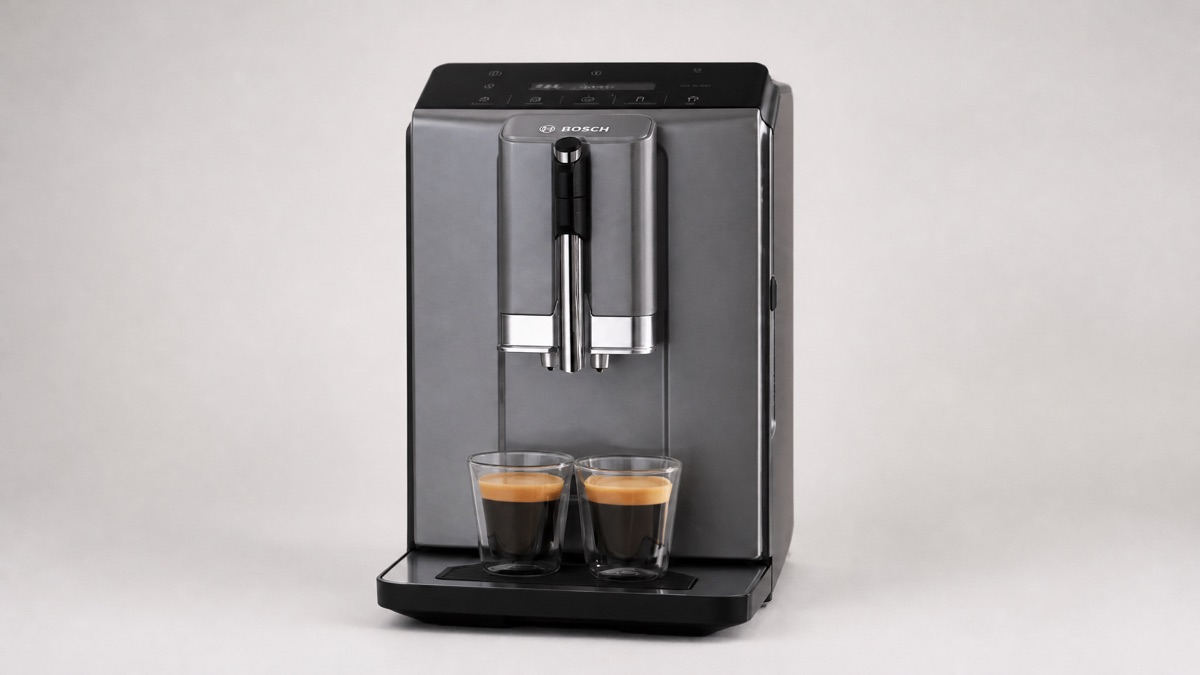
Welcome, I'm Sam, and today I review the Bosch 300 Series VeroCafe. It is a fully automatic bean-to-cup espresso machine from Bosch. It grinds beans with a ceramic burr grinder and froths milk inside the cup with a stainless steel nozzle. Bosch sells it as the entry model of the VeroCafe line.
I opened my coffee shop in 2012, and I have used espresso machines every day since. No sponsor and no script, just my verdict. The machine costs $799 to $899 in the US. Cleaning takes one button, and the body is slim. Espresso measures only 127 F (53 C) in the Coffeeness test, and the grinder has three settings.
The menu holds five drinks, and the milk drinks come out warm. Reviews split on value. The warranty lasts 2 years or 7,000 cups. The machine suits beginners who drink milk drinks, not straight espresso. Near $799 it is a fair buy for that buyer. Near $899 the De'Longhi Magnifica Start and the Philips 2200 offer similar drinks for less money.
What Is the Bosch 300 Series VeroCafe?
The Bosch 300 Series VeroCafe is a fully automatic bean-to-cup espresso machine with a built-in ceramic grinder. Bosch sells it as the entry model of the VeroCafe line. A Milk Express nozzle froths milk inside the cup.
Robert Bosch opened his workshop in Stuttgart in 1886. BSH Hausgeräte, based in Munich, now runs the Bosch home appliance business. The company entered the North American super-automatic market only recently. In Europe the same machine sells as the Bosch VeroCup 100 at a budget price.
The machine is 14 7/8 inches (37.8 cm) tall, 9 3/4 inches (24.8 cm) wide and 16 1/2 inches (41.9 cm) deep. The housing is mostly plastic with matte silver panels. A 47.3 fluid ounce (1.4 L) tank slides out for filling.
Five drinks sit on the panel: espresso, coffee, cappuccino, latte macchiato and milk foam. Each drink offers five strength levels, shown as coffee beans on the display.
The machine fills from a removable tank and cannot connect to a water line. Milk goes in the cup, so no milk carafe or tube is attached. Bosch lists no ground coffee container, so every drink starts from whole beans.
Which Model Numbers Does the Bosch 300 Series Have?
The Bosch 300 Series comes in two US model numbers, the silver TIU20307 and the black TIU20109. Bosch groups both under one owner guide. Other Bosch lines use different numbers. The 500 Series carries the number TPU40109, and the 800 Series uses TPU60309 and TQU60307.
Bosch lists the silver TIU20307 at $899. The black TIU20109 lists at $799 and shows 4.5 stars from 217 ratings on Bosch's US page. Beyond color and price, Bosch's spec pages give both finishes the same five drinks. They also share a 47.3 fluid ounce (1.4 L) tank, ceramic grinder and 15 bar pump.
Published specs for the machine disagree in three places. The bean container is 8.8 ounces (250 g) at Coffeeness and Homebaristas and 9.0 ounces (255 g) on Bosch's page. Weight is 14.8 pounds (6.7 kg) at Coffeeness and 16.0 pounds (7.3 kg) on Bosch's page.
Power draw also differs between sources. It is 1500 W at Coffeeness and 1600 W at Homebaristas. Bosch's US page gives no wattage figure. Homebaristas lists the machine at 120 V.
Spec Conflicts:
| Spec | Coffeeness | Homebaristas | Bosch US |
|---|---|---|---|
| Bean container | 8.8 oz (250 g) | 8.8 oz (250 g) | 9.0 oz (255 g) |
| Weight | 14.8 lb (6.7 kg) | 14.8 lb (6.7 kg) | 16.0 lb (7.3 kg) |
| Power | 1500 W | 1600 W | Not listed |
How Does the Bosch 300 Series Work?
The Bosch 300 Series works by grinding, tamping and brewing at the press of one drink button. Filling the tank and the hopper starts the setup. Warm-up takes under one minute. A 15 bar pump then pushes the water through the grounds.
An LCD and lit sensor keys form the Easy Select panel. Every key needs one light tap and carries a plain symbol or word. The display also warns when the grounds bin is full or when cleaning is due.
Factory volumes are close to standard. Espresso works best at 1.4 ounces (40 ml). The coffee default of 4 ounces (120 ml) is already balanced. The spout moves up and down to fit cups from 3.0 to 5.5 inches (7.6 to 14 cm).
The two-cup function works for black drinks only. The machine has no hot water outlet, so it cannot make an americano.
Brew Steps:
- Fill the water tank and the bean hopper.
- Turn the machine on and wait under one minute.
- Pick a strength from one to five beans.
- Place the cup under the spout and press the drink button.
Bosch names a feature AromaMax and says it controls grind flow, volume and brew temperature. Bosch does not explain how, and the panel has no brew temperature setting.
How Does the Bosch 300 Series Make Milk Drinks?
The Bosch 300 Series froths milk with the Milk Express nozzle, which dips into the cup. Milk goes into the cup first, and the cup sits in the center of the tray. The stainless steel nozzle is pushed into the milk, and a drink button starts the cycle.
The machine froths the milk first and then pours espresso on top. Foam grows as it forms, so cups should be filled no more than one third with milk. A fuller cup can overflow.
Froth level is a saved setting, so the machine can repeat the same texture each time. Holding the cappuccino, latte macchiato or milk button makes its light flash. A second press ends the froth, and the display reads Settings saved. Each milk drink stores its own level.
In the Coffeeness test, the cappuccino was a bit too frothy but well textured, at 149 F (65 C). The latte macchiato also came out at the right temperature. The milk system is slow and feels dated. The milk nozzle goes in the dishwasher.
What Are the Bosch 300 Series Features?
The Bosch 300 Series features a ceramic grinder, Milk Express frother, removable brew unit and Calc'n Clean program. A water filter, a hardness test strip and cleaning tablets ship in the box. A welcome box and a descaling tablet are included too.
Several features are missing. Home Connect is Bosch's smartphone app, and the 300 Series does not support it. The machine also has no color screen and no hot water function. Profiles are limited to a memo function, so one household setting is saved at a time.
The machine takes whole beans only. Decaf drinkers must empty the hopper and fill it with decaf beans.
A BRITA Intenza water filter ships in the box, and Bosch sells replacements as part TCZ7003US. The display tells the owner when to change the filter.
Holding the Coffee Bean and Calc'n Clean buttons together opens the settings menu. The menu changes language, sound and other options. The drinks panel adjusts strength and cup volume.
The bean hopper has a rubber-sealed lid that keeps air out. A storage canister still keeps beans fresher over weeks. The power cord is 39 3/8 inches (1 m) long.
Tank placement needs a check before buying. The removable tank may be hard to reach under overhanging cabinets.
Key Features:
- CeramDrive ceramic flat burr grinder
- Milk Express in-cup frother
- Removable brew unit
- Calc'n Clean combined program
- BRITA Intenza water filter in the box
How Good Is the Bosch 300 Series Grinder?
The Bosch 300 Series grinder is a ceramic flat burr grinder with only three grind settings. Bosch calls it CeramDrive. Three steps give little room to dial in different beans.
The Bosch 500 Series offers six levels, and the De'Longhi Magnifica Start offers 13. The 300 Series is the least adjustable of the three.
Three settings still pulled different aromas from medium roasts. Very light and very dark roasts are a poor fit, because the grinder handles extremes badly.
The grind cannot get finer. A higher strength setting adds more ground coffee per shot and gives more body and flavor.
Ceramic burrs are not automatically quiet. Coffeeness measured 72.9 decibels while the grinder ran. The tester compared the sound to a lawnmower running over a branch. Normal conversation measures about 60 decibels on CDC noise charts.
How Good Is the Coffee From the Bosch 300 Series?
The Bosch 300 Series makes good coffee but cool espresso. A medium roast blend gave a velvety mouthfeel and a balanced taste with plenty of chocolate. Coffee as a standard drink brews hotter and fuller than espresso.
Good Housekeeping tested the machine and named it Best Value. Its espresso came out in consistent amounts with a dark, golden honey crema. The buttons responded well, and strength was easy to adjust.
The coffee setting uses 4 ounces (120 ml) of water, which is more than a shot of espresso needs. The extra water lifts the drink toward a satisfying temperature. For this reason, Coffeeness recommends coffee as the standard drink for this machine.
Temperature also changed over time. Good Housekeeping saw espresso temperature climb as more drinks were brewed back to back.
Is the Bosch 300 Series Espresso Hot Enough?
No. The Bosch 300 Series espresso measures 127 F (53 C), which is too cold. Coffeeness reports the problem only with espresso. Preheating the cup did not fix it.
Coffeeness measured the European VeroCup 100, the twin of the US machine. The Specialty Coffee Association sets brew water at 195 to 205 F (90 to 96 C). A 127 F (53 C) shot sits far below that range.
Pulling two espressos in quick succession did not help either. Good Housekeeping saw temperature rise over a run of drinks.
The coffee drink brews at a better temperature, because it uses more water. Milk drinks also arrive warm. The cappuccino measured 149 F (65 C).
What Do Bosch 300 Series Reviews Say?
Bosch 300 Series reviews agree on easy use and easy cleaning but split on value. Bosch's US page shows 4.5 stars from 217 ratings for the black TIU20109. Homebaristas scores the machine 8 out of 10.
The split on value comes down to price. Coffeeness labels the machine Too Expensive at $849 and calls the grinder very limited. Good Housekeeping names it Best Value at $799.
The two reviewers also did not test the same unit. Coffeeness tested the European VeroCup 100, which matches the US machine apart from the name and minor details. The noise and temperature numbers come from that unit. Good Housekeeping tested the US machine at $799.
None of these reviews show how the machine holds up over time. Owner posts cover short ownership and say little about years of use. Long-term failure rates are unknown.
What Do Owners Like About the Bosch 300 Series?
Owners of the Bosch 300 Series like the simple touch panel and the one-touch milk drinks. Every key carries a plain symbol or word. Even new users find the menu easy.
That ease carries into cleaning, which earns steady praise. The front door opens onto a brew unit that rinses under running water. Calc'n Clean guides descaling step by step.
The slim body also earns praise. The machine is 9 3/4 inches (24.8 cm) wide, so it fits small kitchens. The frother sits in the middle of the body, not on the side.
Espresso flavor gets a nod as well. Medium roast shots taste velvety with a chocolate lean and a good crema.
What Are the Bosch 300 Series Complaints?
The Bosch 300 Series complaints center on the grinder, the small drink menu and the milk system. The grinder has three settings and runs at 72.9 decibels. That gives a buyer little control over the grind and a fairly loud start to each cup.
The menu limits choice in the same way. It lists five drinks, with no americano and no profiles. A home that wants more variety or saved settings will not find them here.
The espresso itself draws a complaint, because it measures 127 F (53 C) in the Coffeeness test. Coffee and milk drinks come out warmer, so the cold result affects the espresso most.
Milk drinks bring their own problem. The frother can be inconsistent, and the milk cycle is slow. Coffeeness calls the milk system old-fashioned.
Water use is another complaint. Homebaristas says the machine uses a lot of water. The 47.3 fluid ounce (1.4 L) tank needs frequent refills in a busy home.
The build adds a last concern. The body is mostly plastic. At about 14.8 pounds (6.7 kg) the machine feels light, though the frothing nozzle is stainless steel.
Main Complaints:
- Cold espresso at 127 F (53 C)
- Three grind settings and 72.9 decibel noise
- Five drinks with no americano
- High water use and a small tank
- Slow, inconsistent frother
How Do You Clean the Bosch 300 Series?
Cleaning the Bosch 300 Series takes one button and a few rinses. The Calc'n Clean button runs cleaning and descaling together. The display walks through each step.
A cleaning tablet goes into a small compartment in the brewing unit. A descaling tablet dissolves in the water tank. Bosch ships both in the box.
The brew unit comes out by hand. The machine must be off and cool. Pulling the front door open exposes a red lever. Unlocking the lever slides the unit out for a rinse under running water.
The brew unit must dry fully before it goes back. The lever then locks in place.
Brew Unit Steps:
- Turn off the machine and let it cool.
- Pull the front door open and unlock the red lever.
- Slide the brew unit out and rinse it under running water.
- Dry it thoroughly and reinsert it until the lever locks.
The drip tray cover, milk nozzle, grounds container and drip tray are dishwasher safe. Bosch lists no automatic rinse for the milk system, so the nozzle is cleaned by hand or in the dishwasher. The brew unit is not on the dishwasher list, so it gets a rinse only.
The water filter needs setup too. The filter goes under water, flat side up, until bubbles stop. The hardness is set on the A, B, C aroma ring.
How Long Does the Bosch 300 Series Warranty Last?
The Bosch 300 Series warranty lasts 2 years or 7,000 cups, whichever comes first. The limited warranty covers the entire appliance, parts and labor, from the original delivery date.
Two limits apply, so the one reached first ends the cover. Heavy use makes the cup limit the more likely one. At three cups a day, 7,000 cups last about 6.4 years, so the 2 year term ends first. At ten cups a day, the cup limit ends the cover after about 23 months.
Machines bought on Bosch's US store ship free with 30-day returns. Questions about cover or returns go to Bosch small appliance support at 1-800-701-5231.
How Does the Bosch 300 Series Compare With the Bosch 500 Series?
The Bosch 300 Series costs $200 to $300 less than the 500 Series and offers fewer drinks and fewer settings. The 500 Series TPU40109 lists at $1,099. Coffeeness calls the 500 a little better than the 300.
The higher price of the 500 Series buys more choice at the machine. It adds a color screen, nine drinks and six grind levels. A grind level sets how fine the beans are ground.
The 500 Series also holds more. Its tank holds 64.2 fluid ounces (1.9 L), and its hopper holds 9.5 ounces (270 g). Its double cup function also covers milk drinks.
The 500 Series also gives more control over each cup. Bosch's guide shows a drink temperature setting of Normal, High and Max on the 500 Series. The 300 Series has no such setting. The 500 Series More button also opens specialty coffees such as Flat White and Americano.
Spec Comparison:
| Spec | 300 Series | 500 Series |
|---|---|---|
| Model | TIU20307 | TPU40109 |
| Drinks | 5 | 9 |
| Grind levels | 3 | 6 |
| Water tank | 47.3 fl oz (1.4 L) | 64.2 fl oz (1.9 L) |
| Display | LCD | Color TFT |
| Price | $799 to $899 | $1,099 |
How Does the Bosch 300 Series Compare With the De'Longhi Magnifica Start?
The De'Longhi Magnifica Start beats the Bosch 300 Series on grinder choice and price. It has a stainless steel conical burr grinder with 13 settings. The Bosch grinder has three.
The model is the ECAM220.21. The De'Longhi also froths milk with a better auto system. It offers the same number of drinks as the Bosch machine, for less money.
Other rivals cost less or give more. The Philips 2200 offers about the same drink count for almost half the price, though it asks for more effort.
The Philips 2200 comes with a classic milk frother as the EP2220 and with the LatteGo milk system as the EP2230. The Gaggia Cadorna Prestige costs more and adds adjustable grind, more drinks and user profiles.
How Much Does the Bosch 300 Series Cost?
The Bosch 300 Series costs $799 to $899 in the US. Bosch's US page lists the black TIU20109 at $799 and the silver TIU20307 at $899. Coffeeness saw $849 on Amazon, and Good Housekeeping listed $799.
An optional active cup warmer adds about $100 on top. The warmer does not come in the base price.
The 500 Series sits $200 to $300 higher at $1,099. Good Housekeeping notes the 300 Series costs over $1,000 less than some fully automatic rivals.
Price Points:
- Black TIU20109: $799 on Bosch's US page
- Silver TIU20307: $899 on Bosch's US page
- Amazon price seen by Coffeeness: $849
- Active cup warmer: about $100 extra
Is the Bosch 300 Series Worth the Price?
Yes. The Bosch 300 Series earns its price only near the low end of the range. Good Housekeeping calls it worth the money for buyers who pour milk into the cup themselves.
Coffeeness disagrees at $849. That review calls the machine not worth the money or the risk. It says a drop of a couple hundred dollars would change the verdict.
Price matters because the warranty covers a set number of cups. At $799, the 7,000 cup warranty limit works out to about 11 cents per covered cup before beans.
Rivals such as the De'Longhi Magnifica Start and the Philips 2200 offer similar drinks for less.
Is the Bosch 300 Series Worth It?
Yes. The Bosch 300 Series is worth buying near $799 for milk drink fans and not near $899. Easy cleaning, a slim body and a good crema count in its favor.
The weak points are real. Espresso measures 127 F (53 C). The grinder has three settings and runs at 72.9 decibels. The menu holds five drinks, and the body is mostly plastic.
Coffeeness tested the VeroCup 100 and reported the 127 F (53 C) and 72.9 decibel figures. No long-term durability data exists. The 2 year warranty is the only protection on record.
Pros:
- Easy cleaning with one Calc'n Clean button
- Slim 9 3/4 inch (24.8 cm) body
- One-touch milk drinks through Milk Express
Cons:
- Cold espresso at 127 F (53 C)
- Only three grind settings
- Five drinks and no americano
Who Should Buy the Bosch 300 Series?
Buyers of the Bosch 300 Series should be beginners who want one-touch milk drinks in a compact machine. Cappuccino and latte macchiato lovers fit best, because milk drinks mask the cool espresso.
Straight espresso drinkers should look elsewhere. The same goes for buyers who want user profiles, app control, an americano or more than three grind settings. The grinder also suits very light and very dark roasts poorly.
Two other machines fit those buyers better. The Bosch 500 Series suits buyers who want nine drinks and a temperature setting. The De'Longhi Magnifica Start suits buyers who want a finer grind choice for less.
Odradeks Coffee House is reader-supported. If you buy through a link on this page, we may earn a small affiliate fee at no extra cost to you.