BonJour Espresso Maker Review: Is It Worth It?
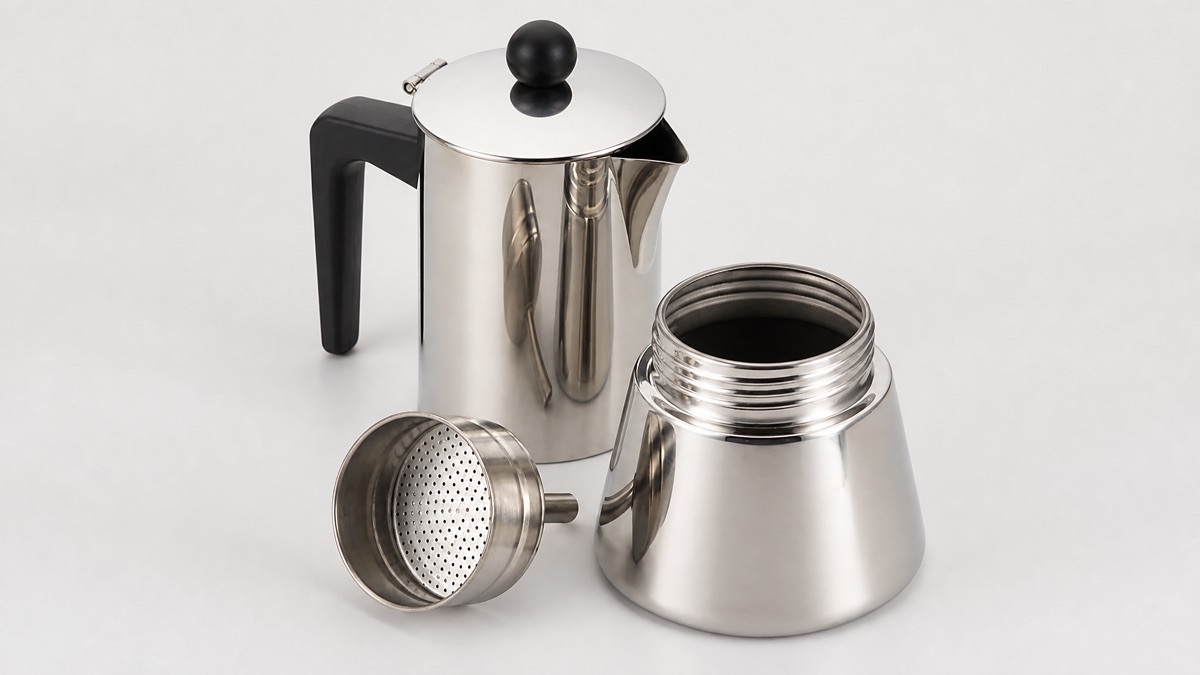
Hello and welcome, Sam here. The BonJour espresso maker is a stainless steel stovetop pot from BonJour, a Meyer Corporation brand. It brews strong coffee on a stove with no cord and no pump. Two sizes exist, a 4-cup pot and a 6-cup pot. Our customers love Honduran Santa Bárbara, so I judge stainless steel moka pots with Honduran Santa Bárbara.
The pot is a moka pot, not a true espresso machine. Steam pushes the water at about 1 to 2 bar. A fine grind, low heat and a tight seal give the best brew. Hand washing is the rule, and the 4-cup pot sells for $49.99.
Induction support, the steel grade and long-term tests are missing from the listings. This review covers sizes, brewing, stoves, reviews, cost and cleaning. A buyer can then judge if the BonJour pot beats a Bialetti at a low price. No company read this review before I published the page.
What Is the BonJour Espresso Maker?
The BonJour espresso maker is a stainless steel pot that brews strong coffee on a stove. BonJour, a Meyer Corporation brand, sells it as the Stovetop Espresso Maker. The pot has no cord and no pump.
The design copies the classic Italian pot. A contoured handle sits on the side, and the lid carries a coffee bean knob. Amazon rates the 9 ounce (266 ml) model 4.1 out of 5 stars from 31 ratings.
The pot belongs to the moka pot family. Alfonso Bialetti marketed the first Moka Express from 1933. Meyer Corporation owns BonJour, along with kitchen labels such as Circulon and Anolon.
The name BonJour also fits a different product, so the two are easy to confuse. The Inalsa Bonjour is an 800 W electric machine sold in India. It makes espresso, cappuccino and latte with 4 bar of pressure. The stovetop pot is a separate item.
Is the BonJour Espresso Maker Real Espresso?
No. The BonJour espresso maker is not real espresso, because heat and steam push the water, not a pump. The cup is strong and concentrated. Sweet Maria's places moka pot coffee between espresso and Turkish coffee.
The listing still uses the word. BonJour says the pot brews rich, full-bodied espresso without costly high-tech machines. The listing adds that Italians have shared this style of coffee for generations.
The difference comes down to pressure. A moka pot extracts at about 1 to 2 bar, while the espresso standard is 9 bar. With so little pressure, a moka pot cup has thin crema, or none at all.
The strong coffee suits sipping. The listing also names iced coffee drinks and recipes such as tiramisu and chocolate mocha cupcakes as uses.
Which BonJour Espresso Maker Sizes Exist?
Two BonJour espresso maker sizes exist: a 4-cup 9 ounce pot and a 6-cup 14 ounce pot. Both brew small demitasse cups, not mugs.
The 4-cup pot is model 53916 and holds 9 ounces (266 ml). The 6-cup pot is model 53917 and holds 14 ounces (414 ml). Both sizes share the same body, handle and bean knob lid.
Sizes at a glance:
| Spec | 4-cup pot | 6-cup pot |
|---|---|---|
| Model | 53916 | 53917 |
| Capacity | 9 ounces (266 ml) | 14 ounces (414 ml) |
| Cups | 4 demitasse cups | 6 demitasse cups |
| Price seen | $49.99 | $59.99 |
Retail titles can mislead on size. Some pages list a 32 ounce figure for the 4-cup pot. That number does not match the 9 ounce (266 ml) listing, so the cup count is the safer guide.
How Does the BonJour Espresso Maker Work?
The BonJour espresso maker works by boiling water in the base and forcing it up through the grounds. Steam pressure builds in the sealed base. That pressure pushes the hot water through the coffee into the top chamber.
The pot has three parts, and each handles one step of that path. The base holds the water that boils and makes the steam. The filter basket holds the grounds that the hot water must pass through. The upper half collects the finished coffee.
Because the base is sealed, the steam pressure inside keeps rising as the water heats. The base carries a safety valve for this reason. The valve releases steam if the pressure climbs too high.
The same pressure that pushes water upward also looks for any gap to escape. Steam that escapes where the halves screw together stops the pot from brewing. Tight threads and a clean gasket fix that.
How Do You Brew With the BonJour Espresso Maker?
You brew with the BonJour espresso maker by filling the base, loading the filter and heating the sealed pot. Fill the base with water to just below the safety valve. Drop in the filter basket and fill it with ground coffee.
Screw the top on tight and set the pot on low to medium heat. A brew takes about 5 minutes. The sound changes from bubbling to a drier hiss when the water is gone. Lift the pot off the heat then.
Brew steps:
- Fill the base with water to just below the safety valve.
- Drop in the filter basket and fill it with ground coffee.
- Screw the top on tight.
- Set the pot on low to medium heat for about 5 minutes.
- Lift the pot off the heat when the sound turns dry.
Run one first brew with used grounds before drinking from the pot. That brew cleans the pot and tests the valve. Low heat also keeps the steel from blackening.
What Grind Suits the BonJour Espresso Maker?
A fine grind suits the BonJour espresso maker, finer than drip but coarser than espresso. Sweet Maria's compares the target to a fine filter drip setting.
Do not pack the grounds. Wet coffee swells and tamps itself. A finger can level the basket, and a wipe clears loose grounds from the rim.
Grind size also affects the filter screen. Powder is so fine that it clogs the screen, and a clogged screen can stop the brew. The rule is fine but not powdery.
What Is the BonJour Espresso Maker Made Of?
The BonJour espresso maker is made of stainless steel. BonJour calls the steel durable. The finish is plain stainless steel in one color.
The lid carries a coffee bean knob, and the handle has a contoured shape. The listings do not name the handle material. They also do not give the steel grade.
Without a grade for the BonJour pot, the best comparison is Sweet Maria's own moka pot. It uses 18/10 food-grade stainless steel, but it is a different product. Sweet Maria's calls steel pots safer than the cheaper aluminum kind.
The grade decides whether a pot works on induction. 18/10 stainless steel (AISI 304) is non-magnetic. A pot made fully of it needs a bonded magnetic layer in the base to heat on induction.
Which Stoves Suit the BonJour Espresso Maker?
The BonJour espresso maker suits a standard stove, and no listing confirms induction. The listing says to set the pot on the stove and bring it to a gentle boil.
Gas and electric burners suit stainless moka pots at low to medium heat. High heat blackens the steel and can melt a handle.
Induction works differently, because an induction stove heats only a magnetic base. No BonJour page states that the pot has one. A magnet held to the base gives a quick hint. A strong pull is a good sign, but a weak magnet can miss a bonded layer.
Induction owners who want a sure fit can pick a pot sold as induction ready. One example is the Bialetti Moka Induction. That pot uses an aluminum base clad in stainless steel. Owners of a classic aluminum pot have another route. Bialetti also sells a 13 cm stainless steel induction plate for its classic aluminum pots.
What Do BonJour Espresso Maker Reviews Say?
BonJour espresso maker reviews say little, but the scores are good: 4.1 out of 5 stars from 31 ratings. Few written reviews exist online for this pot.
Home Depot lists only 2 reviews for the 4-cup pot. Because so few people wrote comments, the star scores carry more weight than any single remark.
No lab or hands-on test of the pot turned up. Brew time, cup temperature and yield are not measured in any page read for this review.
What Do Owners Like About the BonJour Espresso Maker?
Owners like the BonJour espresso maker for its design, its materials and its price. Materials and price draw praise on the 4-cup page.
The design reads classic Italian. The contoured handle and bean knob lid give the pot a finished look.
The method stays simple. The steps are fill, load, seal and heat. BonJour calls it a fuss-free brewing system.
What Are the BonJour Espresso Maker Complaints?
The BonJour espresso maker complaints center on unclear capacity labels and hard-to-find stock. The 32 ounce title on some pages does not match a 4-cup pot.
The 6-cup pot sells out. Overstock showed it backordered, and Best Buy no longer offers model 53917 new.
Listings leave gaps. None gives the steel grade, the weight or induction support. Leaks at the join are the classic moka pot fault, and a worn gasket or loose threads cause them.
How Does the BonJour Espresso Maker Compare to a Bialetti?
The BonJour espresso maker compares well to a Bialetti on method, and differs on material and induction proof. Both brands follow the same stovetop steps.
Bialetti is the best known moka pot brand. Alfonso Bialetti marketed the aluminum Moka Express from 1933. The Venus line is stainless steel. The Moka Induction adds a stainless steel clad base.
Cup labels differ between brands. The Moka Express 4-cup holds 190 ml, and the Venus 4-cup holds 170 ml. The BonJour 4-cup holds 266 ml (9 ounces). Compare milliliters, not cup counts.
Cup sizes:
| Pot | Material | 4-cup capacity |
|---|---|---|
| Bialetti Moka Express | Aluminum | 190 ml |
| Bialetti Venus | Stainless steel | 170 ml |
| BonJour stovetop pot | Stainless steel | 266 ml (9 ounces) |
The Bialetti Brikka adds a weighted Cremavent valve. The valve raises pressure for more visible crema. No BonJour listing mentions such a valve.
Fill the base, load the basket, seal the halves and heat gently. That method is the same for both. Bialetti prints induction support on its induction models, and BonJour pages state none.
BonJour Espresso Maker vs an Electric Espresso Machine?
The BonJour espresso maker swaps the electric espresso machine's pump and controls for a stove and a pot. BonJour pitches the pot as espresso without costly high-tech machines.
A pump machine runs at 9 bar, against 1 to 2 bar in the pot. A stovetop pot has no pump, no pressure gauge and no steam wand. The brewer controls only grind, dose and heat.
The pot makes four or six small cups at once, not a single shot. Milk drinks need a separate frother. The Inalsa Bonjour electric unit adds a frothing function at 4 bar.
How Much Does the BonJour Espresso Maker Cost?
The BonJour espresso maker costs $49.99 for the 4-cup pot and $59.99 for the 6-cup pot. Bed Bath & Beyond listed the 4-cup price. Overstock listed the 6-cup price.
Per cup, the 4-cup pot costs $12.50 and the 6-cup pot costs $10.00. The larger pot saves $2.50 per cup. Per ounce, the 4-cup pot costs $5.55 and the 6-cup pot costs $4.29.
Price breakdown:
| Size | Price | Per cup | Per ounce |
|---|---|---|---|
| 4-cup (9 ounces) | $49.99 | $12.50 | $5.55 |
| 6-cup (14 ounces) | $59.99 | $10.00 | $4.29 |
| Gap | $10.00 | $2.50 less | $1.26 less |
The 6-cup pot adds only $10 for two more cups. Prices move, and the 6-cup pot is often out of stock.
Where Can You Buy the BonJour Espresso Maker?
You can buy the BonJour espresso maker at Amazon, Home Depot and Walmart. Stock varies by size and by store.
The 4-cup pot has the widest spread of listings. The 6-cup pot shows as backordered or gone at the stores checked. Meyer Corporation owns the BonJour brand and lists it on its brand page.
Match the model number to the cup count before ordering: 53916 for 4 cups and 53917 for 6 cups.
How Do You Clean the BonJour Espresso Maker?
You clean the BonJour espresso maker by hand, after the pot cools. Take the pot apart once it is cool. Rinse the base, the top and the filter basket in warm water.
Do not use steel wool or abrasive pads. Clear old grounds from the filter screen, and check the rubber gasket. Steam leaks at the join point to a worn gasket.
Urnex coffee-maker cleaners suit pots with no aluminum. A stainless steel pot like this one fits that rule.
Descale with equal parts white vinegar and water, filled to just below the safety valve. Brew the mixture like coffee, then rinse well. Hard water calls for this every 2 to 3 months.
Check the gasket monthly. Replace it when it turns stiff or cracks. Many guides set the swap at every 6 to 12 months. Never take the safety valve apart.
Is the BonJour Espresso Maker Dishwasher Safe?
No. The BonJour espresso maker is not dishwasher safe, and Overstock lists the 6-cup pot as hand wash only. Hand washing is the rule to follow for both sizes.
Sweet Maria's gives the same rule for its stainless pot: do not use a dishwasher. The advice holds for all moka pots with a gasket, which is the rubber ring that seals the pot.
Dry each part before the pot goes back together. A dry gasket seats cleanly on the next brew.
Is the BonJour Espresso Maker Worth It?
Yes. The BonJour espresso maker is worth it as a low-cost stove brewer, not as a true espresso machine. The steel body, the simple method and the small price are real strengths.
The weak points are few reviews, no induction claim, an unknown steel grade and a hard-to-find 6-cup pot.
Pros:
- Stainless steel body
- Simple fill, load, seal and heat method
- Low price for four or six cups
- No cord and no pump
Cons:
- Few written reviews
- No induction claim on any listing
- Unknown steel grade
- 6-cup pot often out of stock
The 4-cup pot holds 266 ml, about 66 ml a cup. That fills demitasse cups, not mugs.
The 4.1 star Amazon score backs the buy for plain daily use on a gas or electric stove.
Who Should Buy the BonJour Espresso Maker?
Home brewers with a gas or electric stove should buy the BonJour espresso maker, if they want strong small coffees at a low price. Pick the 4-cup pot for one or two drinkers.
The 6-cup pot suits a small group. The extra two cups cost only $10 more.
Buyers with an induction stove, a milk-drink habit, or a wish for a crema-topped shot should skip it. Induction owners get a better match from the Bialetti Moka Induction.
Odradeks Coffee House is reader-supported. If you buy through a link on this page, we may earn a small affiliate fee at no extra cost to you.