Bodum Coffee Maker Review: Is the Chambord Worth It?
Hello, I'm Sam, from Odradeks. Our doors were open when Nestlé took a majority stake in Blue Bottle in 2017. Bodum makes many coffee makers, but the Chambord French press is the one most people picture.
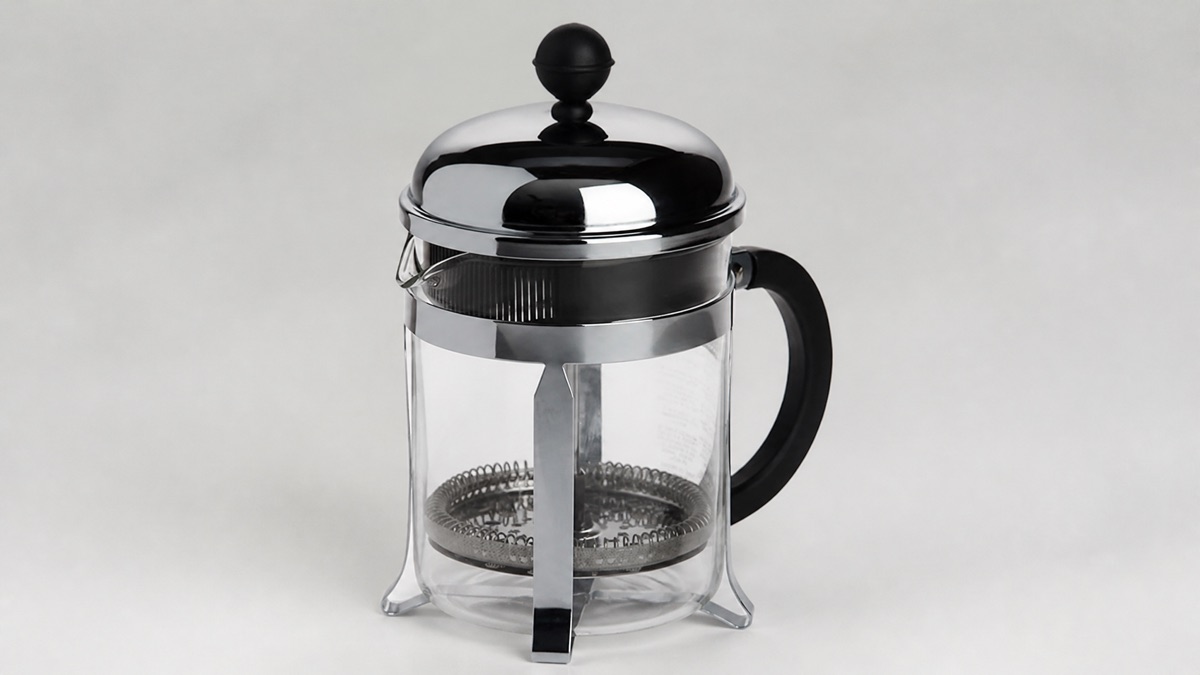
The Chambord is a domed glass press in a chrome-plated steel frame. It comes in four sizes, from 12 oz (0.35 L) to 51 oz (1.5 L). It makes a rich, smooth cup with a full body, and it needs no paper filters.
The press costs about $40 for the 34 oz (1 L) size. Its thin glass loses heat fast, and the glass can break if dropped. The Chambord suits home brewers who want bold, low-cost coffee. There was no sponsor, and Bodum did not see this review early.
Is the Bodum Chambord a Good French Press?
Yes. The Bodum Chambord is a good French press for simple, bold, low-cost brewing. A former barista who tested it passed it on looks, taste and process. The tester would pick it over almost any other French press.
The Amazon page for the 34 oz (1 L) size shows 4.6 stars from 28,722 ratings. Amazon also tags it as an Amazon's Choice. Most best-French-press buying guides list the Chambord.
The press still has two weak points. Thin glass walls insulate poorly, so coffee cools in the carafe. The lid spout must also line up with the opening to pour cleanly.
What Is the Bodum Chambord?
The Bodum Chambord is a domed French press with a glass beaker in a chrome-plated steel frame. The press is made in Portugal.
The design is nearly 75 years old. Bodum has kept the same look while adding sizes and finishes.
Peter Bodum founded Bodum in Copenhagen, Denmark, in 1944. The company is now based in Switzerland and sells in over 50 countries.
Italians Attilio Calimani and Giulio Moneta patented the first design that resembles a modern French press in 1929. Swiss designer Faliero Bondanini patented the glass and steel version in 1958.
French makers sold that 1958 design as the Chambord. Bodum bought the rights to the Chambord name in 1983.
Finishes include polished chrome, stainless steel, copper, black and gold.
How Does the Bodum Chambord Work?
The Bodum Chambord works by steeping coarse grounds in hot water, then pressing them out with a mesh plunger. Hot water and ground coffee sit together in the glass beaker.
After the coffee steeps, the plunger pushes a steel mesh filter down through the brew. The mesh holds the grounds at the bottom of the beaker, so the liquid stays above them.
The lid adds a last filter stage at its pour spout. This stage stops larger grounds from reaching the mug.
Because the filter is metal mesh, oils pass through it into the cup. Paper filters trap those oils. The press cup tastes fuller as a result.
The press needs no paper filters or pods. Each brew leaves no filter waste.
What Is the Bodum Chambord Made Of?
The Bodum Chambord is made of borosilicate glass, steel and BPA-free plastic.
The beaker uses heat-resistant borosilicate glass. This glass handles quick temperature changes without cracking.
The frame is chrome-plated steel and holds the beaker. The handle has a soft, grippy plastic grip.
The plunger and mesh filter are stainless steel. A BPA-free plastic knob sits on top.
The black lid is BPA-free plastic. Its pour spout turns closed to hold heat while the coffee steeps.
Chambord Parts:
- Beaker: borosilicate glass
- Frame: chrome-plated steel
- Plunger and filter: stainless steel
- Knob and lid: BPA-free plastic
How Do You Brew With the Bodum Chambord?
The Bodum Chambord brews coffee with coarse grounds, hot water, a four minute steep and a slow press.
Use a coarse grind. Fine grounds clog the filter and make the plunger hard to press.
The standard ratio is 8 g (0.3 oz) of coffee to 4 oz (118 ml) of water. One tested run used 11.5 g (0.4 oz) of coffee and 4.8 oz (142 ml) of water.
Heat matters next. The beaker is preheated with hot water, and then that water is poured out. The coarse grounds go into the beaker, hot water goes over them, and one stir mixes the two.
A timer is set for four minutes while the grounds steep. After that, the plunger is pressed down slowly until it reaches the bottom.
All the coffee is poured out right away. Coffee left on the grounds turns bitter.
Brew Steps:
- Preheat the beaker with hot water, then pour it out.
- Add coarse grounds to the beaker.
- Pour in hot water and stir once.
- Steep for four minutes.
- Press the plunger down slowly.
- Pour all the coffee out right away.
The same press also makes cold brew, which swaps heat for time. Use 1 cup of coarse coffee to 5 cups of cold water and steep 12 to 24 hours. A concentrate uses 1 cup of coffee to 3 cups of water.
Cold brew keeps well. Leftover cold brew lasts up to two weeks in the fridge.
What Sizes Does the Bodum Chambord Come In?
The Bodum Chambord comes in four sizes: 12 oz (0.35 L), 17 oz (0.5 L), 34 oz (1 L) and 51 oz (1.5 L).
Bodum calls these the 3 cup, 4 cup, 8 cup and 12 cup. One Bodum cup is only 4 oz (118 ml). The 8 cup size therefore holds eight 4 oz cups, or 34 oz (1 L).
Chambord Sizes:
| Size | Bodum Name | Capacity |
|---|---|---|
| 12 oz | 3 cup | 0.35 L |
| 17 oz | 4 cup | 0.5 L |
| 34 oz | 8 cup | 1 L |
| 51 oz | 12 cup | 1.5 L |
The 34 oz model measures 5.6 x 4.3 x 9.1 inches (14.2 x 10.9 x 23.1 cm) and weighs 1.25 lbs (0.57 kg).
Grounds take up room in the pot. The poured volume is therefore lower than the label volume.
Which Bodum Chambord Size Fits You?
The Bodum Chambord 34 oz (1 L) size fits about four people. This is the most popular size.
Three of the four sizes cover most needs:
- 12 oz (0.35 L): This size suits one person with one mug.
- 34 oz (1 L): This size fits about four people and is the most popular.
- 51 oz (1.5 L): This size serves a family or a group.
The tested 34 oz press included a coffee scoop. One scoop measures 0.4 oz (11.5 g).
How Does the Bodum Chambord Taste?
The Bodum Chambord has a rich, smooth taste with a full body. A single serving tested rich and smooth.
The cup was also sweeter than a French press normally is. It had less acidity than usual. A full preheated batch stayed smooth and drinkable, though its taste was a little more acidic than the single cup.
The full body comes from the filter. Oils pass through the metal mesh into the cup, and those oils give the coffee its full body. Some fine particles pass the mesh too.
The oils include cafestol, a compound in coffee oil that can raise LDL cholesterol. Paper filters remove more than 90 percent of it. A metal mesh does not, so the same oils that build the body also carry cafestol into the cup.
The fine particles that get through the mesh settle at the bottom of the glass as sediment. A side by side test found less sediment from the Chambord than from the Bodum Brazil. The Brazil left thicker coffee at the bottom of the glass.
Does the Bodum Chambord Keep Coffee Hot?
No. The Bodum Chambord does not keep coffee hot for long.
The glass walls are thin and have a single layer. Glass this thin lets heat escape fast, so a carafe left on the counter goes cold quickly.
The heat loss starts during brewing. A tested unit read 180°F (82°C) after a five minute steep. The carafe was not preheated. The target range for a brew is 195 to 205°F (91 to 96°C). The coffee was already too cool before anyone poured it.
Preheating the beaker with hot water helps. Turning the lid spout closed during the steep also holds heat in.
Bodum also sells the Columbia, an insulated French press. The Bodum Columbia is the in-brand answer to cold coffee.
Is the Bodum Chambord Easy to Clean?
Yes. The Bodum Chambord is easy to clean because the press has few parts. The plunger unscrews into separate pieces, so each piece can be washed on its own.
A rinse after each brew handles daily cleaning. The mesh filter traps coffee oils over time, so it should be rinsed well after each use. The filter is slightly thin, so it should be handled gently.
A deeper clean uses dish soap, apple cider vinegar or a cleaning product.
A new press also needs washing. It should be washed in warm, soapy water before first use and dried thoroughly.
Is the Bodum Chambord Dishwasher Safe?
Yes. The Bodum Chambord is dishwasher safe for the beaker, filter and plunger.
The lid and frame are different. These parts need hand washing with a non-abrasive sponge.
Hand washing the filter has one extra benefit. The filter comes apart, which clears every last ground.
Heat is another limit. The press is not for stovetop use.
What Are the Bodum Chambord Complaints?
The Bodum Chambord draws complaints about a wobbly plunger, a slipping frame and fast cooling.
Some units have a plunger that wobbles. Some frames also slip. A tested unit had neither fault.
The pour spout needs lining up with the lid opening. A misaligned lid makes coffee dribble out. Some rival lids filter all the way round, such as the Fellow Clara.
Fine grounds make the plunger hard to press. Pressing too hard can squirt hot coffee. The Chambord has no splash guard.
The glass has no volume markings. A separate measuring cup is needed.
Main Complaints:
- Wobbly plunger on some units
- Slipping frame on some units
- Pour spout needs lining up
- Hard plunger with fine grounds
- No volume markings
- Fast cooling
Does the Bodum Chambord Break Easily?
Yes. The Bodum Chambord can break easily when dropped, even though borosilicate glass resists heat shock.
The glass handles hot water well. A hard knock on a counter or sink is a different kind of stress. To cushion such knocks a little, the frame has metal feet that add some shock absorption.
Because breakage is a real risk, the warranty matters. Bodum gives a limited one year warranty on manufacturer defects. The warranty does not cover glass, so a cracked beaker is the owner's cost.
Spare glass beakers are sold separately for the Chambord sizes. Manufactum and Maxicoffee list them.
A steel body, such as the Espro P7 has, avoids glass breakage. The trade-off is that the brew is no longer visible.
How Does the Bodum Chambord Compare?
The Bodum Chambord compares well on price, looks and visible brewing but trails on insulation.
The closest rival is the Bodum Brazil, which uses the same glass and comes in the same sizes. The Chambord adds a metal frame around the glass.
The Espro P7 is built differently. It has double steel walls and a two-layer filter. The Chambord costs a fraction of the Espro.
The AeroPress is a different kind of brewer. It makes a lighter, cleaner single cup. The Chambord makes a bolder, larger batch. The AeroPress lists at $39.95 and uses paper filters, while the Chambord needs no filters.
Press Comparison:
| Press | Body | Price |
|---|---|---|
| Bodum Chambord 34 oz | Glass and steel frame | $39.69 |
| Bodum Brazil 12 oz | Glass and plastic base | $15.39 to $17.99 |
| Espro P7 32 oz | Double-wall steel | $119.95 to $149.95 |
Bodum Chambord vs Bodum Brazil
The Bodum Chambord beats the Bodum Brazil on sediment, cleaning and plunger fit.
The Brazil has a fixed plastic base and handle. Cleaning the Brazil is harder when coffee gets on the outside of its body.
The Brazil does cost less. The 12 oz (0.35 L) size sold for $15.39 on sale and $17.99 normally.
The Brazil comes in black, red and green.
Bodum Chambord vs Espro P7
The Bodum Chambord costs far less than the Espro P7 but keeps coffee warm for a shorter time.
The Espro P7 is built from double-walled stainless steel.
The P7 also has a two-layer basket filter. Both layers are very fine and seal tightly against the wall. The Espro makes a smoother, grit-free cup.
That build comes at a higher price. The Espro P7 32 oz (0.95 L) lists at $119.95 from Espro and $149.95 at Sur La Table.
How Much Does the Bodum Chambord Cost?
A Bodum Chambord costs about $40 for the 34 oz (1 L) size.
Amazon lists the 34 oz size at $39.69 new. Parlor Coffee sells it at $40. 1st in Coffee lists $49.95.
34 oz Prices:
| Seller | Condition | Price |
|---|---|---|
| Amazon | New | $39.69 |
| Parlor Coffee | New | $40 |
| 1st in Coffee | New | $49.95 |
| Amazon | Used, like new | $30 |
A like-new used 34 oz press costs $30 on Amazon.
A coarse grind needs a grinder, which adds to the start-up cost.
Is the Bodum Chambord Worth the Price?
Yes. The Bodum Chambord is worth the price because the press needs no filters or pods.
Running costs are only coffee. A spare glass beaker is the main repair cost.
The Espro P7 costs about twice as much or more.
Is the Bodum Chambord Worth It?
Yes. The Bodum Chambord is worth it for a home brewer who wants bold, low-cost coffee.
Its strengths are price, looks, a visible brew, easy cleaning and full flavor. The size range also covers one to twelve cups.
Main Strengths:
- Low price
- Classic looks
- Visible brew
- Easy cleaning
- Full flavor
Its limits are poor heat retention, a fussy pour and breakable glass. Drinking the coffee soon after brewing avoids the first.
Who Should Skip the Bodum Chambord?
Buyers who should skip the Bodum Chambord are clumsy or forgetful brewers, travelers and fans of light paper-filtered coffee.
The following are the three types of buyers who do better with another brewer:
- Clumsy or forgetful brewers: An insulated steel press such as the Espro P7 suits them better.
- Travelers: Glass makes the Chambord a poor travel press.
- Fans of light paper-filtered coffee: These drinkers want a light, clean cup. A pour over or the AeroPress suits them better.
Odradeks Coffee House is reader-supported. If you buy through a link on this page, we may earn a small affiliate fee at no extra cost to you.