Black and Decker Coffee Grinder Review: Is the CBG110S Worth It?
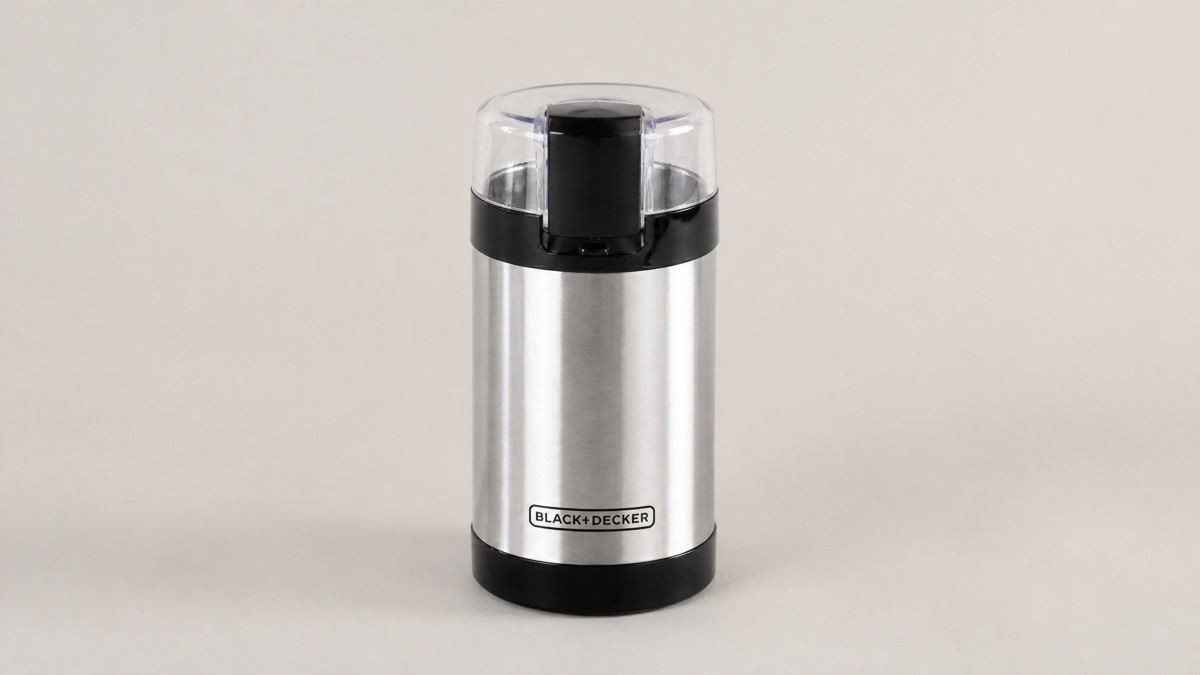
Good morning, coffee lovers, I'm Sam. Our espresso comes from a La Marzocco Linea, so I know a good shot. The Black+Decker CBG110S is a one-touch stainless steel blade grinder that holds 2/3 cup (155 ml) of beans. It costs $25.99.
The grinder makes a medium grind in 14 to 16 seconds. The lid lock keeps the blades off until the lid sits securely. The blades chop the beans, so the grounds come out uneven. The fixed bowl cleans with a damp cloth only. Drip and French press work well. Espresso does not.
A 2 year limited warranty backs the grinder. It beats the Krups F203 on price and loses to the Black+Decker CBM310BD on grind control. My opinion of the Black+Decker CBG110S is my own, with no deal attached. Espresso fans need a burr grinder instead.
What Is the Black+Decker CBG110S Coffee Grinder?
The Black+Decker CBG110S coffee grinder is a one-touch stainless steel blade grinder that holds 2/3 cup (155 ml) of beans. It grinds coffee beans, dry herbs and some dry spices. The grinder suits households that want a cheap, simple way to grind fresh coffee.
The Black & Decker Corporation owns the Black+Decker name. Empower Brands, a Spectrum Brands subsidiary, uses the name under license and sells the grinder. The manual covers three versions: the CBG110S, the CBG110SC and the CBG110BS. It states that the grinder is for household use only, so it is not built for commercial work.
The box holds two parts: the grinder base with its lid and the grinding bowl. No brush, scoop or extra bowl comes with it. The base stores the power cord in a wrap on the underside.
The CBG100S is the older model in the same line. The maker claims the CBG110S grinds 30% better than the CBG100S over a 10 second test. That claim compares two blade grinders from the same brand.
Beginners, students, renters and small kitchens make up the main audience. The grinder costs little and takes up almost no counter space. The price comes with a trade: the blades chop the beans, and no burr sets the grind size.
What Are the Black+Decker CBG110S Specs?
The Black+Decker CBG110S specs list a 150 watt motor at 120 volts. The base draws household power in the United States. The motor is small but spins the blades fast enough to finish a load in seconds.
The bowl sets the size of each load. It holds up to 2/3 cup (155 ml) of beans, about 70 g (2.5 oz). That much fills a full pot in a drip brewer. Larger loads do not fit in the bowl.
The bowl and blades are stainless steel, and the lid is clear plastic. The clear lid lets the user watch the beans while grinding. The cord wrap sits under the base.
The grinder stands 7.3 inches (18.5 cm) tall, 4.18 inches (10.6 cm) long and 3.4 inches (8.6 cm) wide. The unit weighs 1.43 pounds (0.65 kg).
Spec Sheet:
| Spec | Value |
|---|---|
| Motor | 150 W, 120 V |
| Height | 7.3 in (18.5 cm) |
| Length | 4.18 in (10.6 cm) |
| Width | 3.4 in (8.6 cm) |
| Weight | 1.43 lb (0.65 kg) |
| Bean capacity | 2/3 cup (155 ml) |
How Does the Black+Decker CBG110S Work?
The Black+Decker CBG110S works by spinning stainless steel blades that chop the beans into smaller pieces. No burrs crush the beans, and the grinder has no numbered grind settings. The user sets the grind size with the length of the press.
A single push-button on the lid controls the motor. The motor runs while the user holds the button. The blades stop when the user lets go.
Because the button is the only control, grind time is the only dial on this machine. Short presses leave coarse pieces. Longer grinding turns the pieces into a fine powder.
Blades chop beans at random. A blade grinder makes fines, the fine dust, and boulders, the large chunks, in the same batch. Pulse grinding is the standard technique for this kind of grinder. The user presses in short bursts and lets the blades rest between them.
Short bursts also protect the motor. The manual sets a limit: never run the grinder more than 30 seconds at a time. The motor can warm up past that point. Short bursts protect the motor and the beans.
Loading takes four steps. The user pours in up to 2/3 cup (155 ml) of beans, closes the lid and plugs in the cord. The user then presses the button for a few seconds and lets go.
How Does the Black+Decker CBG110S Lid Lock Work?
The Black+Decker CBG110S lid lock works by keeping the blades off until the lid sits securely on the bowl. The lid interlock cuts power when the lid is loose. The manual warns against running the grinder without the lid in place.
A loose lid never starts the motor. This protects fingers and stops beans from flying out of the bowl.
The blades keep spinning for a moment after the user lets go. The user waits until they stop completely. The user then unplugs the grinder and lifts the lid.
The lid is a consumer replaceable part, with part number 20106000004701. A cracked lid can be replaced without a service visit. The rest of the grinder has no user serviceable parts.
How Well Does the Black+Decker CBG110S Grind Coffee?
The Black+Decker CBG110S grinds a full load of coffee beans to a medium grind in 14 to 16 seconds. The result is a usable grind for drip, French press and moka pot. The grounds are less even than burr grounds.
The maker claims 30% better grinding and a uniform grind. That figure compares the CBG110S with the older CBG100S over a 10 second test. It does not measure grind evenness. No independent sieve test of the CBG110S was found.
A blade grinder chops beans with a spinning blade, so the result depends on technique. The user controls the grind with press length and by shaking the grinder between presses. Practice gives a repeatable routine.
Uneven grounds matter differently for each brewing method. Drip tolerates them because the paper filter catches the fines, which are the finest particles. French press passes some fines through its metal mesh, so the cup shows silt. Pour-over and espresso punish uneven grounds the most.
The grinder holds a 4.5 star rating from 19.7K ratings on Amazon. The rating reflects satisfaction with a low price and a simple job. It does not measure grind quality.
How Long Should the Black+Decker CBG110S Grind for Each Brew Method?
The Black+Decker CBG110S grinds 10 to 28 seconds, with the brew method setting the time. A coarse grind for French press or percolator takes 10 to 12 seconds. The manual gives these times for a full load of 2/3 cup (155 ml). Smaller loads need less time.
A medium grind takes 14 to 16 seconds. The manual names automatic drip as the use for that grind.
A fine grind takes 24 to 28 seconds. The manual names espresso and Turkish coffee for that grind. This long run sits close to the 30 second limit.
Pulses give another way to time the grind. A separate test used short pulses. Drip took 6 to 7 pulses, about 12 seconds in total. French press took 4 pulses, about 8 seconds.
The manual suggests 1 tablespoon (15 ml) of ground coffee for each 5 oz (147 ml) cup. A scoop count keeps each brew steady. Pulse timing keeps the grind steady.
Grind Times for 2/3 Cup (155 ml):
| Grind | Time | Brew Method |
|---|---|---|
| Coarse | 10-12 seconds | Percolator or French press |
| Medium | 14-16 seconds | Automatic drip |
| Fine | 24-28 seconds | Espresso or Turkish |
Does the Black+Decker CBG110S Grind Evenly?
No. The Black+Decker CBG110S does not grind evenly because its blades chop the beans into mixed sizes. The grounds hold coarse chunks and fine dust together. Burr grinders do this job with more care.
Holding the button for 20 seconds makes dust with a few chunks left.
That mix causes trouble in the cup. The fine powder over-extracts, which means too much flavor is pulled out of it. The chunks under-extract in the same cup, so too little comes out of them.
No independent sieve test of the CBG110S exists in the research. The claim of even grounds therefore rests on the maker alone. Owners judge by taste.
Short pulses and a shake between pulses help. The shake moves chunks back under the blades. The result is still mixed, but the dust shrinks.
Uneven grounds make uneven extraction, and the fines show up as muddy sediment in a French press cup. A paper filter catches most of that sediment in a drip brewer.
What Are the Benefits of the Black+Decker CBG110S?
The Black+Decker CBG110S offers five benefits: simple, fast grinding at a low price. The benefits come from its small size and its single button.
- One-button operation: The grinder has no dials, and the single button leaves nothing to learn. The user presses, waits and releases. A first-time user grinds fresh coffee on day one.
- Compact body: The body is small and light at 1.43 pounds (0.65 kg). The cord wraps under the base. A drawer or a shelf stores it with ease.
- Range of foods: The grinder handles dry herbs and some dry spices as well as beans. Fresh grinding keeps aroma that pre-ground coffee loses on the shelf. A household can buy whole beans and grind them just before brewing. One 2/3 cup (155 ml) load makes up to 12 cups. Peppercorns take about 10 seconds for a half cup. The manual lists the foods that cause damage, so the limits are clear.
- Low price: The grinder sells for $25.99. That price is low for a grinder with a metal bowl and metal blades.
- Speed: A coarse or medium load finishes in under 16 seconds. That is all the time the user must spend, which adds to the value.
The 2 year limited warranty adds protection to the low price. The grinder also needs no setup beyond plugging it in.
Is the Black+Decker CBG110S Loud?
Yes. The Black+Decker CBG110S is loud to some owners and quiet to others. One tester describes a high-pitched whine. Other owners call it quieter than the grinders they used before.
The disagreement matters less because the noise is brief. A coarse or medium load takes under 16 seconds, so the sound ends fast.
A short run still bothers some people, and a cheap fix exists. A folded towel or a silicone mat under the base dulls the sound and costs almost nothing.
No decibel reading is published for the CBG110S, so no measured number can settle the debate. The loudness verdict stays a matter of ear. Buyers sensitive to noise should expect a normal blade grinder whine.
How Do You Clean the Black+Decker CBG110S?
The Black+Decker CBG110S cleans with a damp cloth, because its bowl is fixed and cannot go in water. The manual forbids immersing the bowl, the base or the plug. The lid is the only part that takes a wash.
The first step is to unplug the grinder. Unplugging removes the risk of a sudden start. The blades are sharp, so each wipe needs care around them.
The lid is the one part that can get wet. It washes in warm water with dish soap. The dishwasher is not allowed.
A slightly damp cloth or sponge wipes the bowl and the base. A small brush reaches the corners better than a cloth. The user then dries all parts well.
Harsh detergents, abrasive cleansers and scouring pads are off limits. They scratch the stainless steel. The grinder has no user serviceable parts, so the cord wrap and the cleaning are the only upkeep.
Cleaning Steps:
- Unplug the grinder and wait for the blades to stop.
- Wash the lid in warm water with dish soap.
- Wipe the bowl and base with a slightly damp cloth.
- Dry every part thoroughly.
- Wrap the cord under the base.
Can the Black+Decker CBG110S Grind Spices Without Flavoring Coffee?
No. The Black+Decker CBG110S cannot grind spices without flavoring coffee, because its fixed bowl never goes in water. The manual warns that peppercorns and spices change the taste of beans ground afterward. It suggests a separate grinder for spices.
Because water is off limits, the bowl can only be cleaned dry. A tablespoon of baking soda helps. The user grinds it in the bowl and wipes the bowl thoroughly. The manual gives this step for nut residue.
Dry rice works as a second dry cleaner. Grinding 2 tablespoons of rice for 15 seconds absorbs oils and odors. The user then wipes out the dust.
Cleaning is only part of the limit, since the grinder cannot handle every spice. The manual bars moist, extremely hard and gummy foods. Whole ginger, chocolate, sesame seeds and oily spices such as cinnamon, cloves and nutmeg can harm the unit. Peanuts and grains such as wheat, rice, barley and dried corn are also barred.
Nuts show the same flavor problem in a milder form. They leave a nutty taste in the next batch of coffee. Wiping the bowl after nuts removes most of it. A coffee-only habit avoids the whole problem.
Who Should Avoid the Black+Decker CBG110S?
Espresso drinkers, large-batch brewers and precision fans should avoid the Black+Decker CBG110S. The blade design cannot hold a grind size. The small bowl caps each batch.
Espresso needs fine and even grounds. A blade grinder gives mixed sizes, so shots extract unevenly. A burr grinder suits espresso better.
The bowl holds 2/3 cup (155 ml). Brewing for a crowd takes two or three loads. Each load adds time and mess.
Buyers who want repeatable grind sizes need numbered settings. The CBG110S has none. Press length is the only control.
Owners who like to rinse parts in the sink will dislike the fixed bowl. The bowl takes a cloth only. Continuous running also warms the unit.
Poor Fits:
- Espresso drinkers
- Large-batch brewers
- Buyers who want numbered grind settings
- Owners who want a bowl that rinses in the sink
Is the Black+Decker CBG110S Good for Espresso?
No. The Black+Decker CBG110S is not good for espresso because blade grounds extract unevenly. A burr grinder is the right tool for espresso.
The CBG110S has no setting to hold a size between shots, so each shot comes out a little different.
A blade grind can pull a drinkable shot in a pressurized portafilter basket. A non-pressurized basket hides nothing. It exposes the uneven grounds.
The manual lists 24 to 28 seconds as the fine setting for espresso or Turkish coffee. Turkish coffee tolerates a blade powder better than espresso does. The manual does not claim espresso quality.
Some owners report an espresso-style grind in 20 seconds. Those reports describe fine powder, not a dialed-in shot. A fine grind and an even grind are different things.
The 30 second run limit also matters. A fine grind sits near the limit. A user who pushes past it risks heat and a worn motor.
Black+Decker CBG110S vs Krups F203 and Black+Decker CBM310BD: Which Is Better?
The Black+Decker CBG110S beats the Krups F203 on price and loses to the Black+Decker CBM310BD on grind control. The Krups F203 is another blade grinder. The CBM310BD is a burr mill from the same brand.
Price is the clearest gap between the two blade grinders. Walmart listed the Krups F203 at $35.02 in a snapshot. The CBG110S costs $25.99, so the Krups sits $9.03 higher.
The Krups F203 has a 200 watt motor. It also holds 3 oz (85 g) of beans. That is more than the 2/3 cup (155 ml) bowl of the CBG110S. Its bowl is fixed, so it cannot be lifted out.
A fixed bowl is harder to wash, and the SHARDOR blade grinder addresses that. It has a removable grinding cup that washes more easily. It holds 70 g (2.5 oz) of beans. The unit is bulkier than the CBG110S.
The Black+Decker CBM310BD is the burr option here. Its dial runs from very fine for espresso to coarse for percolator. That range gives it the grind control the blade models lack.
The CBM310BD also has a removable clear container that holds 1 cup of beans. It carries a 2-year limited warranty.
Grinder Comparison:
| Grinder | Type | Capacity | Power | Price |
|---|---|---|---|---|
| Black+Decker CBG110S | Blade | 2/3 cup (155 ml) | 150 W | $25.99 |
| Krups F203 | Blade | 3 oz (85 g) | 200 W | $35.02 |
| Black+Decker CBM310BD | Burr | 1 cup | Not listed | Not listed |
| SHARDOR blade grinder | Blade | 70 g (2.5 oz) | Not listed | Not listed |
Is the Black+Decker CBG110S Better Than a Burr Grinder?
No. The Black+Decker CBG110S is not better than a burr grinder for grind quality, but it wins on price and speed. The blades chop, while burrs crush beans to a more even size. Evenness is what the cup tastes.
Blades chop for as long as the user presses, so the size depends on time and technique. A burr grinder holds its size from batch to batch.
- CBM310BD: This model gives a dial to pick coarse or fine. The CBG110S gives only a button. A dial brings the same result tomorrow that it brought today.
- Baratza Encore: This is the usual next step up. It has 40 grind settings and 40 mm conical steel burrs. Retailers list it at $149.95, nearly six times the CBG110S price.
- Hario Skerton Pro: This is a hand grinder with ceramic conical burrs. Its hopper holds 60 g (2.1 oz). It costs less than the Encore and needs arm work instead of a motor.
The trade is plain. The blade grinder costs less and finishes in seconds. The burr grinder costs more and gives better, repeatable grounds.
How Much Does the Black+Decker CBG110S Cost?
The Black+Decker CBG110S costs $25.99 on the Black+Decker store, at Walmart and on Amazon. The price is the same across the three.
Price Snapshot:
| Grinder | Price | Gap to CBG110S |
|---|---|---|
| Black+Decker CBG110S | $25.99 | None |
| Krups F203 | $35.02 | $9.03 more |
The Amazon page lists the grinder as a best seller with 19.7K ratings.
One 2/3 cup (155 ml) load grinds enough coffee for up to 12 cups. At 1 tablespoon (15 ml) per cup, a single load covers a whole pot.
What Warranty Covers the Black+Decker CBG110S?
A 2 year limited warranty covers the Black+Decker CBG110S against defects in materials and workmanship.
The manual asks owners to register the warranty at prodprotect.com/blackanddecker.
An owner with a problem calls the customer care line at 1-800-465-6070. The manual tells owners not to return the product to the store or mail it to the maker. The call comes first.
The grinder has no user serviceable parts. Repairs go through the maker. The lid is the only part an owner can replace.
Is the Black+Decker CBG110S Worth It?
Yes. The Black+Decker CBG110S is worth it as a cheap, quick grinder for drip, French press and dry spices. It is not worth it for espresso. At $25.99 it fits that narrow job well.
The grinder has one button, so the user presses it and waits. A coarse or medium load takes under 16 seconds. The body is compact, which keeps it easy to store. The grinder also has a 2 year warranty.
Its weaknesses come from the same simple design. The grounds are uneven, so the grinder cannot match the quality of a burr grinder. The bowl is fixed, and the capacity is small. Noise reports split between loud and quiet.
The Amazon rating of 4.5 stars from 19.7K ratings shows that most buyers are happy. The rating fits the grinder's job. Buyers who expect burr quality will be disappointed.
Pros:
- One-button operation
- Fast cycle
- Compact body
- 2 year warranty
Cons:
- Uneven grounds
- Fixed bowl
- Small capacity
Who Should Buy the Black+Decker CBG110S?
Beginners, students, renters and small-kitchen cooks should buy the Black+Decker CBG110S. The grinder suits a first step away from pre-ground coffee. It also suits anyone who wants one cheap tool for beans and dry spices.
Its best uses are drip coffee, French press and moka pot. These methods forgive mixed grounds. Dry spices work too, if the user cleans the bowl between jobs.
Buyers who later want espresso or a clean pour-over should move up to a burr grinder. The CBM310BD is one step up from the same brand. The CBG110S stays useful afterward as a spice grinder.
Odradeks Coffee House is reader-supported. If you buy through a link on this page, we may earn a small affiliate fee at no extra cost to you.