Ascaso Coffee Machine Review: Is It Worth It?
Welcome, I'm Sam, and I use grinders and brewers every day. I have run a kosher coffee shop since 2012, and I know which thermoblock espresso machines last through a rush.
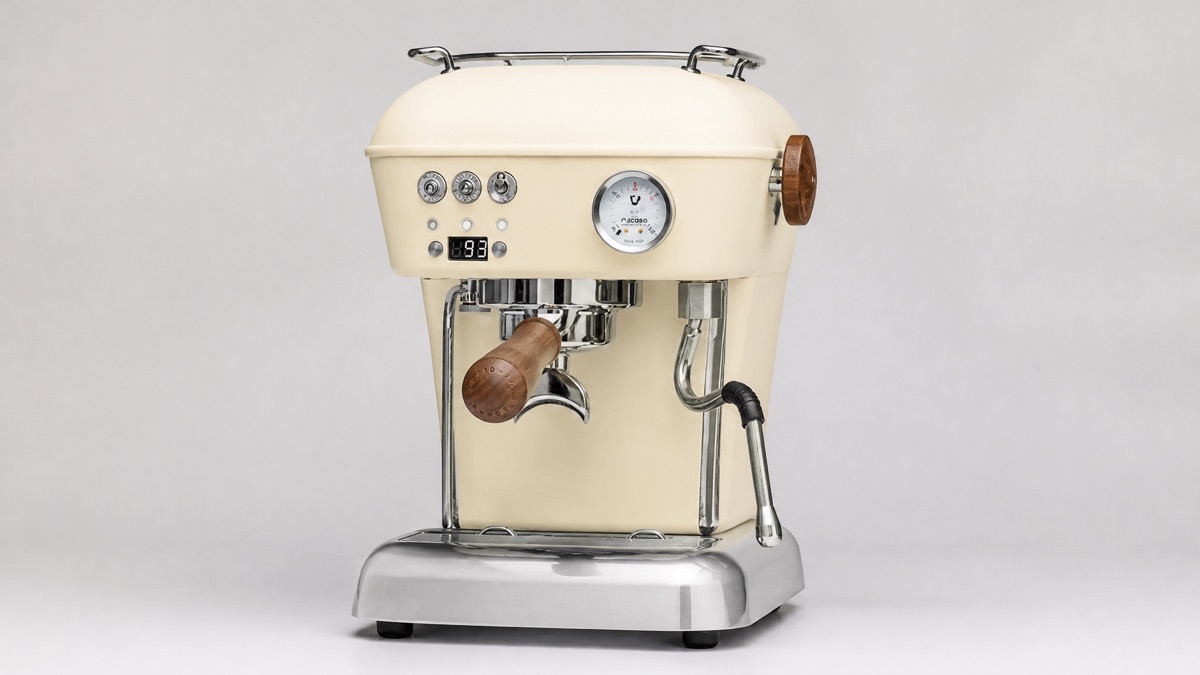
An Ascaso coffee machine is a semi-automatic home espresso machine made in Barcelona. Models carry a 58 mm portafilter, PID temperature control and walnut accents. Prices run from about $1,000 to $2,415, and steam power is modest on single thermoblock models.
My notes cover PID control, steam power and reliability, and nobody paid for my notes. The review ends with a clear verdict on who should buy an Ascaso and who should skip it.
What Is an Ascaso Coffee Machine?
An Ascaso coffee machine is a semi-automatic home espresso machine from Barcelona with a 58 mm portafilter and PID control. Most models heat water with a thermoblock instead of a boiler.
The Ascaso line has two design families. The Dream line has curved shapes in many colors, and the Steel line has corners and edges. Each machine has a removable water tank, so no plumbing is needed.
No Ascaso espresso machine has a built-in grinder. A separate burr grinder adds $200-$500 to the total cost, and a coffee scale helps the volumetric controls work well.
Ascaso machines suit home baristas who want café-style control in a small footprint. The Dream PID measures 13.5 x 10 x 13.5 inches (34.3 x 25.4 x 34.3 cm).
Who Makes the Ascaso Coffee Machine?
Ascaso designs and makes every Ascaso coffee machine in Barcelona, Spain. Jesús Ascaso founded the company in 1962 as a maker of spare parts for espresso machines.
Jesús Ascaso left his village in the Huesca mountains for Barcelona. He worked on the Gaggia production line from 1952 to 1962.
His son JL Ascaso later moved Ascaso Factory from spare parts into complete espresso machines. The company now employs 50 people in facilities of over 4,000 m² (43,000 sq ft). It sells in more than 95 countries.
The brand stays a niche name in the United States. Ascaso began a distribution partnership with Espresso Parts in 2020. Service in the United States runs through a limited network of authorized centers.
Which Ascaso Coffee Machine Models Can You Buy?
The Ascaso coffee machine range includes four main models: the Dream PID, Steel Uno, Steel Duo and Steel Duo Plus. Ascaso USA lists six 120V Steel products, in white, black and inox, and the top price there is $2,415 for the Duo Plus.
The Dream PID uses one thermoblock, a heater that warms water as it passes through. It sells for $1,550 to $1,735. Colors include Anthracite Gray, Cloud White, Kid Blue, Love Red, Polished Aluminum, Sun Yellow, Sweet Cream and Dark Black.
The Steel Uno falls in the $1,000-$1,500 range. The Steel Duo PID has two thermoblocks and lists at $2,095. The Steel Duo Plus also has two and lists at $2,415. Espresso Parts also sells refurbished units.
Ascaso Models and Prices:
| Model | Thermoblocks | US Price |
|---|---|---|
| Dream PID | 1 | $1,550-$1,735 |
| Steel Uno | 1 | $1,000-$1,500 |
| Steel Duo PID | 2 | $2,095 |
| Steel Duo Plus | 2 | $2,415 |
Older Dream machines without PID still appear on resale sites. They lack the temperature control of the Dream PID.
How Do the Ascaso Coffee Machine Steel Uno, Duo and Duo Plus Differ?
The Steel Uno, Duo and Duo Plus differ mainly in how they heat water. The Uno uses a single thermoblock for coffee and steam. The Duo adds a second thermoblock dedicated to steam.
A thermoblock is a small metal block that heats water as it flows through. The Uno has only one, so it must change temperature between brewing and steaming. That change takes time, and the user has to wait.
The Duo avoids that wait because its two thermoblocks each hold their own temperature. One handles coffee and the other handles steam. This lets the Duo brew and steam at the same time.
The Duo Plus is the second-generation Duo and costs $320 more than the Duo PID. Its upgrades include a joystick steam valve with a wood accent, 1-hole and 3-hole steam tips, and a competition shower screen under the grouphead.
How Does an Ascaso Coffee Machine Work?
An Ascaso coffee machine works by pumping tank water through a heated metal block into the portafilter. The block heats fresh water on demand, so no hot water sits between shots.
A digital PID display sets the brew temperature. A PID is a controller that keeps the heat at the chosen number.
The pump also pushes the water through the coffee, and its force is the pressure. An adjustable over-pressure valve, or OPV, sets the pump pressure.
Pre-infusion wets the coffee puck at low pressure before full pressure begins. The puck is the packed coffee in the portafilter.
Each shot also needs the right amount of water. Volumetric dosing stops each shot at a saved volume. Every cup then gets the same amount of water.
The Duo Plus reaches brewing temperature in under 3 minutes. The portafilter still needs about 30 minutes of preheating on the Dream PID and Steel Duo PID.
What Does PID Control Do on an Ascaso Coffee Machine?
PID control holds the brew temperature steady on an Ascaso coffee machine. PID stands for Proportional Integral Derivative, and the controller adjusts temperature in one-degree steps.
Those small steps let the Dream PID set brew temperature anywhere from 88°C to 96°C (190°F to 205°F). Light roasts suit the upper end of that range, and dark roasts suit the lower end.
A set temperature only helps if the machine reads the right spot. The Steel Duo PID reads temperature at the brew group, not at the thermoblock. The thermoblock runs hotter than the water that reaches the coffee, so a reading there would mislead.
How Does the Thermoblock Heat an Ascaso Coffee Machine?
The thermoblock heats the water in an Ascaso coffee machine as it flows through a metal block. The block is made of aluminum and stainless steel.
Because the block heats only the water in use, the machine does not keep a full tank hot. That design uses less energy than a full boiler, and the water stays fresh.
Boiler machines often need 10-15 minutes to warm up. Ascaso thermoblock machines reach brewing temperature in minutes.
The same design has a limit. A single thermoblock cannot brew and steam at once. The Dream PID needs 10-15 seconds to switch to steam temperature after a shot.
What Features Does an Ascaso Coffee Machine Have?
Ascaso coffee machines have PID temperature control, an adjustable pressure valve, volumetric shot programming and a 58 mm portafilter. Walnut accents and a compact body complete the design.
Key Features:
- PID temperature control
- Adjustable pressure valve
- Volumetric shot programming
- 58 mm portafilter
- Walnut accents
The Steel Duo PID adds two LED lights, an active cup warmer and a stainless steel steam wand that purges itself. The wand stays cool to the touch.
The Duo PID holds 2 liters (68 fl oz) of water. The machine weighs 15 kg (33 lb) and measures 270 x 360 x 315 mm (10.6 x 14.2 x 12.4 in). Ascaso USA sells every Steel model at 120V.
The Dream PID has walnut handles on the portafilter and steam knob, a 1.4 liter (47 fl oz) removable tank and an auto-off timer. The machine draws 1100 W at 120V and saves two shot volumes.
The Dream PID box holds five baskets: two traditional, two pressurized and one ESE pod basket. A blank backflush basket, a stainless steel tamper and a walnut portafilter handle complete the kit.
Espresso Parts lists the Dream PID for home use only, not for cafés. Pre-infusion is available on the Dream PID.
The Steel Uno adds programmable power-saving modes, pre-infusion time, dwell time and shot length. The Uno also accepts ESE pods.
Can You Adjust Pressure on an Ascaso Coffee Machine?
Yes. An Ascaso coffee machine lets the owner adjust pump pressure with an external screw. The adjustable OPV needs no disassembly.
The screw sits at the lower front of the Steel Duo PID. The owner can reach it without opening the machine. The Duo Plus works a little differently. It lets owners pull either 6-bar or 9-bar shots.
Most espresso uses about 9 bar (130 psi), so that is the usual setting. The Dream PID range runs from 8 bar to 15 bar (116 psi to 218 psi).
A front pressure gauge shows shot pressure live. The gauge helps spot channeling, which is water cutting a path through the coffee puck.
Does an Ascaso Coffee Machine Make Good Espresso?
Yes. An Ascaso coffee machine makes good espresso with stable temperature and repeatable shot volumes. Crema comes out rich and golden with fresh beans.
A Dream PID test of 80 shots across light, medium and dark roasts held group head temperature within 0.5°C (0.9°F). Shot times varied by less than 2 seconds.
That steadiness held up under a heavy workload. The Duo Plus handled close to a dozen drinks in one morning with no drop in quality. The machine pulled shots, steamed milk and made lattes and americanos back to back.
Heat takes time to build, though. The portafilter, the metal handle that holds the coffee, heats slower than the thermoblock, the part that heats the water. For this reason, the Duo PID needs about 30 minutes of preheating. Bean quality and grind matter more than the machine at this level.
How Good Is the Ascaso Coffee Machine Steam Wand?
The Ascaso coffee machine steam wand is good enough for home lattes but weaker than a boiler machine. The wand makes glossy microfoam with practice.
The Duo PID takes 40-45 seconds to steam 200 ml (6.8 fl oz) of milk. The wand is wide and non-burn, with a bulbous tip that makes microfoam harder.
The Dream PID steams 8 oz (240 ml) of milk in 45-60 seconds. Hearts and tulips are possible with practice.
The Dream PID wand uses a walnut knob instead of the switch on the Steel Duo. The Duo Plus adds a joystick valve and offers 1-hole and 3-hole tips.
Two thermoblocks give the Duo models steam while brewing. Single thermoblock models steam after the shot, and a large latte takes 30 seconds or more.
How Does an Ascaso Coffee Machine Compare to Rivals?
An Ascaso coffee machine compares well with rivals on controls, size and looks, but trails on steam power. The main rivals are the Rancilio Silvia, Breville Barista Express, Gaggia Classic Pro, Lelit Victoria and Lelit Mara X.
The Rancilio Silvia costs $995, which is $555 less than the $1,550 Dream PID. The Silvia has a stronger boiler but no PID, so brew temperature can swing.
The Breville Barista Express is an all-in-one machine with a built-in grinder at a lower budget. The Dream PID suits owners who already have a quality grinder.
The Gaggia Classic Pro suits tinkerers who add PID kits, flow control and OPV changes. The Dream PID offers PID, OPV control and design without modifications.
The Lelit Victoria is the closest rival on price and features. The Dream PID is more compact, with retro styling and walnut accents.
The Rancilio Silvia Pro X is a dual boiler machine, so it brews and steams at the same time. The Dream PID costs less, takes less counter space and heats faster.
Ascaso Dream PID vs Rivals:
| Machine | Price | PID |
|---|---|---|
| Ascaso Dream PID | $1,550 | Yes |
| Rancilio Silvia | $995 | No |
| Lelit Mara X | $1,700 | Yes |
Ascaso Coffee Machine vs Lelit Mara X: Which Is Better?
The Ascaso Dream PID costs less and offers finer PID control than the Lelit Mara X. The Mara X wins on boiler power and brewing while steaming.
The Lelit Mara X costs $1,700, which is $150 more than the Dream PID, and uses a heat exchanger with a 61 oz (1.8 liter) boiler. A dual probe system holds thermal stability.
The Mara X brews and steams at the same time. The single thermoblock Dream PID cannot.
The PID on the Mara X offers three presets, while the Dream PID adjusts in one-degree steps. Both machines use a 58 mm portafilter.
The Mara X tank holds 84.5 fl oz (2.5 liters), against 47.3 fl oz (1.4 liters) on the Dream PID.
How Reliable Is an Ascaso Coffee Machine?
An Ascaso coffee machine is reliable with regular servicing, though owner reports of failures are mixed. Older Dream models show both long lives and early faults.
Some older Dream machines last a long time. They can pass 3,000 cups and six years of daily use.
The maker advises a service every third descale, about every 6 months. Descaling removes mineral buildup from inside the machine. Seals are an easy owner swap that takes about 30 minutes.
Not every machine reaches that age. The temperature gauge is the most reported failure on older Dream machines. Pump and heating element failures also appear after 10 months to 2 years.
Because early faults happen, warranty terms matter. Espresso Parts lists 12 months of coverage against defects and 5 years on thermoblock boilers and groups. Both terms apply to domestic use for purchases from 2020.
Seattle Coffee Gear adds its own 1-year warranty on the Dream PID, covering parts and labor.
What Do Owners Dislike About the Ascaso Coffee Machine?
Owners dislike the weak steam power, the long repair waits and the missing grinder on the Ascaso coffee machine. Most other points draw praise.
Single thermoblock models cannot brew and steam together. The steam wand is also slower than boiler machines, so large lattes need patience.
Older Dream machines show peeling paint after about two years. Repairs take 2 to 6 months when parts are scarce.
The portafilter heats slowly, and the cup rack on the Duo PID rattles during extraction. The rack tilts backward and the cups vibrate.
The user manual is as confusing as that of other advanced machines, and the English translation has small quirks. Ascaso videos explain start-up, programming, steaming and brewing.
How Much Does an Ascaso Coffee Machine Cost?
An Ascaso coffee machine costs from roughly $1,000 to $2,415 in the United States. The price depends on the model and the heating system.
The Dream PID lists at $1,550 at Seattle Coffee Gear, with polished aluminum at $1,650. Espresso Parts shows $1,735 for the aluminum Dream PID.
The Steel Duo PID lists at $2,095 and the Steel Duo Plus at $2,415 at Ascaso USA. The Steel Uno falls in the $1,000-$1,500 range.
A separate grinder adds $200-$500. Upgrades such as a bottomless portafilter, a self-leveling tamper and an upgraded basket add more.
Running costs stay low because a thermoblock heats only the water in use.
Is the Ascaso Coffee Machine Worth the Price?
Yes. The Ascaso coffee machine is worth the price for buyers who want PID and volumetric control in a compact body. Few rivals match that mix near $1,550.
PID temperature control is normally a feature of machines costing $2,000 or more. The Dream PID adds adjustable OPV and volumetric programming at $1,550. An OPV sets the maximum pressure in the pump. Volumetric programming stops each shot at a set amount of water.
The Rancilio Silvia costs $555 less but has no PID. Buyers who enjoy manual control can save that money.
A grinder adds to the cost of either machine. A grinder budget of $200-$500 raises the real cost of the Dream PID to $1,750-$2,050.
Is an Ascaso Coffee Machine Worth It?
Yes. An Ascaso coffee machine is worth it for home baristas who want PID control, a compact body and strong looks. The weak spots are steam power and service reach.
Strengths include a 58 mm portafilter, fine PID control, volumetric shots, walnut parts and a small footprint. The espresso quality matches good cafés when the beans and grind are right.
Weaknesses include modest steam power, one thermoblock on the Dream PID and Steel Uno, no built-in grinder and a thin US service network.
Pros:
- Fine PID control
- Volumetric shots
- Compact body
- Walnut parts
Cons:
- Modest steam power
- No built-in grinder
- Thin US service network
The Dream PID at $1,550 suits small counters and espresso-first drinkers. The Steel Duo PID and Duo Plus suit buyers who steam milk often, because two thermoblocks brew and steam together.
Who Should Skip an Ascaso Coffee Machine?
Three kinds of buyer skip the Ascaso coffee machine: heavy milk-drink makers, one-button shoppers and buyers who need local repair.
Heavy milk-drink makers need more steam power than a thermoblock gives. Buyers who make six or more milk drinks back to back prefer a dual boiler machine, which costs $2,000-$3,000 or more.
Buyers who want one button and a built-in grinder prefer an all-in-one such as the Breville Barista Express.
Buyers far from an authorized service center face shipping for repairs, because the US network is limited.
Odradeks Coffee House is reader-supported. If you buy through a link on this page, we may earn a small affiliate fee at no extra cost to you.