Aroma Coffee Grinder Review: Is It Worth It?
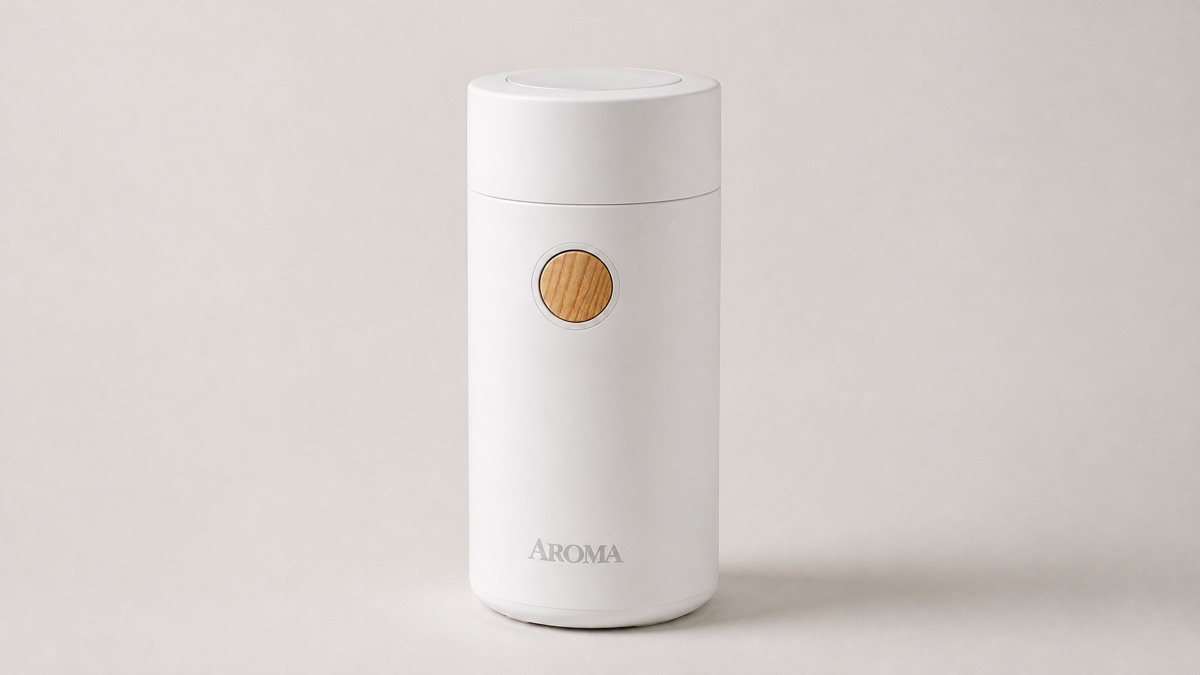
Hello, I'm Sam, and I write these reviews between orders. My baristas often ask how the Aroma Electric Compact Coffee Grinder compares with the Cuisinart DCG-20N.
The Aroma Electric Compact Coffee Grinder, model ACG-107, is a small blade grinder from Aroma Housewares. It chops coffee beans, peppercorns and dried spices, holds 40 g (1.4 oz) per batch and sells for about $25. Its 150 W motor finishes a batch in 5 seconds or less.
The grinder does not grind evenly, because blades cut beans into dust and chunks. It cannot make an espresso grind, and the motor is loud. A lid interlock keeps it safe, and a quick wipe after each use keeps it clean. Rivals such as the Cuisinart DCG-20N cost the same.
The verdict is clear: a fair pick for budget drip coffee and spices, and a poor pick for espresso. Read below for grind evenness, cleaning steps and rival blade grinders, with no sponsor.
What Is the Aroma Electric Compact Coffee Grinder?
The Aroma Electric Compact Coffee Grinder, model ACG-107, is a small electric blade grinder from Aroma Housewares. It chops coffee beans, peppercorns and dried spices. It sells for about $25 and targets home cooks who want fresh grounds on a budget.
A blade grinder chops beans with a spinning blade. A burr grinder crushes beans between two fixed surfaces. The ACG-107 uses blades, so it costs less and gives a less even grind than a burr model.
The body has a matte white finish, a clear viewing lid and a wood-accented power button. The clear lid lets the user watch the grind and stop at the right moment.
One printed manual covers both the ACG-107 and the ACG-107B. Retailers also list the grinder as the Aroma Housewares Mini Coffee Grinder and Electric Herb Grinder. All of these names point to the same small blade design.
Searches for an Aroma grinder also return the Wilfa Svart Aroma and the Aromaster burr grinders. Those come from other brands and are not covered here.
What Are the Aroma Grinder's Specs?
The Aroma grinder's specs are a 150 W motor and a 40 g (1.4 oz) capacity. The body measures 3.63 x 3.63 x 7.69 inches (9.2 x 9.2 x 19.5 cm), so it takes little counter space.
Two angled blades do the cutting. They are made of 304 stainless steel, which resists rust and is easy to wipe clean.
Capacity is where the sources disagree. A third-party manual page lists a larger capacity of 2.5 oz (70 g) and a 120 V supply. The maker listings give 40 g, so batches near 40 g are the safe size to plan around.
Key Specs:
| Spec | Value |
|---|---|
| Motor | 150 W |
| Capacity | 40 g (1.4 oz) |
| Blades | Angled 304 stainless steel |
| Size | 3.63 x 3.63 x 7.69 in (9.2 x 9.2 x 19.5 cm) |
| Price | About $25 |
A 40 g (1.4 oz) batch makes about 640 ml (21.6 fl oz) of coffee at a 1:16 coffee-to-water ratio. That fills one large mug or two small cups.
How Does the Aroma Coffee Grinder Work?
The Aroma coffee grinder works by spinning two angled steel blades that chop beans into smaller pieces. A longer run gives smaller pieces, and a shorter run leaves coarser pieces.
The grinder has no dial for grind size. The seller claims a range from coarse grounds to ultra-fine powder in 5 seconds or less. Run time is the only control the user has.
The blades strike beans instead of crushing them to a set size. Some beans get hit many times and turn to fines, which are tiny dust-like particles. Other beans get missed and stay as chunks.
A safety lid interlock keeps the motor off until the clear lid is locked in place. The grinder will not start with the lid loose.
How Do You Use the Aroma Grinder?
To use the Aroma grinder, add beans, lock the lid, press the power button and release it to stop. Aroma's manual says to press the power button to stop grinding.
Steps:
- Add up to 40 g (1.4 oz) of dry beans to the chamber.
- Lock the clear lid in place.
- Press the power button and grind in short bursts.
- Release or press the button to stop, then unplug and tip out the grounds.
Keep each batch under the 40 g (1.4 oz) limit. A full chamber leaves the top beans uncut while the bottom beans turn to dust.
Grind in short bursts and check the grounds through the clear lid. Long runs heat the beans and dull the flavor.
Pulses of 2 to 3 seconds work better than one long run. A light shake between pulses moves uncut beans back to the blades. The grinder takes dry, whole beans only, so wet or syrup-coated beans stay out.
Does the Aroma Coffee Grinder Grind Evenly?
No. The Aroma coffee grinder does not grind evenly, because blade grinders cut beans into a mix of dust and chunks. This holds for every blade model in its price class.
How much this matters depends on the brewing method.
Paper-filter brewing hides most of this flaw. Drip machines and pour-over cones tolerate small differences in particle size.
French press and espresso expose the flaw. Fine dust over-extracts, which means too much flavor is pulled out, and the coffee turns bitter. Large chunks under-extract, so the coffee tastes weak.
A moka pot sits between the two extremes. Fines can clog its basket and slow the flow. A coarse and even cut works best there.
Some habits can reduce the unevenness. Shaking the grinder while it runs moves beans through the blades. This evens out the batch a little.
Tilting the grinder between pulses helps in the same way. Smaller doses also give a more even batch than a full chamber.
Can the Aroma Grinder Grind Fine Enough for Espresso?
No. The Aroma grinder cannot grind fine enough for espresso, because blades cannot make uniform fine particles. Espresso needs matched particles to hold back water evenly.
A blade grinder chops beans at random, so some pieces end up tiny and others stay large. Blade grinders also cannot make the powdery grind that Turkish coffee needs.
The seller states an ultra-fine setting, but that claim comes from the seller and not from tests. A claim like that cannot cancel out how blades cut.
Longer runs do not fix the problem. Extra seconds make more dust and still leave chunks behind. The uneven mix only gets worse.
A burr grinder is the right tool for espresso. The Aroma suits drip, cold brew and French press at a coarse grind.
Is the Aroma Grinder Loud?
Yes. The Aroma grinder is loud, like every blade grinder. A blade grinder spins a sharp blade at high speed to chop the beans. That fast chopping makes a lot of noise. One tested blade grinder measured 84 dB.
Aroma does not publish a decibel figure for the ACG-107. The noise does not last long, though, since one batch takes 5 seconds or less.
What Are the Benefits of the Aroma Coffee Grinder?
The benefits of the Aroma coffee grinder are a low price, a small body and a one-touch start. These three traits make it an easy first grinder.
- Price near $25, far below any burr grinder
- Footprint small enough for dorms, campers and tight kitchens
- Single button that grinds in 5 seconds or less
Fresh grinding also helps flavor. Beans ground just before brewing taste fresher than a bag of pre-ground coffee.
Ground coffee loses aroma quickly, because its aromatic compounds escape once the bean is cut. Whole beans keep those compounds far longer. The grinder suits drip, pour-over, cold brew and coarse French press grinds.
Can the Aroma Grinder Handle Spices and Herbs?
Yes. The Aroma grinder handles peppercorns, dried spices and herbs as well as coffee beans. The steel blades cut hard seeds and dry leaves.
Spice oils cling to the chamber and transfer to the next batch of coffee. Wipe the chamber clean between uses.
Many cooks keep one grinder for coffee and a second one for spices. At $25, a second unit costs little.
Wet or oily foods such as fresh garlic, fresh ginger and nut pastes clog the blades. Large hard pieces, such as cinnamon sticks, need breaking into small bits first.
Safe to Grind:
- Coffee beans
- Peppercorns
- Dried spices
- Dried herbs
How Do You Clean the Aroma Coffee Grinder?
To clean the Aroma coffee grinder, unplug it and wait until it cools fully. Aroma's manual gives this order before any wiping.
Aroma's manual also forbids taking the grinder apart. Any servicing must go through Aroma Housewares.
Water should stay away from the motor base and the power cord. After each use, wipe out the leftover grounds with a dry cloth or a soft brush. A soft brush or a cotton swab reaches the blades while the grinder is unplugged.
Brushing removes loose grounds, but old oil sticks to the corners. Grinding a spoonful of dry white rice lifts that oil and the loose grounds. Grinder cleaning tablets such as Urnex Grindz do the same job. Tip the rice out and wipe the chamber.
A clean grinder also needs a dry home. Store it in a cool, dry place away from moisture. A dry cabinet protects the motor and the blades.
Cleaning Steps:
- Unplug the grinder and let it cool fully.
- Brush out the leftover grounds with a soft brush.
- Grind a spoonful of dry white rice to lift old oil.
- Tip out the rice and wipe the chamber with a dry cloth.
Does Oily Coffee Hurt the Aroma Grinder?
No. Oily coffee leaves residue on the blades and the lid but does not hurt the Aroma grinder. The 304 stainless blades resist rust.
The residue still matters, because old oil turns rancid. Rancid oil changes the taste of the next batch. A quick wipe after each grind removes the oil before it can go bad.
Spices cause a harder problem than coffee oils, since their smells linger longer. A rice cycle followed by a dry wipe clears most of the smell before the next coffee batch.
How Does the Aroma Coffee Grinder Compare to Rivals?
The Aroma coffee grinder, compared to rivals, sits in the same 150 W class and price band as the best-known blade grinders. Rivals mainly differ in capacity and in the size of their rating pools.
| Grinder | Price | Capacity | Rating |
|---|---|---|---|
| Aroma ACG-107 | $25.00 | 40 g (1.4 oz) | No large pool |
| Black+Decker CBG110S | $25.99 | 2/3 cup | 4.6 stars, 19,670 ratings |
| Cuisinart DCG-20N | $24.95 | 2.5 oz (70 g) | 4.4 stars, 14,076 ratings |
| Amazon Basics | $20.79 | Not listed | 4.4 stars, 19,805 ratings |
| Ovente CG225 | $14.99 | 2.5 oz (70 g) | 4.2 stars, 815 ratings |
The Black+Decker CBG110S also runs at 150 W with a one-touch button. It costs $25.99 and carries a rating pool near 20,000 buyers.
The Ovente CG225 costs $14.99 and matches the Aroma at 150 W. It is the cheapest in this group.
The Black+Decker and Amazon Basics models have the largest rating pools. The Cuisinart holds the most beans. The Ovente has the lowest price. The Aroma has the smallest chamber.
Aroma Grinder vs Cuisinart DCG-20N?
The Cuisinart DCG-20N holds more beans than the Aroma grinder, at 2.5 oz (70 g) against 40 g (1.4 oz). The larger chamber suits a full 12-cup pot.
Price does not separate the two, since the Cuisinart costs $24.95 and the Aroma costs $25. The choice therefore rests on other traits. The Cuisinart also has a safety interlock.
The Cuisinart has 4.4 stars across 14,076 ratings. The Aroma has no rating pool of that size, so its long-term durability is less proven.
Aroma Grinder vs Black+Decker CBG110S?
The Black+Decker CBG110S has a far larger rating pool than the Aroma grinder, at 4.6 stars from 19,670 ratings. It costs $25.99, close to the Aroma at $25.
Both use a 150 W motor and a one-touch button. The Black+Decker lists a capacity of 2/3 cup of beans.
The two grind with blades, so both give an uneven cut. The Black+Decker's larger buyer pool is the main reason to pick it.
Is the Aroma Coffee Grinder Safe to Use?
Yes. The Aroma coffee grinder is safe to use when the lid interlock works and the user unplugs it before cleaning. The motor will not run with a loose lid.
A buyer can test the interlock. Press the button with the lid loose. The motor should stay off. A grinder that runs with a loose lid is unsafe and should be retired.
The blades are sharp. Never reach into the chamber while the grinder is plugged in. A cracked lid can defeat the interlock, so the grinder should stop being used.
The blades and motor can also be harmed by what goes in. Ice, stones, shells, sugar and wet foods can chip the blades or strain the motor.
Aroma's manual says never to disassemble the grinder. Questions go to Aroma support at 1-800-276-6286.
The grinder is not a toy. It should be stored unplugged, out of reach of children, with the cord clear of the counter edge.
Who Should Avoid the Aroma Grinder?
Espresso drinkers should avoid the Aroma grinder, because a blade cannot make a uniform fine grind. A burr grinder suits them better.
Three other groups also find the grinder a poor fit:
- French press fans: The grinder gives uneven chunks and dust. The cup tastes both bitter and weak.
- Large households: These homes brew big pots. The 40 g (1.4 oz) limit forces several batches for one carafe.
- Daily grinders of oily dark roasts: Oily dark roasts ground every day leave more residue. They call for a wipe after each batch.
How Much Does the Aroma Coffee Grinder Cost?
The Aroma coffee grinder costs about $25. J.L. Hufford lists the ACG-107 at $25.00, and Aroma sells it direct.
Blade grinders in the same class range from $14.99 to $27.49. The Aroma sits near the top of that range.
A third-party page lists a one-year limited warranty. Aroma's own manual excerpt does not confirm the term, so check the card in the box.
The Aroma sells direct from Aroma Housewares and through J.L. Hufford. The same grinder appears on Amazon under the Mini Coffee Grinder name, so listings are best matched by model number.
Running costs are close to zero. A 150 W motor running 5 seconds per batch uses a fraction of a cent. The grinder has no filters or burrs to replace.
Is the Aroma Grinder Worth the Price?
Yes. The Aroma grinder is worth the price at $25 for drip coffee and spices, but rivals match that price. The Black+Decker and Cuisinart both come with huge rating pools.
The size of those rating pools matters because the Aroma has far fewer ratings than its rivals. Fewer ratings give less proof that the motor lasts. A buyer who wants a grinder for years of use has more evidence for the Black+Decker and Cuisinart.
A buyer who cares most about the taste of the coffee faces a different choice.
An entry burr grinder crushes beans between two metal surfaces, and it costs several times more than the Aroma. The Baratza Encore lists at $149.95. It has 40 grind settings and 40 mm stainless conical burrs. That price is six times the Aroma, so a buyer who wants better coffee should save for one.
Is the Aroma Coffee Grinder Worth It?
Yes. The Aroma coffee grinder is worth it as a cheap, small blade grinder, and it is not worth it for espresso.
The pros are low cost, small size, a safe lid and spice use. The cons are an uneven grind, loud noise and a 40 g (1.4 oz) limit.
Buyers who want a bigger rating pool at the same price should compare the Cuisinart DCG-20N first.
Buy it for drip, pour-over, cold brew and spices. Skip it for espresso, French press, moka pot and households of three or more.
Pros:
- Low price near $25
- Small body
- Safe lid interlock
- Spice use
Cons:
- Uneven grind
- Loud motor
- 40 g (1.4 oz) limit
- Small rating pool
Is the Aroma Grinder Better Than a Burr Grinder?
No. The Aroma grinder is not better than a burr grinder for grind quality. Burrs crush beans to a set size and give more uniform particles than blades.
Aroma also sells a conical burr coffee grinder, the ACG-106, so the brand is not limited to blades. That model suits espresso and French press better.
The blade design wins only on price and size. A buyer on a tight budget still gets fresh grounds.
Odradeks Coffee House is reader-supported. If you buy through a link on this page, we may earn a small affiliate fee at no extra cost to you.