Pintinox Capri 1-Cup Moka Pot Review: Is It Worth It?
Hello, Sam here, and thanks for visiting. After 14 years running a coffee shop, I care how long aluminum moka pots last.
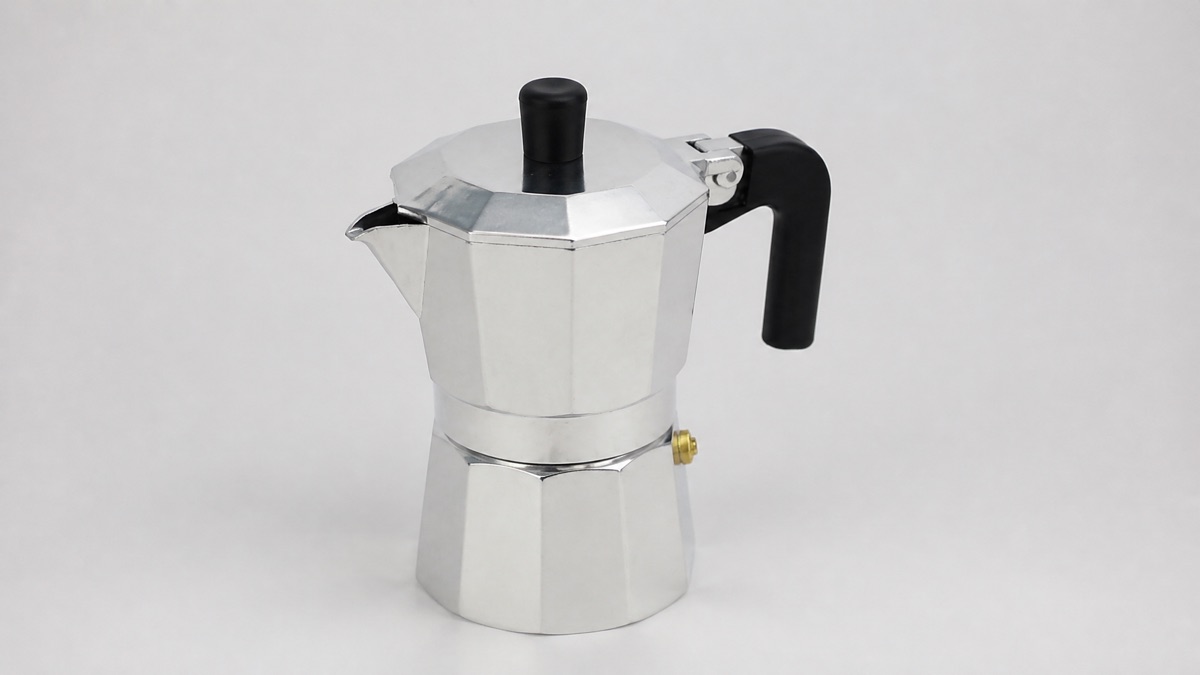
The Pintinox Capri 1-cup is a small aluminum stovetop moka pot from the Italian cookware maker Pintinox. The boiler holds 75 ml (2.5 fl oz) of water. The pot brews about 60 ml (2 fl oz) of strong coffee for one drinker.
The pot works by steam pressure, so the coffee is strong but not espresso. The body is food-grade aluminum with resin handles and silicone seals. The standard Capri does not work on induction hobs. Buyers rate it 4.2 to 4.3 out of 5 stars.
No independent test of the Capri exists, and no US price is confirmed. Read on to learn who should buy the Capri and who should skip it. I also compare the Bialetti Moka Express on brewing and cleaning, and brands paid nothing.
What Is the Pintinox Capri 1-Cup Moka Pot?
The Pintinox Capri 1-cup is a small aluminum stovetop moka pot that brews one serving of strong coffee. The boiler holds 75 ml (2.5 fl oz) of water. A gas flame or an electric hob supplies the heat.
Pintinox sells the Capri line in several sizes. Buyers can pick a half-cup, 1-cup, 2-cup, 3-cup, 6-cup, 9-cup or 12-cup pot. Retail sites also sell a set of the 1-cup and 3-cup pots. The 1-cup pot suits one drinker.
Capri Sizes:
- Half cup
- 1 cup
- 2 cups
- 3 cups
- 6 cups
- 9 cups
- 12 cups
A moka pot makes strong coffee, but not true espresso. Steam pressure pushes the water through the grounds at 1 to 2 bar (100 to 200 kPa). Espresso machines run at 9 bar (900 kPa). Moka coffee tastes bolder than drip and thinner than a real shot.
The standard Capri differs from the Capri Induction. Pintinox sells the induction version as a separate pot with a full induction base. Buyers must pick the right version for the hob they own.
Who Makes the Pintinox Capri?
Pintinox makes the Capri and is an Italian cookware company that Giacomo Pinti founded in 1929. The firm sits in Valtrompia, an Italian valley with a long record of metalworking. Pintinox builds its own molds in-house.
Pinti Inox S.p.A. is the legal name behind the Pintinox brand. Giacomo Pinti opened his first workshop in Lumezzane, near Brescia, to make chromed brass cutlery. The headquarters now sit in Sarezzo. The third generation of the family runs the firm, and the brand sells in more than 50 countries.
The company works in stainless steel and aluminum. Its range of cookware is wide, so coffee is only one line among many. Within that line, Pintinox lists four moka pot series: Natura, Black&Wood, Capri and Capri Induction.
Product data lists China as the country of origin for the Capri. The design and the brand are Italian, yet the pot is not marked as made in Italy. Buyers who want an Italian-made pot need to confirm the origin before ordering.
How Does the Pintinox Capri Work?
The Pintinox Capri works by pushing hot water through ground coffee with steam pressure. Water sits in the lower chamber, called the boiler. Heat builds pressure there. The pressure forces the water up through the grounds and into the top chamber.
A moka pot has five main parts. The boiler holds the water and carries a safety valve. A funnel basket holds the grounds. A rubber gasket seals the two halves. A filter disc sits in the upper chamber, where the brewed coffee collects.
The Capri boiler is a semi-valve design. The safety valve lets out steam if pressure climbs too high. Pintinox says the shape allows full extraction of the flavor compounds in the grounds. No independent test backs that claim.
Moka pressure stays low. Brewing at 1 to 2 bar makes a stronger drink than drip. The Capri brews moka-style coffee, so the cup is not an espresso shot.
How Do You Brew Coffee With the Pintinox Capri?
The Pintinox Capri brews coffee in four steps: fill, load, heat and pour. The brewer fills the boiler with 75 ml (2.5 fl oz) of water. Medium-fine grounds go into the funnel basket. The pot then heats on a small flame.
The grind decides whether the water can pass through the grounds. A medium-fine grind works best. The grounds feel gritty between the fingers, not powdery. Store-bought espresso grind is usually too fine and can block the filter. Instant coffee and extracts also block the filter plate.
The basket gets filled level and is never tamped. Tamping restricts the water flow and over-extracts the coffee. The water level stays just below the safety valve. Grounds or scale that block the valve stop it from working, which is dangerous.
Brew Steps:
- Fill the boiler with 75 ml (2.5 fl oz) of water.
- Load medium-fine grounds into the funnel basket without tamping.
- Heat the pot on a small flame.
- Pour the coffee once the top chamber fills.
A new pot needs a rinse in warm water first. The first two to three brews get thrown away. The pot needs full measures of water and coffee, because a half-filled pot does not brew properly. The pot never goes on a heat source without water.
The 1-cup pot is small, so a hob with a small flame suits it best. A pot that is hot after brewing can also be hard to unscrew. Running the pot under cold water cools the metal and loosens the joint.
What Is the Pintinox Capri Made Of?
The Pintinox Capri is made of food-grade aluminum with resin handles and silicone seals. The body is the aluminum. The handle and knob use thermosetting phenolic resin. That resin resists heat and protects the hand from scalds.
Capri Materials:
- Body: food-grade aluminum
- Handle and knob: thermosetting phenolic resin
- Seals: silicone
Aluminum is the classic moka pot metal. Alfonso Bialetti began as an aluminum vendor, and the original design and many current models use aluminum with Bakelite handles. Stainless steel is the other common material for moka pots.
Aluminum raises a safety question for some buyers. Aluminum migration into coffee is negligible. It falls below 1% of the recommended weekly intake once a new pot has been used. Discarding the first brews follows that logic.
The European Food Safety Authority sets a tolerable weekly intake of 1 mg of aluminum per kg of body weight. The limit covers all dietary sources, not only cookware. EFSA set the figure in 2008.
Care affects the metal. White deposits form inside an aluminum base when the pot is stored wet, because the metal oxidizes. Full drying and separate storage of the parts prevent the problem.
Does the Pintinox Capri Work on Induction?
No. The standard Pintinox Capri does not work on induction hobs. Aluminum is not magnetic, so an induction hob cannot heat the pot. The pot suits glass ceramic, halogen, electric and gas hobs.
Stainless steel moka pots work on induction, while aluminum pots do not. An induction hob can show an error and shut off when a plain aluminum pot sits on the smallest zone. Some buyers return the pot for that reason.
Pintinox sells a separate Capri Induction pot for these buyers. It has a full induction base and polypropylene handles. The seals are still silicone. A buyer with an induction hob must choose that version.
A steel adapter plate is another way to run an aluminum pot on induction. The steel heats, and the pot sits on top of it. Bialetti sells a 13 cm (5.1 in) induction plate adapter. The plate adds thermal lag, so heating is slower and harder to control. No adapter is confirmed for the Capri.
How Much Coffee Does the Pintinox Capri 1-Cup Make?
The Pintinox Capri 1-cup makes about 60 ml (2 fl oz) of coffee. The boiler holds 75 ml (2.5 fl oz) of water. Pintinox says the pot yields about 80% of its boiler capacity, and 80% of 75 ml is 60 ml.
Larger Capri sizes scale up. The 3-cup boiler holds 158 ml (5.3 fl oz), and the 6-cup boiler holds 304 ml (10.3 fl oz). The 80% rule gives about 126 ml (4.3 fl oz) and 243 ml (8.2 fl oz) of coffee.
Capri Sizes and Yield:
| Size | Boiler | Coffee Yield |
|---|---|---|
| 1 cup | 75 ml (2.5 fl oz) | 60 ml (2 fl oz) |
| 3 cups | 158 ml (5.3 fl oz) | 126 ml (4.3 fl oz) |
| 6 cups | 304 ml (10.3 fl oz) | 243 ml (8.2 fl oz) |
A moka cup is a small cup. Moka pot sizes count demitasse cups of about 40 to 60 ml (1 to 2 fl oz) each. The Capri 1-cup sits at the top of that range.
Cup labels do not scale in a straight line. The 3-cup yield of 126 ml (4.3 fl oz) is 2.1 times the 1-cup yield. The 6-cup yield of 243 ml (8.2 fl oz) is about 4 times the 1-cup yield. Buyers who need a set volume need to use the milliliter figures.
The yield varies with the method and the coffee used. A full measure of water and coffee gives the best result. A half-filled pot does not work properly.
Can the Pintinox Capri Make a Latte?
Yes. The Pintinox Capri can make a small latte, because moka coffee is strong enough to stand up to milk. Moka coffee is stronger than drip. Milk drinks are a common use for moka pots.
The size of the pot sets the limit on the drink. The milk can outweigh the coffee when a latte comes from only 60 ml (2 fl oz). The 1-cup pot therefore suits a small milk drink better than a tall one.
The 3-cup size solves this by making more coffee. Its boiler holds 158 ml (5.3 fl oz) and yields about 126 ml (4.3 fl oz) of coffee. That is about twice the 1-cup yield, which leaves more room for milk.
Does the Pintinox Capri Make Good Coffee?
Yes. The Pintinox Capri makes good coffee in the moka style, with a strong and rich taste. Moka coffee sits between drip and espresso in strength. Buyers rate the taste well.
Owners describe the espresso-style cup as tasty. Some say the flavor matches name-brand moka pots. Several rate the value as very good for the price class.
Moka coffee has limits. Pressure of 1 to 2 bar is far below the 9 bar of espresso. The result is strong coffee, not an espresso shot.
Because the design is a standard moka one, the flavor depends on the same things in any moka pot. Bean variety, roast level, grind fineness, water and heat all change the taste. No independent tasting test of the Capri exists. Results follow the beans and the heat control more than the brand name.
What Do Owners Say About the Pintinox Capri?
Owners say the Pintinox Capri is well made and rate it 4.2 to 4.3 out of 5 stars. The 1-and-3-cup set holds 524 ratings. The 6-cup pot holds 607 ratings.
The star split on the set shows that most buyers are happy. Five stars make up 65% of ratings, and four stars add another 13%. Three stars make up 8%, two stars 3% and one star 11%. Six buyers mention quality, and all six are positive.
Buyers explain their praise with size, build and price. Buyers call the pot small and fine, and note that it stores easily. Several call the espresso tasty. Some call it a cheap way to brew espresso-style coffee.
The 1-cup size earns specific praise. A one-person household finds it perfect. A 3-cup Capri can last five years of regular use.
What Are the Pintinox Capri's Drawbacks?
The Pintinox Capri's drawbacks are induction incompatibility, a small yield and little independent testing. The pot fails on induction hobs. The 1-cup size brews only about 60 ml (2 fl oz). No lab test or expert review covers the model.
About 11% of ratings on the 1-and-3-cup set are one star. Induction failure is one cause. A plain aluminum pot can trigger an error on an induction hob and get returned.
Handling can also disappoint. A handle can snap in transit, and a 12-cup pot arrived with a broken handle. A small flame also suits the 1-cup size best.
Public data gives no weight or height for the 1-cup pot alone. The country of origin is China, not Italy. The missing details make the Capri harder to judge than a pot with a full spec sheet.
How Do You Clean the Pintinox Capri?
The Pintinox Capri is easy to clean by hand in warm water, with no chlorine or bleach. Pintinox recommends hand washing when possible. The maker allows suitable detergents and bans chlorine-based products and bleaching agents.
Full drying matters. Parts stay apart until they are completely dry, because damp aluminum oxidizes. Storing the pieces separately lets air circulate and keeps the metal sound.
Bialetti advises water only for aluminum pots, because detergent can taint the metal and the coffee. Water alone is the safer routine. Steel wool and abrasive pads scratch the surface and discolor it.
A white deposit or stain inside the base comes from storing the pot wet. A scrub with a dish brush in warm water and white vinegar lifts the deposit. A rinse and a full dry follow.
Cleaning Routine:
- Let the pot cool and separate the top section from the base.
- Wash every part by hand in warm water.
- Dry each piece fully with a clean cloth.
- Store the parts apart so air can circulate.
The funnel, filter plate and rubber ring wear out. The gasket needs replacing about once a year. The Capri uses silicone seals. No US source for Capri spare gaskets turned up for this review.
Is the Pintinox Capri Dishwasher Safe?
No. The Pintinox Capri is not dishwasher safe. Pintinox recommends hand washing. Product data says a dishwasher can damage the pot and change the taste of the coffee.
The cause is the detergent. Dishwasher detergent is strong, and aluminum reacts to it. Bialetti gives the same rule for aluminum moka pots.
Stainless steel pots from other brands can go in a dishwasher. Hand washing still protects the flavor.
How Does the Pintinox Capri Compare to Rivals?
The Pintinox Capri compares with the Bialetti Moka Express and low-cost generic aluminum pots as its main rivals. All three brew by steam pressure. All three use aluminum. The Capri and the Bialetti do not work on induction.
The Bialetti Moka Express 1-cup makes about 60 ml (2 fl oz) of coffee. The pot stands 135 mm (5.3 in) tall on a 70 mm (2.8 in) base. US retailers list it at $39.95 and $39.99.
A generic 1-cup aluminum espresso maker from Luminuxe costs $17.81 at Walmart. The pot holds 4.7 stars from 125 seller reviews. It works on gas and electric hobs.
Pintinox Capri vs Rivals:
| Pot | Coffee Yield | US Price |
|---|---|---|
| Pintinox Capri 1-cup | 60 ml (2 fl oz) | Not confirmed |
| Bialetti Moka Express 1-cup | 60 ml (2 fl oz) | $39.95 to $39.99 |
| Luminuxe 1-cup | Not stated | $17.81 |
Pintinox Capri vs Bialetti Moka Express: Which Is Better?
The Bialetti Moka Express is better than the Pintinox Capri for buyers who need a warranty and spare parts. Alfonso Bialetti introduced the Moka Express in 1933. Bialetti sells replacement rings, funnels, filter plates, knobs and handles.
All Bialetti products carry a two-year manufacturing warranty. The warranty excludes parts that wear out. For the Capri, no warranty terms or US parts support turned up.
The published Capri specs match the standard moka layout. The pot has an aluminum body, a resin handle and a silicone seal. The boiler holds 75 ml (2.5 fl oz).
Both pots brew moka coffee, so taste differences come mostly from the beans and the heat. Both pots also fail on induction, so neither has an edge there. The choice rests on support and price, not on brew method.
How Much Does the Pintinox Capri Cost?
The Pintinox Capri has no confirmed US price, so the cost stays unstated. No US retailer listing for the pot turned up. A price quoted from a European page would not apply to US buyers.
The web shop prices the pot by size. The price rises with each step from the half cup to the 12 cup. The price buys an aluminum pot, a resin handle and a silicone seal in one of several sizes. Product pages sell the 1-cup pot alone and also in a 1-and-3-cup set. A set adds a second pot for the same order.
Without a Capri price, rival 1-cup pots show what a US buyer might expect to pay. The Bialetti Moka Express lists at about $40 in the US. A generic aluminum pot costs $17.81. A US buyer pays between about $18 and $40 for the rivals found.
The price of the pot is also close to the whole cost of making coffee with it. A moka pot needs no filters or pods. Only the gasket needs a replacement, about once a year.
Where Can You Buy the Pintinox Capri?
Buyers can buy the Pintinox Capri where Pinti Inox sells it: its web shop and the German and Dutch Amazon storefronts. The web shop sells seven sizes, from a half cup to 12 cups. The 1-cup pot is listed as in stock. Amazon sells the 1-cup pot alone and in a set with the 3-cup pot.
No US listing turned up at Amazon.com or Walmart. The searches found only generic 1-cup aluminum pots at US retailers. The web shop shows prices in euros and states no US shipping terms. A US buyer would therefore need to import the pot.
The induction version is sold as a separate product. The standard Capri fails on induction hobs, so the version matters at checkout.
Is the Pintinox Capri Worth It?
Yes. The Pintinox Capri is worth it for one person who brews on a gas, electric or glass ceramic hob. The 1-cup size fits a single drinker. The design is a standard, proven moka layout.
The reasons are simple. Ratings run 4.2 to 4.3 out of 5 stars across more than 1,100 ratings. Cleaning takes a rinse and a dry. A regular 3-cup Capri can last five years.
Pros:
- Standard moka design with a 75 ml boiler
- Ratings of 4.2 to 4.3 out of 5 stars
- Simple cleaning with warm water
- No filters or pods to buy
The caveats are real. No independent test covers the Capri, and no US price is confirmed. The standard pot fails on induction. The 1-cup yield is only about 60 ml (2 fl oz).
Cons:
- No independent test of the Capri
- No confirmed US price
- Fails on induction hobs
- Small 60 ml (2 fl oz) yield
A Bialetti Moka Express 1-cup costs about $40 in the US and brings a two-year warranty. That pot suits buyers who want parts support. The Capri suits buyers who find one at a fair price.
Who Should Skip the Pintinox Capri?
Buyers who should skip the Pintinox Capri include owners of induction hobs, because aluminum does not heat on induction. The Capri Induction pot is the right version for that hob. The standard pot returns a hob error.
Latte drinkers need a larger size. The 1-cup pot yields about 60 ml (2 fl oz) of coffee. A big milk drink calls for the 3-cup pot or a different brewer.
Buyers who want dishwasher cleaning need another pot. The aluminum Capri takes hand washing only. Buyers who want a local warranty and spare gaskets also do better with a Bialetti.
Odradeks Coffee House is reader-supported. If you buy through a link on this page, we may earn a small affiliate fee at no extra cost to you.